
In today’s saturated marketplace, understanding and implementing effective competitive positioning can mean the difference between thriving and merely surviving. Whether you are launching a new product, refining your brand strategy, or seeking to reclaim market share, competitive positioning serves as the cornerstone of your business success. This comprehensive guide will walk you through the essential steps to establish and maintain a strong competitive position in your industry.
Understanding Competitive Positioning
Competitive positioning refers to the strategic process of establishing your brand, product, or service in the minds of your target customers relative to your competitors. It is not merely about being different; it is about being meaningfully different in ways that matter to your customers. Effective competitive positioning answers a fundamental question: Why should customers choose you over alternatives? You might also enjoy reading about How to Perform the Dunnett Test: A Complete Guide to Statistical Comparison Testing.
The positioning process requires a deep understanding of your market landscape, customer needs, competitor offerings, and your unique value proposition. When executed correctly, competitive positioning creates a distinct space in the market that you can own and defend over time. You might also enjoy reading about How to Conduct Systematic Sampling: A Complete Guide with Examples.
Step One: Conduct a Comprehensive Market Analysis
Before you can position your offering effectively, you must thoroughly understand the market environment in which you operate. Begin by gathering comprehensive data about your industry, including market size, growth rates, trends, and customer demographics.
Gathering Market Intelligence
Start by collecting quantitative and qualitative data from multiple sources. For example, if you operate in the fitness equipment industry, you might discover the following market characteristics:
- Total addressable market: $12 billion annually
- Annual growth rate: 4.3 percent
- Primary customer segment: Adults aged 25 to 45
- Key purchasing factors: Durability (38%), price (32%), brand reputation (18%), features (12%)
- Average purchase frequency: Every 3.5 years
This baseline understanding provides the foundation for all subsequent positioning decisions. Without accurate market data, your positioning strategy will rest on assumptions rather than facts.
Step Two: Analyze Your Competitors Systematically
A thorough competitive analysis reveals where opportunities exist in the market. Rather than simply listing competitors, you must understand their strategies, strengths, weaknesses, and positioning approaches.
Creating a Competitive Matrix
Develop a structured framework to compare competitors across key dimensions. Consider this example from the coffee shop industry:
Competitor A (National Chain):
- Price point: Premium ($4.50 average transaction)
- Location strategy: High-traffic urban areas
- Brand positioning: Convenient, consistent experience
- Customer satisfaction score: 7.2 out of 10
- Market share: 32 percent
Competitor B (Local Artisan):
- Price point: Ultra-premium ($6.20 average transaction)
- Location strategy: Trendy neighborhoods
- Brand positioning: Craftsmanship and sustainability
- Customer satisfaction score: 8.9 out of 10
- Market share: 8 percent
Competitor C (Budget Option):
- Price point: Value ($2.80 average transaction)
- Location strategy: Strip malls and suburbs
- Brand positioning: Affordable daily coffee
- Customer satisfaction score: 6.1 out of 10
- Market share: 15 percent
This analysis immediately reveals positioning gaps. For instance, there appears to be an opportunity for a moderately priced option ($3.50 to $4.00) that emphasizes both quality and value, potentially capturing customers who find Competitor A too generic but Competitor B too expensive.
Step Three: Define Your Unique Value Proposition
Your unique value proposition (UVP) articulates what makes your offering distinctly valuable to customers. A strong UVP addresses specific customer needs better than alternatives and can be credibly delivered by your organization.
Crafting Your UVP Statement
An effective UVP follows this general structure: For [target customer] who [customer need], our
provides [key benefit] unlike [competitive alternative] because [reason to believe].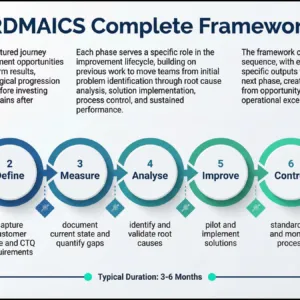
For example, a project management software company might position itself as follows: “For mid-sized marketing agencies who struggle with client communication and deadline management, our platform provides integrated client collaboration tools and automated workflow tracking unlike traditional project management software because we built our system specifically for agency workflows based on research with 200 marketing firms.”
Notice how this statement clearly identifies the target customer, their specific problem, the solution provided, the competitive differentiation, and the credibility factor.
Step Four: Select Your Positioning Strategy
Several proven positioning strategies exist, and selecting the right approach depends on your competitive analysis and organizational capabilities.
Common Positioning Strategies
Cost Leadership: Position yourself as the most affordable option without sacrificing acceptable quality levels. This strategy requires operational excellence and efficiency.
Differentiation: Offer unique features, superior quality, or exceptional service that justifies premium pricing. This approach demands innovation and strong brand building.
Focus Strategy: Concentrate on serving a specific niche market segment better than generalist competitors. This requires deep customer understanding and specialized capabilities.
Operational Excellence: Emphasize reliability, speed, and convenience. This positioning works well in markets where customers value consistent, hassle-free experiences.
Consider a software-as-a-service company entering the accounting software market. Rather than competing directly with established players across all business sizes, they might adopt a focus strategy targeting freelance creative professionals with simplified invoicing and expense tracking designed specifically for their workflow patterns.
Step Five: Test and Validate Your Position
Before fully committing resources to a positioning strategy, validate your assumptions through market testing. This step prevents costly mistakes and refines your approach based on real customer feedback.
Validation Methods
Implement small-scale tests to gauge market response. Create landing pages with different positioning messages and measure conversion rates. Conduct focus groups with target customers to assess message resonance. Run limited advertising campaigns testing various positioning angles.
For example, an eco-friendly cleaning product company might test three positioning approaches: “Powerful cleaning without harsh chemicals” versus “Protecting your family and the planet” versus “Professional-grade natural cleaning solutions.” By measuring response rates, purchase intent, and emotional connection across test groups of 100 customers each, they can identify which positioning generates the strongest market response before committing their full marketing budget.
Step Six: Implement Your Positioning Consistently
Once you have validated your positioning strategy, implement it consistently across all customer touchpoints. Inconsistent positioning confuses customers and dilutes your competitive advantage.
Alignment Across the Organization
Your competitive positioning must be reflected in product development, marketing communications, sales messaging, customer service, pricing strategy, and visual brand identity. Every employee should understand and be able to articulate your positioning.
Create a positioning document that includes your target customer profile, key competitive differentiators, messaging guidelines, and brand personality attributes. Distribute this document throughout your organization and incorporate it into employee training programs.
Step Seven: Monitor and Adjust Your Position
Markets evolve, competitors adapt, and customer preferences shift. Effective competitive positioning requires ongoing monitoring and periodic adjustment.
Establishing Monitoring Systems
Implement regular tracking mechanisms to assess your positioning effectiveness. Key metrics might include brand awareness percentages, consideration rates, market share changes, customer acquisition costs, and net promoter scores.
Schedule quarterly reviews to analyze competitive movements, customer feedback trends, and market condition changes. Be prepared to refine your positioning when data indicates your current approach is losing effectiveness.
Applying Process Excellence to Competitive Positioning
Competitive positioning is not a one-time exercise but an ongoing process requiring systematic analysis, testing, and refinement. This is where methodologies like Lean Six Sigma provide tremendous value. By applying structured problem-solving frameworks, data-driven decision-making, and process optimization principles, you can dramatically improve your positioning outcomes.
Lean Six Sigma tools such as DMAIC (Define, Measure, Analyze, Improve, Control) provide a rigorous framework for positioning decisions. The methodology helps eliminate assumptions, reduce variability in messaging, and create repeatable processes for market analysis and strategy development. Organizations that apply these principles to their strategic marketing functions consistently outperform competitors who rely on intuition alone.
Conclusion
Mastering competitive positioning requires commitment, analytical rigor, and strategic thinking. By following these seven steps, conducting thorough market research, understanding your competitive landscape, crafting compelling value propositions, and implementing your strategy consistently, you can establish a strong market position that drives sustainable business growth.
Remember that effective positioning is built on data, validated through testing, and refined through continuous monitoring. The organizations that succeed are those that approach positioning as a disciplined process rather than a creative exercise alone.
Take Your Strategic Skills to the Next Level
The principles outlined in this guide represent just the beginning of what structured process improvement methodologies can do for your business strategy. If you are serious about developing systematic, data-driven approaches to competitive positioning and overall business excellence, professional training can accelerate your journey.
Enrol in Lean Six Sigma Training Today and gain the analytical frameworks, statistical tools, and process optimization methods that transform good strategists into exceptional ones. Whether you are a business owner, marketing professional, or strategic consultant, Lean Six Sigma certification provides the competitive edge you need in today’s demanding marketplace. Do not leave your competitive positioning to chance. Invest in the skills that deliver measurable results.