In the realm of modern organizational excellence, the demand for streamlined processes and defect reduction has never been higher. For professionals exploring the landscape of process improvement, the Lean Six Sigma methodology stands as the gold standard. The journey toward mastery typically begins at the White Belt level. While this introductory tier serves as an entry point, achieving certification requires a foundational understanding of specific terminologies and conceptual frameworks. Utilizing a six sigma white belt practice test is not merely a recommendation; it is a strategic imperative for those seeking to validate their knowledge and transition into more advanced roles.
To fully appreciate the value of this certification, one must understand that a White Belt practitioner serves as a vital support component within a larger project team. They are the individuals who understand the "why" behind organizational changes and can speak the language of efficiency. Whether you are in healthcare, manufacturing, or finance, mastering these basics is the first step toward a transformative career.
Understanding the White Belt Framework
The fundamental purpose of the Six Sigma White Belt is to provide a high-level overview of the Lean Six Sigma methodology. Unlike the more technical Green or Black Belts, the White Belt focus is on cultural awareness and foundational definitions. It bridges the gap between frontline employees and the specialized project leads who execute complex data analysis.
At this level, the curriculum generally covers the history of Six Sigma (originated by Motorola in the 1980s), the distinction between Lean and Six Sigma, and the basic roles within a project hierarchy. Lean focuses primarily on the elimination of waste: often referred to as "Muda": while Six Sigma is dedicated to reducing variation within a process. When combined, they create a powerful toolkit for any professional environment.
The Role of a White Belt in the Workplace
A White Belt is often tasked with identifying potential "pain points" or bottlenecks within their immediate work area. By understanding the basics, they can effectively communicate these issues to higher-level belts. For instance, in a procurement setting, a White Belt might help identify and resolve supplier performance issues by providing accurate frontline data to the project team.
Navigating the Six Sigma White Belt Practice Test
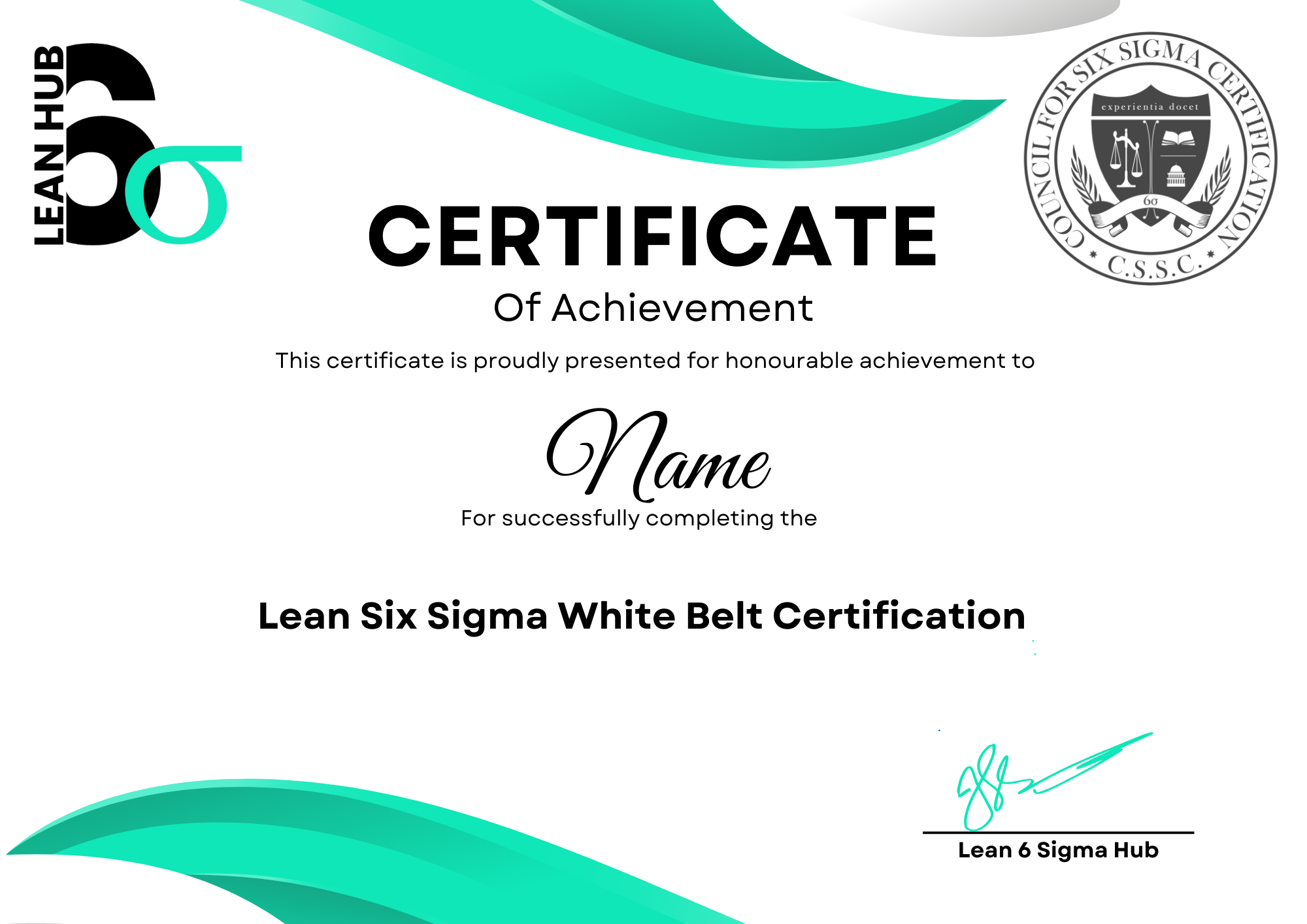
The certification exam for a White Belt is designed to be accessible but comprehensive. Most industry-standard exams, such as those accredited by the Council for Six Sigma Certification (CSSC), consist of approximately 20 to 30 multiple-choice questions. A passing score typically ranges between 70% and 80%.
Preparation through a six sigma white belt practice test allows candidates to familiarize themselves with the phrasing of questions and the logic behind the methodology. Since many of these exams are "open-book," the challenge lies not in memorization, but in the conceptual application of the tools.
Key Focus Areas for Your Practice Sessions:
- The DMAIC Roadmap: Understanding the five phases of process improvement.
- The Concept of Waste: Identifying the 8 types of DOWNTIME waste (Defects, Overproduction, Waiting, Non-utilized talent, Transportation, Inventory, Motion, and Extra-processing).
- Basic Quality Tools: Recognizing tools like the Fishbone Diagram (Ishikawa) and the Pareto Chart.
- Customer Focus: Defining the "Voice of the Customer" (VOC) and how it drives project goals.

Detailed Breakdown: The DMAIC Methodology
The cornerstone of Six Sigma is the DMAIC methodology. Even at the White Belt level, you will be expected to define these five phases accurately. To fully appreciate the structure of a project, consider the following technical definitions:
- Define: In this phase, the team identifies the problem, the project goals, and the customer requirements. This is where stakeholder analysis and mapping take place to ensure project alignment.
- Measure: The focus shifts to data collection. Teams determine the current state of the process. In manufacturing, this might involve calculating rework and scrap rates to establish a baseline.
- Analyze: This is the investigative stage. Professionals look for the root cause of defects. This phase often involves validating root causes before proposing any solutions.
- Improve: Once the root cause is found, the team develops and tests solutions. A common strategy here is batch size reduction to improve flow and responsiveness.
- Control: The final phase ensures that the improvements are sustained over time. This involves creating effective escalation procedures and monitoring performance via dashboards.
Interactive Section: Sample Practice Questions
To assist in your preparation, review the following sample questions which are representative of what you might encounter in a six sigma white belt practice test.
Question 1: What is the primary objective of Six Sigma?
- A) To increase the number of employees.
- B) To reduce variation and eliminate defects.
- C) To increase the physical size of the warehouse.
- D) To eliminate the need for management.
- Correct Answer: B
Question 2: What does the acronym DMAIC stand for?
- A) Design, Monitor, Analyze, Inform, Control.
- B) Define, Measure, Analyze, Improve, Control.
- C) Define, Manage, Align, Increase, Control.
- D) Distribute, Measure, Assess, Improve, Change.
- Correct Answer: B
Question 3: In Lean terminology, what is "Muda"?
- A) A type of leadership style.
- B) A statistical software.
- C) Waste.
- D) A customer requirement.
- Correct Answer: C
Question 4: Which tool is used to identify the "vital few" problems versus the "useful many"?
- A) Fishbone Diagram.
- B) Pareto Chart (80/20 Rule).
- C) Histogram.
- D) Control Chart.
- Correct Answer: B
Question 5: Who is considered the "Father of Six Sigma"?
- A) Bill Smith.
- B) Jack Welch.
- C) Taiichi Ohno.
- D) Henry Ford.
- Correct Answer: A
Career Path and Market Value
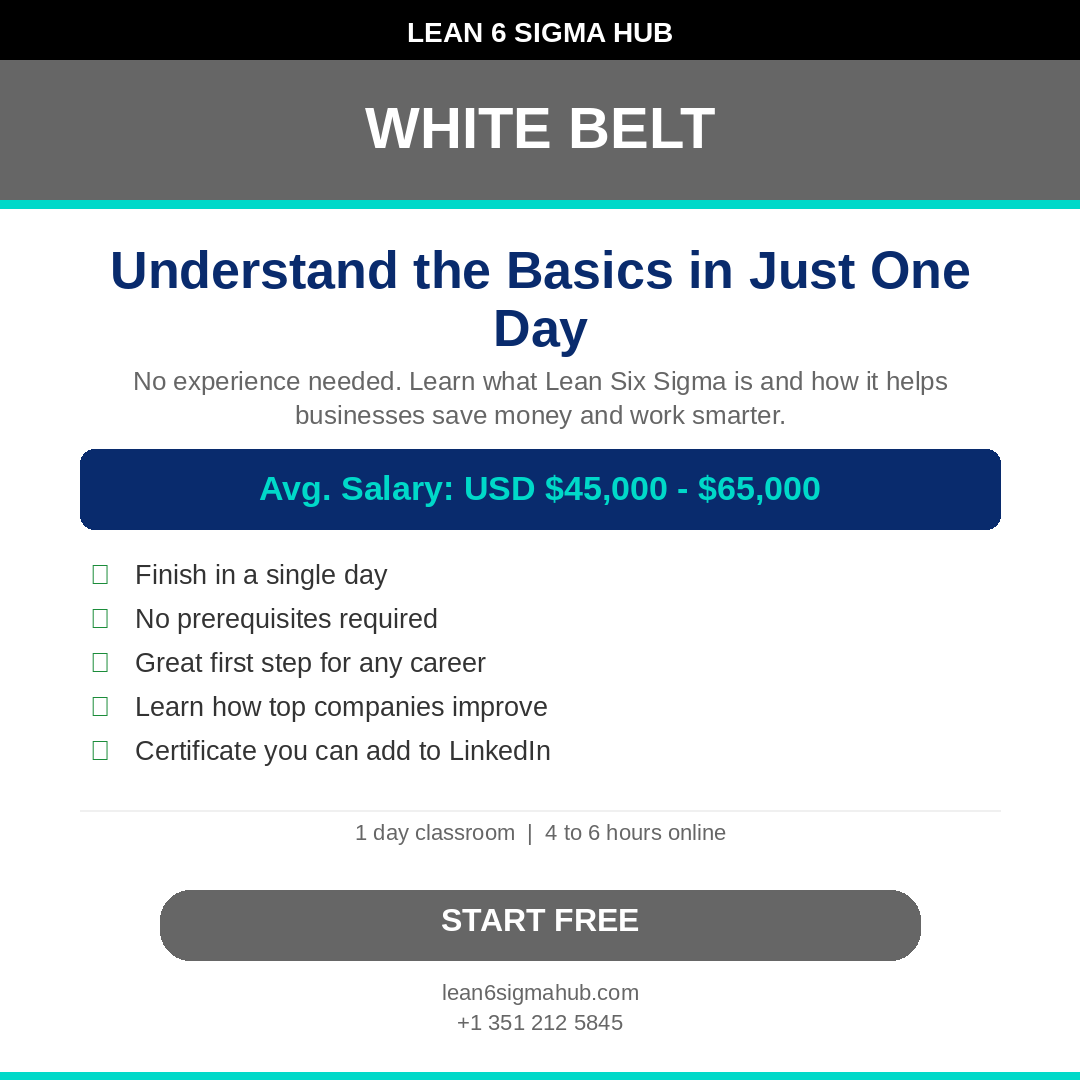
Obtaining a White Belt certification is more than just an educational milestone; it is a signal to employers that you are committed to professional growth and operational efficiency. In the current job market, professionals with Six Sigma training often command higher salaries. The average salary for White Belt holders ranges between USD $45,000 and $65,000, depending on the industry and geographic location.

Furthermore, the White Belt serves as the prerequisite foundation for the Yellow and Green Belts. While the White Belt provides the vocabulary, the Yellow Belt offers deeper tool application, and the Green Belt enables you to lead smaller projects that can transform hybrid workforce productivity or resolve complex transaction failures in payment processing.
Preparation Strategies for Success
To ensure you pass your certification on the first attempt, consider the following protocols:
- Utilize Multiple Practice Tests: Do not rely on a single source. A varied six sigma white belt practice test approach exposes you to different question formats.
- Focus on "The Why": Don't just memorize definitions. Understand why a bottleneck identification is critical for business continuity.
- Review Real-World Applications: Read case studies on how Six Sigma is applied in diverse fields, such as banking compliance or cold chain logistics.
- Leverage Technology: Modern process improvement relies heavily on digital tools. Familiarize yourself with how teams are using technology to monitor process performance.
- Simulate Exam Conditions: Even if the exam is open-book, try taking your practice tests without notes first. This identifies your true knowledge gaps.
Finalizing Your Certification
The journey of a thousand miles begins with a single step: or in this case, a single belt. The White Belt certification is a low-risk, high-reward investment in your professional future. By mastering the foundational principles and validating your skills through a six sigma white belt practice test, you position yourself as a forward-thinking contributor to your organization's success.
Once you have completed your practice rounds and feel confident in your understanding of Lean Six Sigma principles, you are ready to take the official exam. Remember, this is not just about the certificate; it is about adopting a mindset of continuous improvement that will serve you throughout your entire career.
Take the first step toward professional excellence today and enroll in our accredited White Belt certification program to earn your credential and boost your career potential.