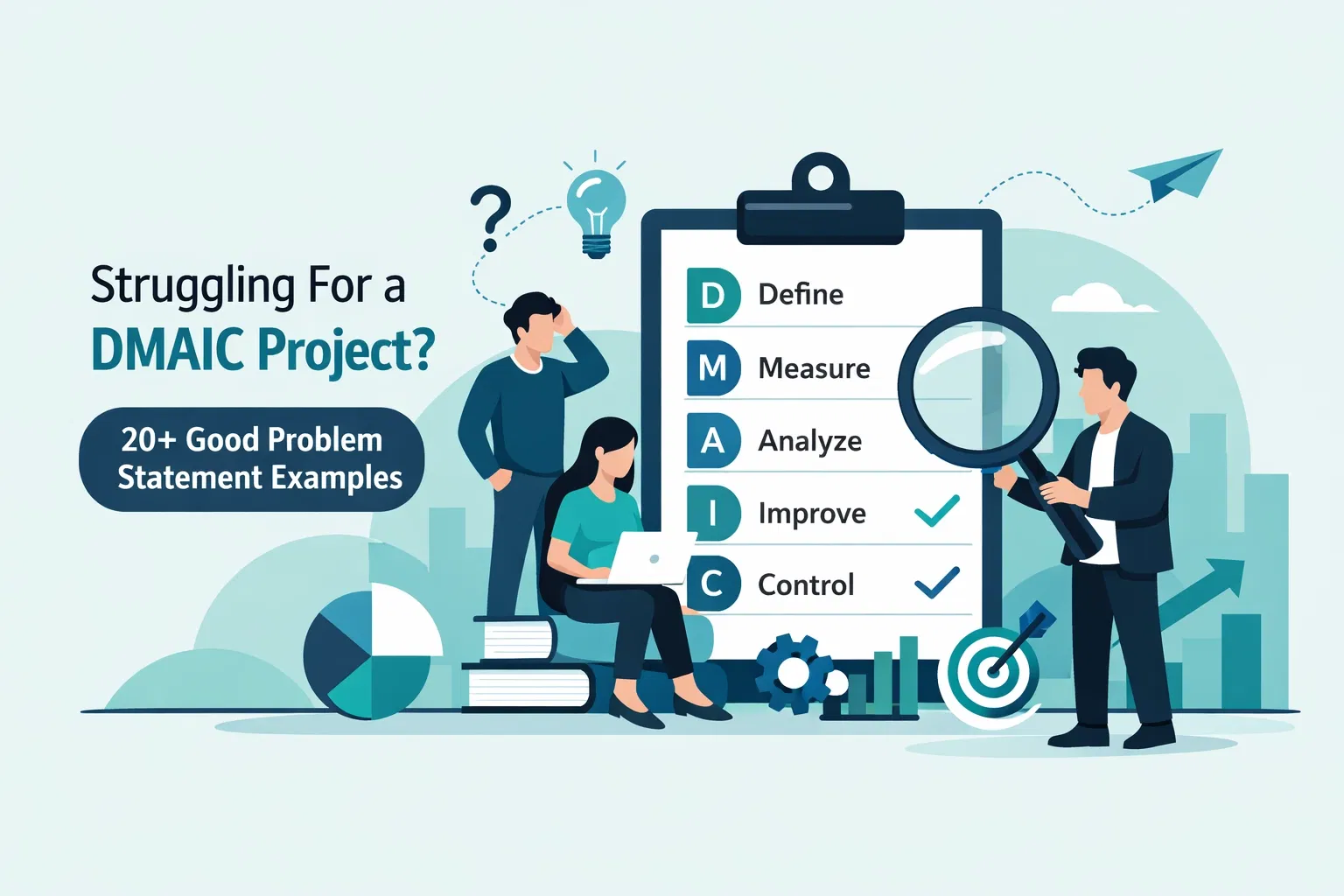
In the realm of operational excellence, the success of any Lean Six Sigma project is often determined before the first piece of data is even collected. The Define Phase serves as the foundation of the DMAIC (Define, Measure, Analyze, Improve, Control) methodology, and at its heart lies the problem statement. A poorly articulated problem leads to "scope creep," wasted resources, and solutions that fail to address the actual root cause. Conversely, a well-crafted statement provides the surgical precision required to drive meaningful organizational change.
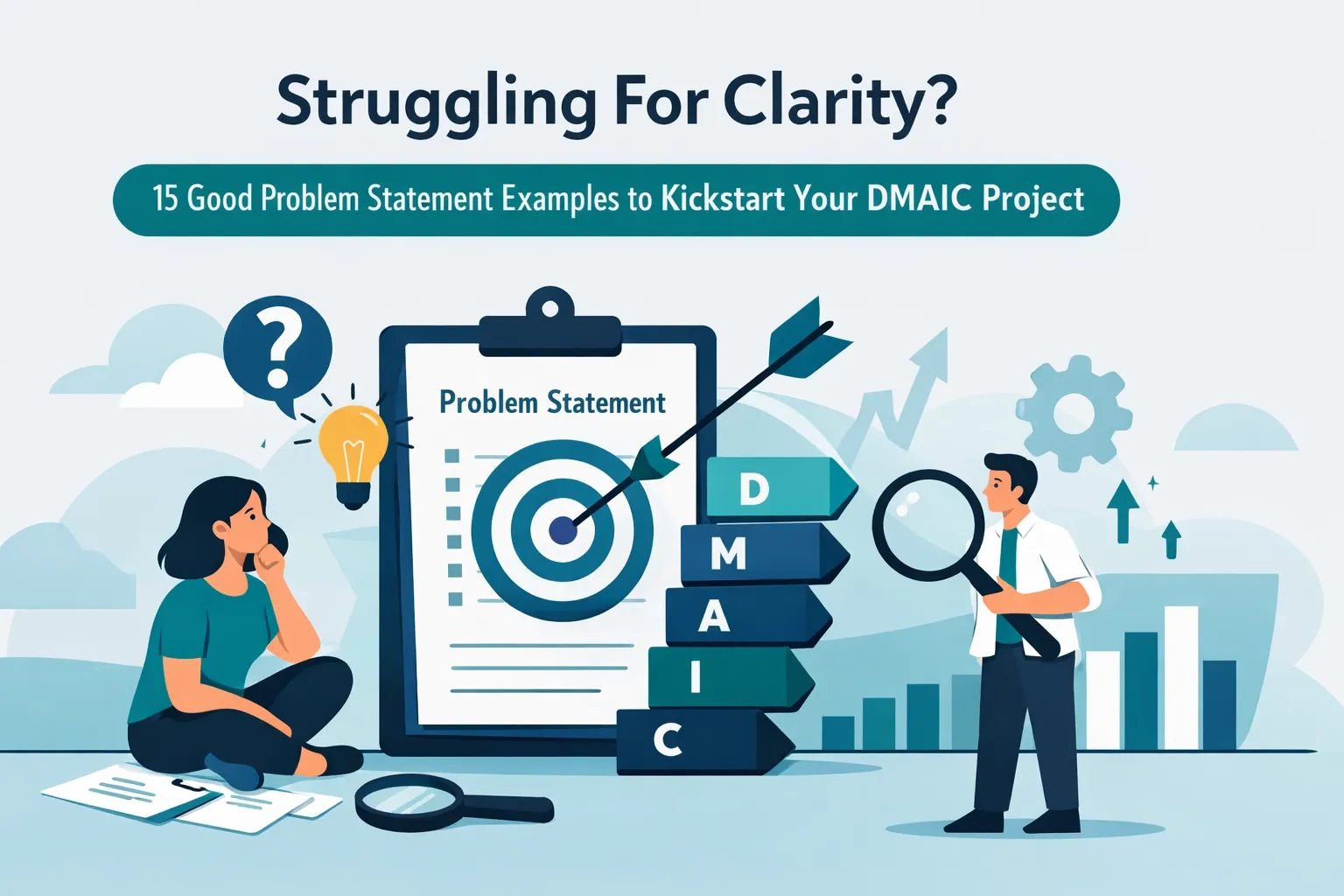
To fully appreciate the importance of this phase, one must recognize that a problem statement is not a description of a solution or a guess at a cause; it is a factual, data-driven declaration of a performance gap. This article provides a technical breakdown of what constitutes a high-quality statement and offers 15 good problem statement examples across various industries to guide your next project.
The Anatomy of a High-Quality Problem Statement
The fundamental purpose of a problem statement is to provide a clear focus for the project team and stakeholders. In the Lean Six Sigma framework, we often utilize the "SMART" criteria: Specific, Measurable, Actionable, Relevant, and Time-bound: but a truly professional statement goes deeper. It must answer the four W’s: What is the problem, Where is it occurring, When was it identified, and to What extent is it impacting the business?
A sophisticated problem statement must include the following five elements:
- The Ideal State: A brief mention of the standard or target performance.
- The Current Reality: The actual performance level as evidenced by data.
- The Gap: The quantified difference between the ideal and current states.
- The Timeline: The specific period during which this performance gap has been observed.
- The Impact: The measurable consequence, typically expressed in financial terms, safety risks, or customer satisfaction metrics.

Before proceeding to the examples, it is essential to conduct a Define Phase stakeholder analysis to ensure that the problem being defined aligns with the strategic priorities of the organization.
15 Good Problem Statement Examples by Industry
To assist practitioners in various sectors, the following examples illustrate how to quantify pain points into actionable project charters.
Healthcare: Enhancing Patient Outcomes and Efficiency
1. Emergency Department Wait Times
Over the last six months (July–December 2025), the average "door-to-doctor" wait time at St. Jude’s Hospital has increased to 78 minutes, compared to the national benchmark of 30 minutes. This 160% variance has resulted in a 12% increase in patients leaving without being seen (LWBS), representing an estimated annual revenue loss of $450,000.
2. Medication Administration Errors
In the surgical wing, medication administration errors have risen from 0.5% to 2.2% of all doses over the past two fiscal quarters. This exceeds the internal safety threshold of 0.2%, leading to an average of three additional bed-days per affected patient and increasing malpractice insurance premiums by $85,000 annually.
3. Patient Discharge Cycle Time
The discharge process for the geriatric ward currently averages 6.4 hours from the time the physician signs the order until the patient leaves the facility. The organizational target is 3 hours. This delay prevents the intake of new patients, resulting in an average of 4.5 bed-blocked hours per day and a reduction in overall facility throughput by 8%.
Logistics and Supply Chain: Optimizing the Flow
4. Cold Chain Temperature Deviations
During the Q3 2025 shipping cycle, 14% of pharmaceutical shipments via the Midwest corridor experienced temperature excursions exceeding the required 2°C to 8°C range. Identifying critical problems in temperature-controlled transport is vital, as these deviations resulted in the loss of $320,000 in spoiled inventory and three major compliance warnings from regulatory bodies.
5. Warehouse Picking Accuracy
The distribution center in Sydney currently reports a picking error rate of 4.2%, against a target of less than 1%. Over the past year, these errors have necessitated $120,000 in expedited shipping costs for corrected orders and a 15% decline in the Net Promoter Score (NPS) from key retail partners.
6. Supplier Lead Time Variability
Over the last 12 months, the lead time for Tier-1 electronic components has fluctuated between 14 and 55 days, with a standard deviation of 12 days. This inconsistency in supplier performance and lead time has forced the production line to halt for a cumulative 112 hours, resulting in $210,000 in unabsorbed overhead.
7. Inventory Carrying Costs
The annual inventory turnover rate for the automotive parts division has dropped from 6.5 to 4.2 over the last 18 months. This has led to $1.8 million in capital being tied up in slow-moving stock, exceeding the industry benchmark of 15% carrying cost by an additional $270,000 per year.

Finance and Banking: Compliance and Accuracy
8. Regulatory Reporting Errors
In the last four reporting cycles, the compliance department identified an average of 22 data integrity errors per submission. In the context of banking compliance and regulatory reporting, these inaccuracies have led to $50,000 in monthly fines and an increased audit frequency by the central bank.
9. Accounts Payable Cycle Time
The accounts payable department currently processes invoices with an average cycle time of 21 days, exceeding the contractual target of 10 days. This delay has resulted in the loss of $45,000 in early-payment discounts and triggered $12,000 in late-payment penalties in the previous quarter.
10. Transaction Failure Rate
For the period of January to March 2026, the digital payment gateway experienced a 3.5% transaction failure rate due to system timeouts. Solving transaction failures and delays is critical, as this performance gap resulted in 12,000 abandoned carts and an estimated $1.1 million in lost revenue.
11. Loan Application Processing Throughput
The mortgage department takes an average of 45 days to move an application from submission to approval, compared to the industry average of 28 days. This 60% lag has led to a 20% application withdrawal rate, as customers move to competitors with faster processing times.
Manufacturing and General Operations: Quality and Productivity
12. Manufacturing Rework Rates
Line 4 of the assembly plant is currently producing defects at a rate of 850 parts per million (PPM), while the quality target is 200 PPM. This necessitates a measure phase analysis of rework and scrap, as the current rework levels cost the company $18,000 per week in additional labor and material.
13. Hybrid Workforce Productivity
Since transitioning to a hybrid model 12 months ago, the software development team has seen a 22% decrease in "story points" completed per sprint. Understanding how DMAIC can transform hybrid workforce productivity is essential, as this decline has delayed the release of three major product features, impacting projected annual revenue by $600,000.
14. Customer Service First-Call Resolution (FCR)
The technical support center’s FCR rate has declined from 82% to 68% over the last three quarters. This increase in repeat calls has raised the cost-per-contact by $4.50, totaling an unbudgeted operational expense of $32,000 per month.
15. Procurement Batch Size Inefficiencies
Current procurement protocols utilize a fixed batch size of 5,000 units, regardless of demand volatility. This lack of batch size reduction has resulted in a 30% increase in warehouse "dead stock" over the last year, costing the organization $140,000 in write-offs.

Why These are "Good" Problem Statement Examples
The examples provided above are effective because they avoid the common traps that plague novice Green Belts and Black Belts. To ensure your own statements meet this professional standard, observe these rules:
- Avoid the "Solution" Trap: A bad statement would say, "We need to buy new software to fix wait times." A good problem statement simply states the wait time is 78 minutes.
- Focus on the "What," not the "Why": The Analyze Phase success criteria are meant for finding root causes. The problem statement should not speculate that "poor training" is the cause.
- Use Quantifiable Metrics: Phrases like "too high," "unacceptable," or "slow" are subjective. Use "22%," "$450,000," or "14 days" to provide an objective baseline.
Moving Beyond the Problem Statement
Once a problem is clearly defined, the project moves into the Measure and Analyze phases. This often involves identifying process constraints and chokepoints to determine where the flow is being restricted. Without a solid problem statement, these subsequent steps become a "fishing expedition" rather than a targeted investigation.
The ability to distill complex organizational pain into a single, data-rich paragraph is a hallmark of a skilled Lean Six Sigma practitioner. It aligns the executive leadership with the project team and ensures that the eventual solution provides a high return on investment.
If you are ready to master the art of the Define Phase and lead high-impact projects that save your organization thousands, explore our globally recognized certification programs. Start your journey toward operational excellence today by enrolling in our Lean Six Sigma training.