So, you’re eyeing that Six Sigma Yellow Belt certification? Smart move. Whether you’re looking to boost your resume or you’ve been tapped by your manager to help lead some process improvements, getting your Yellow Belt is a fantastic entry point into the world of Lean Six Sigma.
But here’s the thing: while the Yellow Belt isn’t as math-heavy as the Black Belt, it’s also not a walk in the park. I see a lot of students go into the exam thinking they can just "wing it" because they’ve sat through a couple of meetings about "efficiency." Then, they see the first question about a Pareto Chart or FMEA and realize they’re in over their heads.
That’s where a good practice test comes in. Before you invest in a full course, you can test your knowledge at no cost with our Free Lean Six Sigma Yellow Belt Practice Exam. It is designed to help you benchmark your current understanding, identify knowledge gaps, and build confidence—for free—before signing up for the full certification training.
At Lean 6 Sigma Hub, we’ve helped thousands of students navigate this journey. To help you get ready, I’ve put together the 10 most important things you need to know before you sit for that exam.
1. Not All Exams are Created Equal
The first thing you’ll notice when searching for a Six Sigma Yellow Belt practice test is that there are different certification bodies. The big ones are ASQ (American Society for Quality) and IASSC (International Association for Six Sigma Certification), and then there's the CSSC (Council for Six Sigma Certification).
Each has its own format. For instance, the ASQ exam is typically an open-book, 2-hour and 18-minute session with about 90 multiple-choice questions. Meanwhile, others might be shorter but closed-book. At Lean 6 Sigma Hub, our training aligns with the CSSC standards, ensuring you get a globally recognized certification that focuses on practical, real-world application.
2. The Magic Number is 70%
Most practice tests and official exams require a passing score of 70% or higher. While that might sound like a "C" grade in high school, don't let it fool you. The questions are designed to test your application of the tools, not just your ability to memorize definitions. If you’re scoring a 72% on your practice tests, you’re cutting it too close. You should aim for a consistent 85% in your practice sessions to account for "exam-day nerves."
3. Master the DMAIC Roadmap
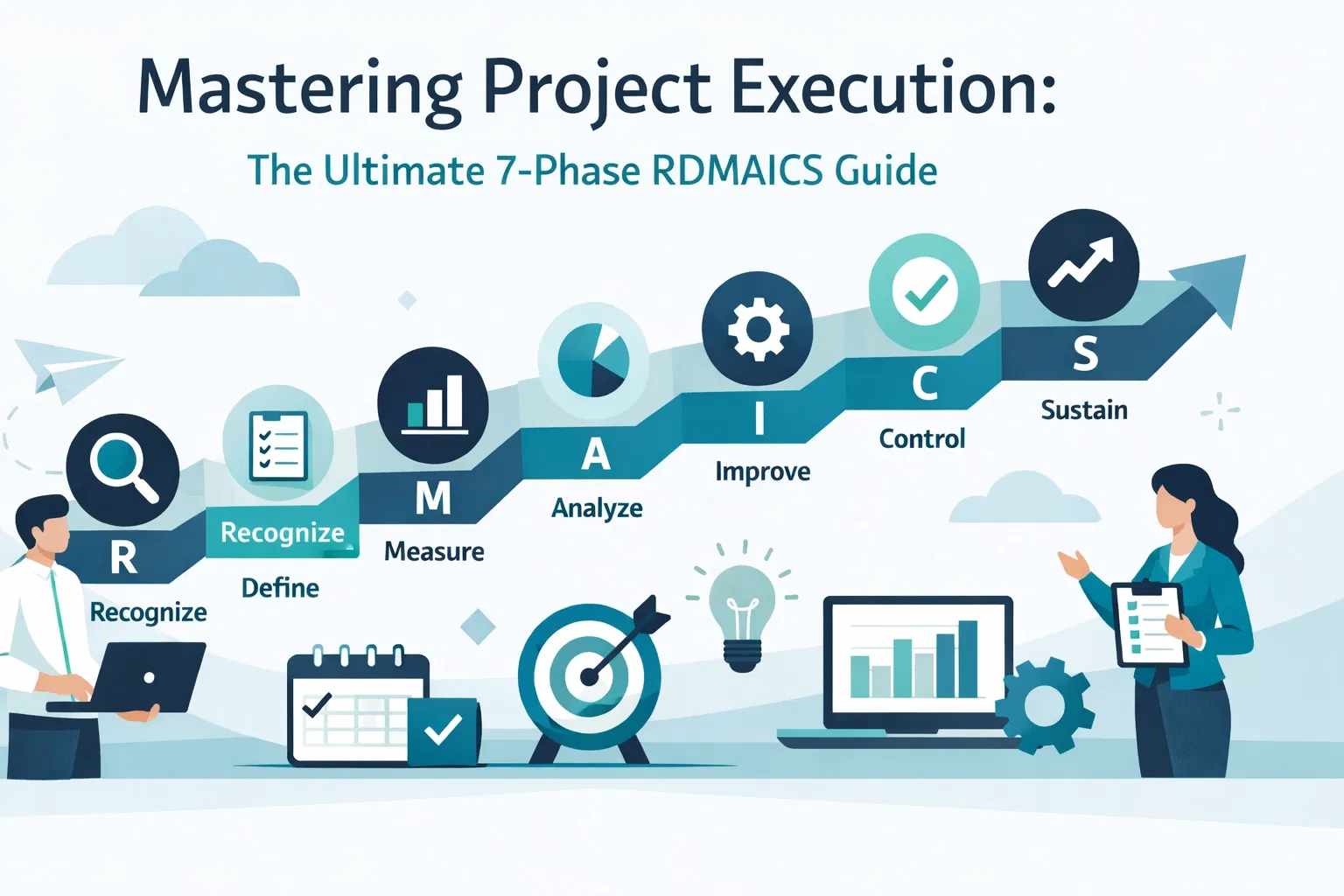
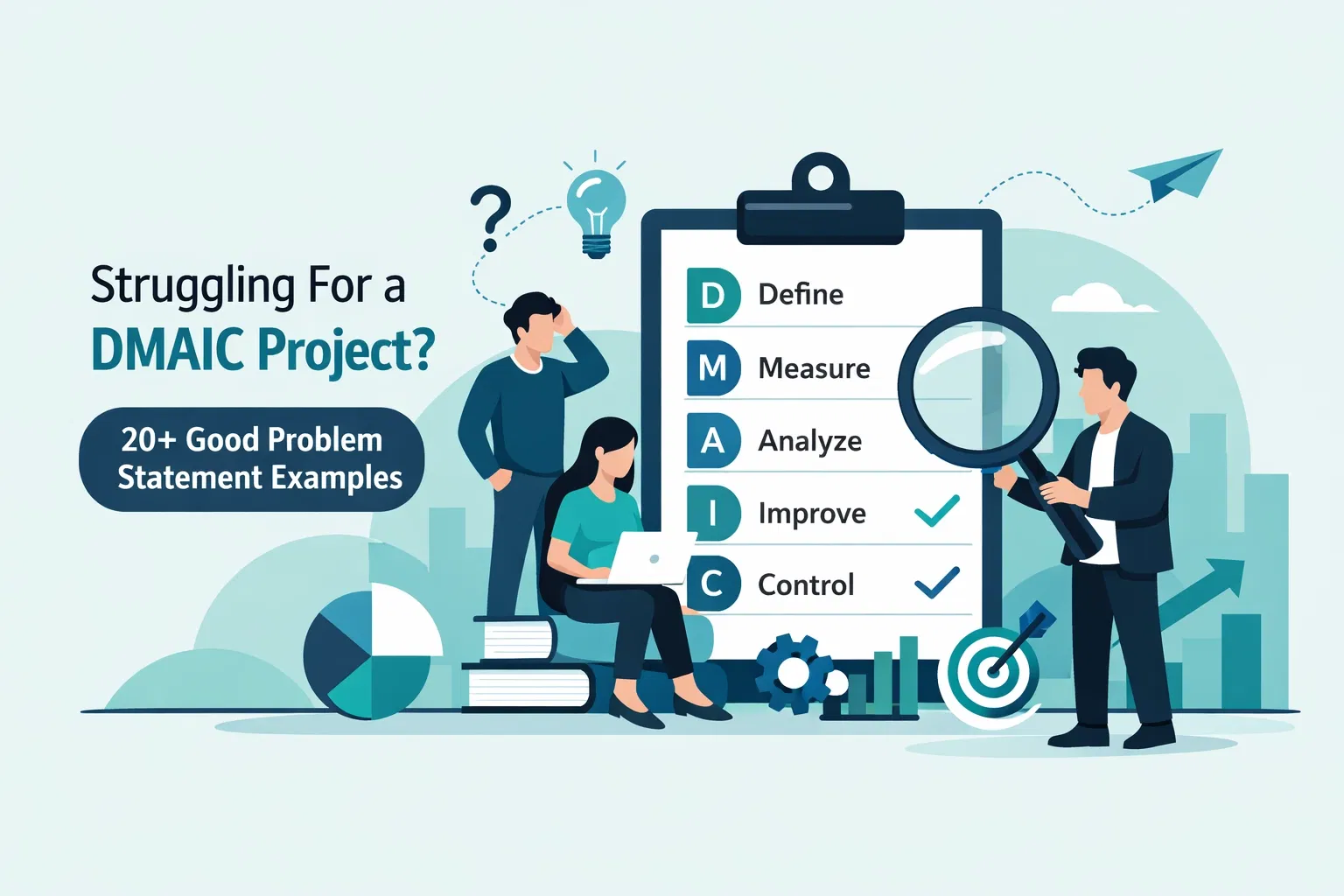
If you don’t know DMAIC (Define, Measure, Analyze, Improve, Control) like the back of your hand, you aren’t ready for the test. This is the skeleton of everything we do in Six Sigma.
- Define: What is the problem?
- Measure: How big is the problem?
- Analyze: Why is it happening?
- Improve: How do we fix it?
- Control: How do we keep it fixed?
In a practice test, you’ll likely see questions asking which tool belongs in which phase. For example, knowing that a Project Charter belongs in the "Define" phase is a classic Yellow Belt question.

4. Key Tools You’ll Actually Be Tested On
You don’t need to be a statistical genius for the Yellow Belt, but you do need to know your tools. Expect to see questions on:
- Pareto Charts: The 80/20 rule.
- 5S: Sort, Set in order, Shine, Standardize, Sustain.
- VSM (Value Stream Mapping): Identifying waste in a process.
- FMEA (Failure Mode and Effects Analysis): Predicting what might go wrong.
- Error Proofing: Also known as Poka-Yoke. If you want to dive deeper into this before your test, check out our guide on 10 error-proofing techniques.
5. Beware the "Common Pitfalls"
Why do people fail the Yellow Belt exam? Usually, it’s one of three things:
- Overthinking: Six Sigma is about simplicity. Don't look for the most complex statistical answer if a simple "Fishbone Diagram" is the right tool for the job.
- Skipping the "Control" Phase: Students love the "Improve" phase because that’s where the "fixing" happens. But the exam puts a lot of weight on "Control": making sure the improvements actually stick.
- Terminology Confusion: Is it a CTQ (Critical to Quality) or a VOC (Voice of the Customer)? Knowing the difference is vital.
6. The Value of Self-Paced Learning
One of the biggest advantages of modern certification is the ability to learn at your own speed. If you’re working a full-time job, you probably can’t disappear into a classroom for a week.
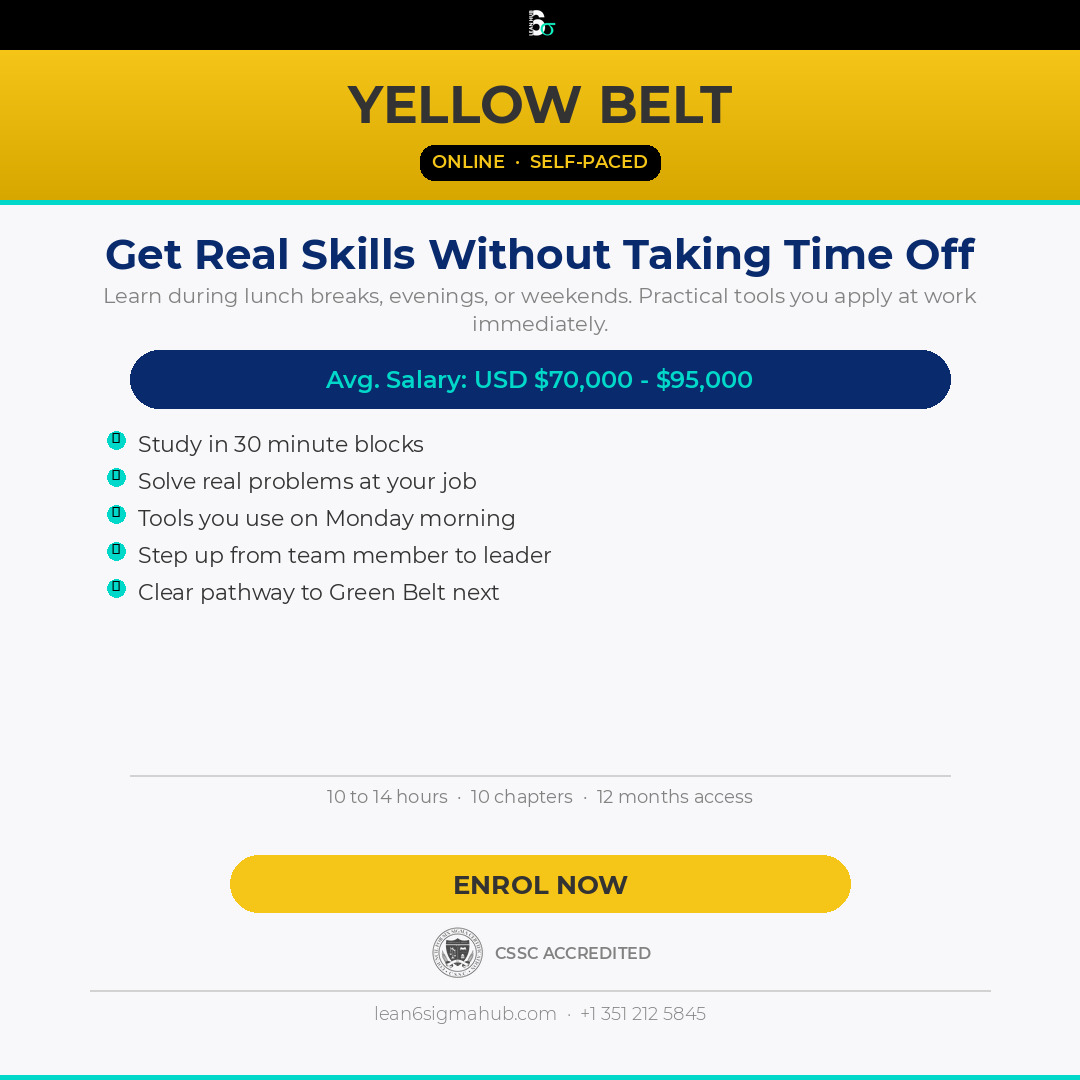
Our Lean Six Sigma Yellow Belt online training is designed to be flexible. You can spend 30 minutes on a lunch break learning about Lean principles and then take a quick practice quiz to lock that knowledge in. This "digestible" learning style often leads to much higher retention rates than cramming.
7. Performance Feedback is Your Best Friend
Taking a practice test isn't just about seeing if you passed; it's about seeing why you missed the questions you did. Good practice platforms provide detailed performance reports. If you find you’re getting 90% of the "Measure" questions right but only 40% of the "Analyze" questions right, you know exactly where to spend your study time. Don’t just take the test once and walk away. Analyze your gaps!
8. Don’t Ignore the "Lean" in Lean Six Sigma
While "Six Sigma" focuses on reducing variation, "Lean" focuses on removing waste. Most Yellow Belt exams are a hybrid of both. You’ll need to understand the 8 Wastes (DOWNTIME: Defects, Overproduction, Waiting, Non-utilized talent, Transportation, Inventory, Motion, and Extra-processing). A good practice test will grill you on these. If you can’t identify "Motion" waste versus "Transportation" waste, you’ve got some reading to do.
9. Use Flashcards for Terminology
Let’s be honest: Six Sigma has a lot of jargon. From "Gemba Walks" to "Kaikaku," it can feel like you're learning a new language. I always recommend my students use Six Sigma flashcards alongside their practice tests. It’s the fastest way to build that mental muscle memory so you don't freeze up when you see an acronym you don't recognize during the real exam.

10. Time Management is a Skill
Even if it's an open-book exam, you don't have time to look up every single answer. The clock is your biggest enemy. If you have 90 questions and 138 minutes, that’s roughly 1.5 minutes per question.
Practice tests help you get your "pacing" right. A common strategy we teach at Lean 6 Sigma Hub is to go through the whole test and answer the "easy" ones first. Save the complex calculations or the ones you need to look up for the second pass. If you get stuck on question five for ten minutes, you’ve already lost the battle.
Ready to Start?
Preparing for your Yellow Belt doesn't have to be a stressful experience. If you use the right tools: like comprehensive practice tests, flashcards, and a solid training program: you’ll walk into that exam feeling confident.
At Lean 6 Sigma Hub, we pride ourselves on making this process as straightforward as possible. Our Yellow Belt course is CSSC-accredited and designed to get you certified in about 10–14 hours of study time. Plus, it looks great on a resume and can lead to a significant salary bump (average ranges are often between $70,000 and $95,000!).
Don't leave your certification to chance. Start your journey with our Lean Six Sigma Yellow Belt online training today and get the practice you need to pass the first time!

Summary Checklist for Exam Day:
- Check your internet connection (if taking it online).
- Have your materials ready (if it's open-book).
- Stay calm: you’ve done the practice tests, you know this stuff!
- Watch the clock: don’t get bogged down on one question.
- Think like a Green Belt: always look for the root cause of the question!
Good luck! You've got this. If you need anything else, feel free to explore the rest of Lean 6 Sigma Hub for more tips, templates, and calculators to help you succeed.