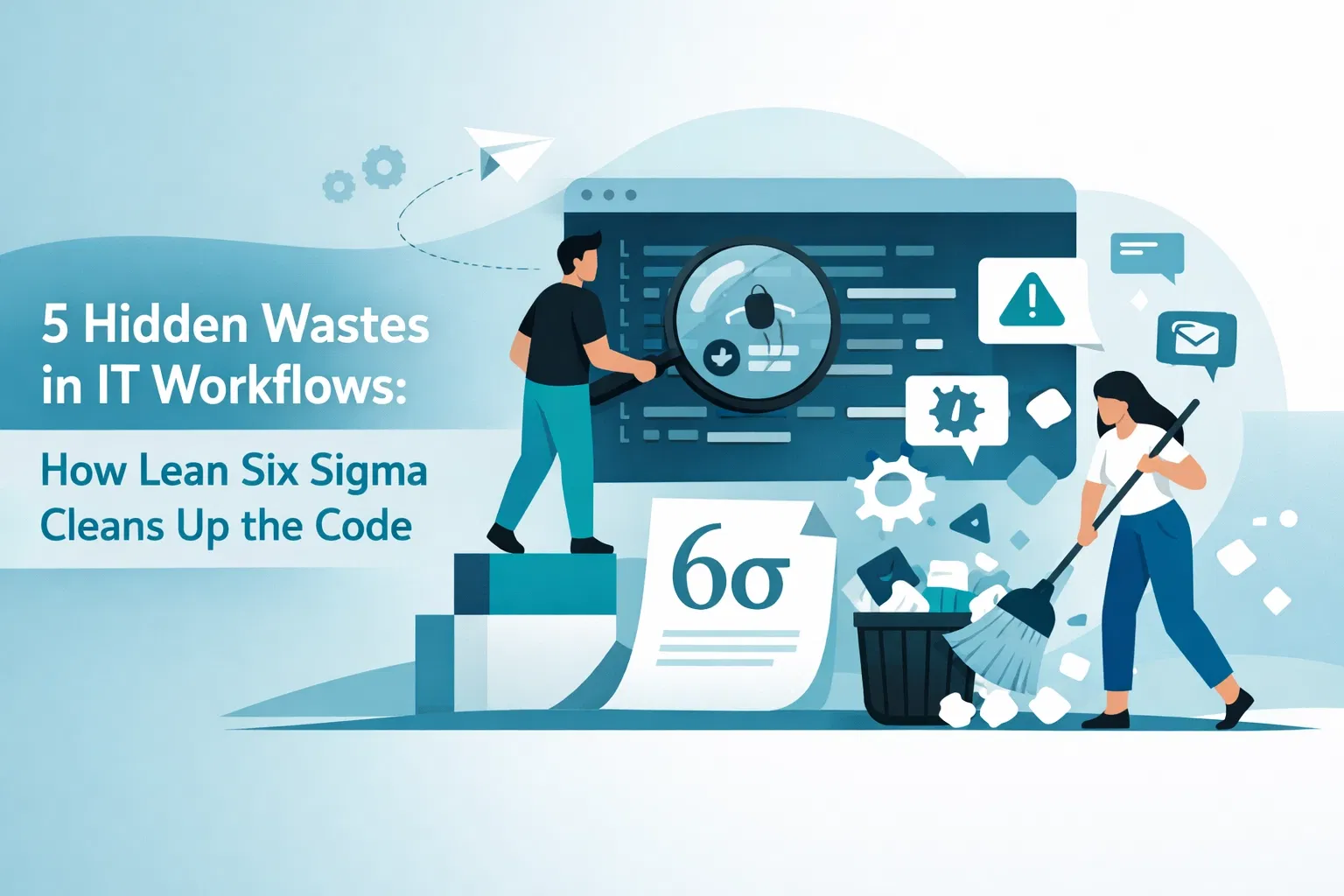
In the realm of modern enterprise, the efficiency of Information Technology (IT) departments often dictates the pace of the entire organization. However, many IT leaders struggle with a paradox: despite employing highly skilled developers and using sophisticated tools, projects often fall behind schedule, budgets balloon, and quality remains inconsistent. The fundamental purpose of applying Lean Six Sigma in this environment is to shift the focus from "working harder" to "working smarter" by identifying and eliminating non-value-adding activities: commonly known as waste.
While Lean Six Sigma originated on the factory floor of Toyota and Motorola, its core principles are remarkably effective when applied to the digital factory of software development and IT operations. In a world where only about 10 percent of process cycle time is considered productive work, the opportunities for improvement are immense. To fully appreciate how these methodologies can transform a tech stack, one must first learn to see the "invisible" waste lurking within the code and the workflows surrounding it.
The Digital "DOWNTIME": Redefining Waste for IT
In traditional Lean methodology, waste is categorized into eight types, often remembered by the acronym DOWNTIME. In IT, these wastes don't look like piles of scrap metal; they look like redundant lines of code, stagnant Jira tickets, and context-switching developers. By pursuing a lean six sigma certification, professionals gain the analytical lens required to spot these inefficiencies.
Below, we explore the five most prevalent hidden wastes in IT workflows and how Lean Six Sigma provides the framework to eradicate them.
1. Over-Processing: The "Gold Plating" Trap
Over-processing occurs when more work is performed on a task than is required by the customer or the end-user. In software development, this is frequently referred to as "gold plating": adding bells and whistles to a feature that the user never requested and will likely never use.
From a technical perspective, over-processing manifests as:
- Writing complex code for a simple problem.
- Over-engineering infrastructure for a low-traffic application.
- Conducting excessive meetings to discuss minor UI changes.
To mitigate this, IT teams utilize the Critical to Quality (CTQ) tree. By using tools like the Voice of Customer Priority Matrix Calculator, teams can align their development efforts strictly with what the customer values. If a feature doesn't move the needle on a CTQ metric, it is, by definition, waste.

2. Defects: The High Cost of Technical Debt
In IT, a defect is any piece of work that requires rework. This includes bugs found in production, failed deployments, or even poorly documented code that needs to be deciphered later. The fundamental problem with defects in IT is the "Rule of 10": a bug that costs $100 to fix during the requirements phase can cost $1,000 during development and $10,000 or more once it reaches the customer.
Lean Six Sigma addresses defects through rigorous Root Cause Analysis (RCA) and the implementation of Poka-Yoke (mistake-proofing). For instance, automated testing and continuous integration (CI) pipelines act as digital mistake-proofing, preventing defective code from progressing through the workflow.
Standardizing these processes is a core component of lean six sigma training. When developers understand how to measure the "Sigma level" of their deployment process, they can move from reactive firefighting to proactive quality assurance.
3. Waiting: The Silent Productivity Killer
Perhaps the most pervasive waste in IT is waiting. In many organizations, developers spend a significant portion of their day waiting for:
- Code reviews from senior engineers.
- Approval from the Change Advisory Board (CAB).
- Environment provisioning from the DevOps team.
- Clarification on vague requirements.
These delays create "dead time" where no value is being added to the product. To identify these bottlenecks, Lean practitioners use Value Stream Mapping (VSM). By documenting the flow of a feature from "Idea" to "Production," teams often find that while the actual coding took 4 hours, the total lead time was 4 weeks due to handoff delays.
For a deeper dive into optimizing these transitions, refer to our complete guide to the Define phase and handoff points. Reducing waiting time is often the fastest way to increase the velocity of an IT department without hiring additional staff.

4. Inventory: The Burden of Unfinished Work
In a manufacturing plant, inventory is easy to see: it’s the crates of parts sitting on the floor. In IT, inventory is "Work in Progress" (WIP). This includes half-finished features, code waiting to be merged, and long backlogs of "high priority" tickets that haven't been touched in months.
High levels of WIP are dangerous for several reasons:
- Delayed ROI: A feature only provides value once it is in the hands of the user. Unfinished code is an investment with zero return.
- Increased Complexity: The more unfinished code you have, the harder it is to integrate new changes, leading to merge conflicts and further defects.
- Hidden Problems: Excessive inventory masks the root causes of delays in the process.
Lean Six Sigma encourages the use of Kanban systems to limit WIP and ensure a smooth flow of work. By using a SIPOC Complexity Score Calculator, IT managers can evaluate the intricacy of their processes and determine if their current inventory levels are sustainable or if they are choking the system.
5. Motion and Transportation: Digital Context Switching
While "transportation" in Lean usually refers to moving physical goods, in IT it refers to the movement of data and the "motion" of people switching between tasks.
Transportation Waste in IT looks like:
- Moving data manually between incompatible software systems.
- Bouncing a ticket between multiple departments because nobody "owns" the resolution.
Motion Waste looks like:
- Context switching: Research shows it can take a developer up to 20 minutes to regain deep focus after a distraction.
- Navigating through poorly designed internal tools or hunting for information in fragmented documentation.
Lean Six Sigma training teaches professionals how to optimize the "workspace": whether that's a physical office or a digital IDE: to minimize unnecessary motion. Standardizing communication protocols and centralizing documentation are simple yet powerful ways to reclaim lost hours.

Implementing Lean Six Sigma in Your IT Workflow
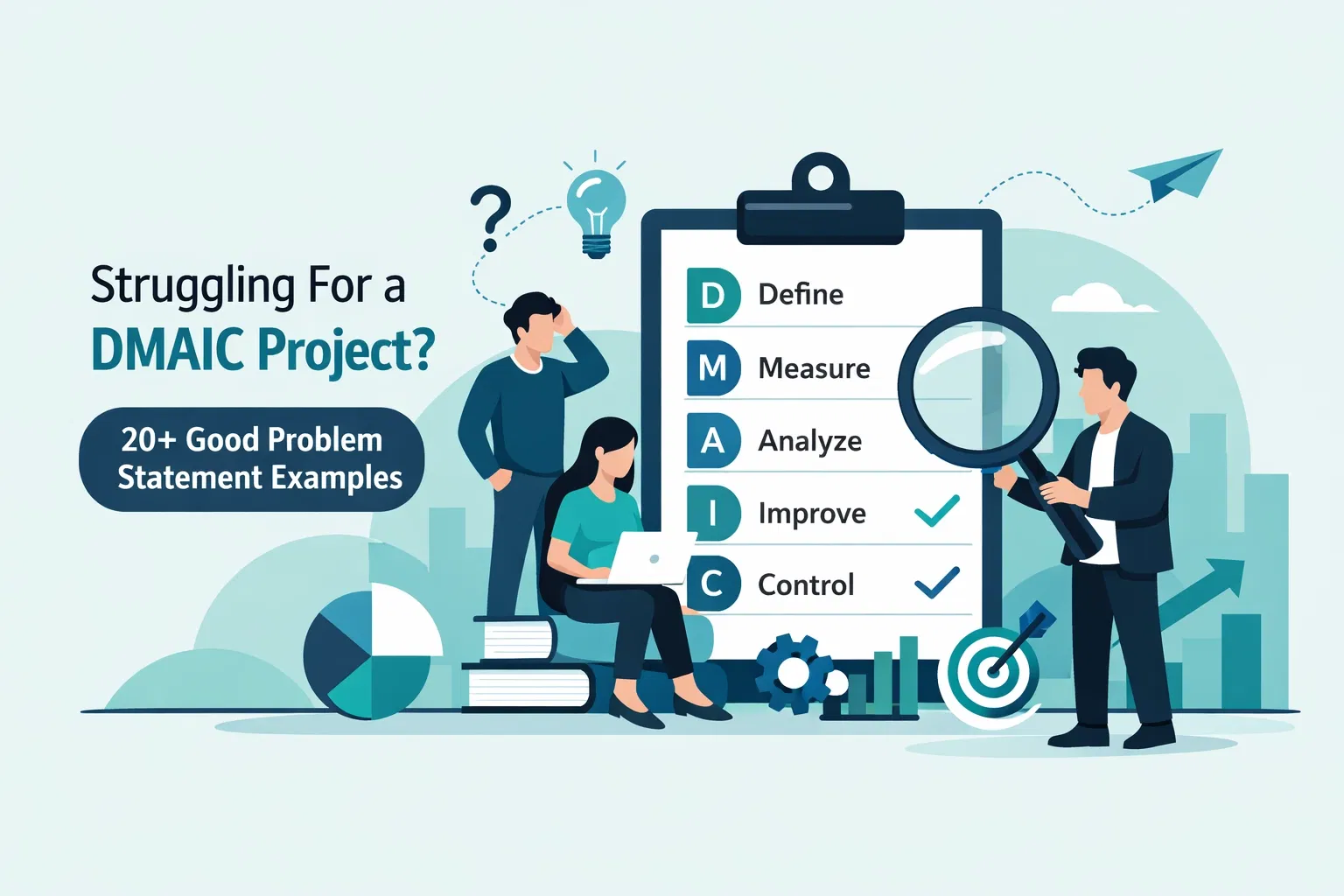
To successfully clean up the code and the processes surrounding it, IT departments should follow the DMAIC (Define, Measure, Analyze, Improve, Control) framework.
Define and Measure
Start by defining what success looks like. Is it faster deployment frequency? Lower change failure rates? Use a Project Charter ROI Calculator to estimate the financial impact of reducing waste in a specific workflow. Once defined, create a Data Collection Plan to gather baseline metrics on current cycle times and defect rates.
Analyze and Improve
During the analysis phase, use tools like the 5 Whys to understand why defects or waiting times are occurring. Improvement might involve automating a manual testing process or restructuring the team into cross-functional units to eliminate handoff delays.
If you are just starting, exploring a Lean Six Sigma hypothetical project can provide a roadmap for how these data-driven decisions play out in a simulated IT environment.
Control
The "Control" phase ensures that the improvements stick. In IT, this often means establishing automated monitoring and dashboarding. If the deployment time starts to creep up again, the system should alert the team immediately.
The Path to Mastery: Training and Certification
The complexities of modern IT infrastructure require more than just "common sense" to manage; they require a structured, scientific approach to process improvement. Whether you are a software engineer, a project manager, or a CTO, obtaining a lean six sigma certification provides you with a globally recognized toolkit for driving efficiency.
At Lean 6 Sigma Hub, we offer specialized training levels tailored to your career goals:
- White Belt: Perfect for understanding the basics and the language of Lean. Get started today with our Free White Belt Course.
- Yellow Belt: Ideal for team members who want to participate in improvement projects. Test your knowledge with a Yellow Belt practice exam.
- Green Belt: For those who want to lead smaller optimization projects within their departments.
- Black Belt: For leaders aiming to transform entire organizational workflows and mentor others. Try our Black Belt sample project to see the level of detail involved.

Final Thoughts
Waste in IT is often invisible, but its impact on the bottom line is very real. By identifying over-processing, defects, waiting, inventory, and motion, IT leaders can significantly improve their delivery speed and product quality. Lean Six Sigma isn't just for manufacturing; it's the secret weapon for any tech-driven organization looking to excel in 2026 and beyond.
Empower your team and accelerate your career by enrolling in a professional Lean Six Sigma certification program today. Visit Lean 6 Sigma Hub to begin your journey from chaos to control.