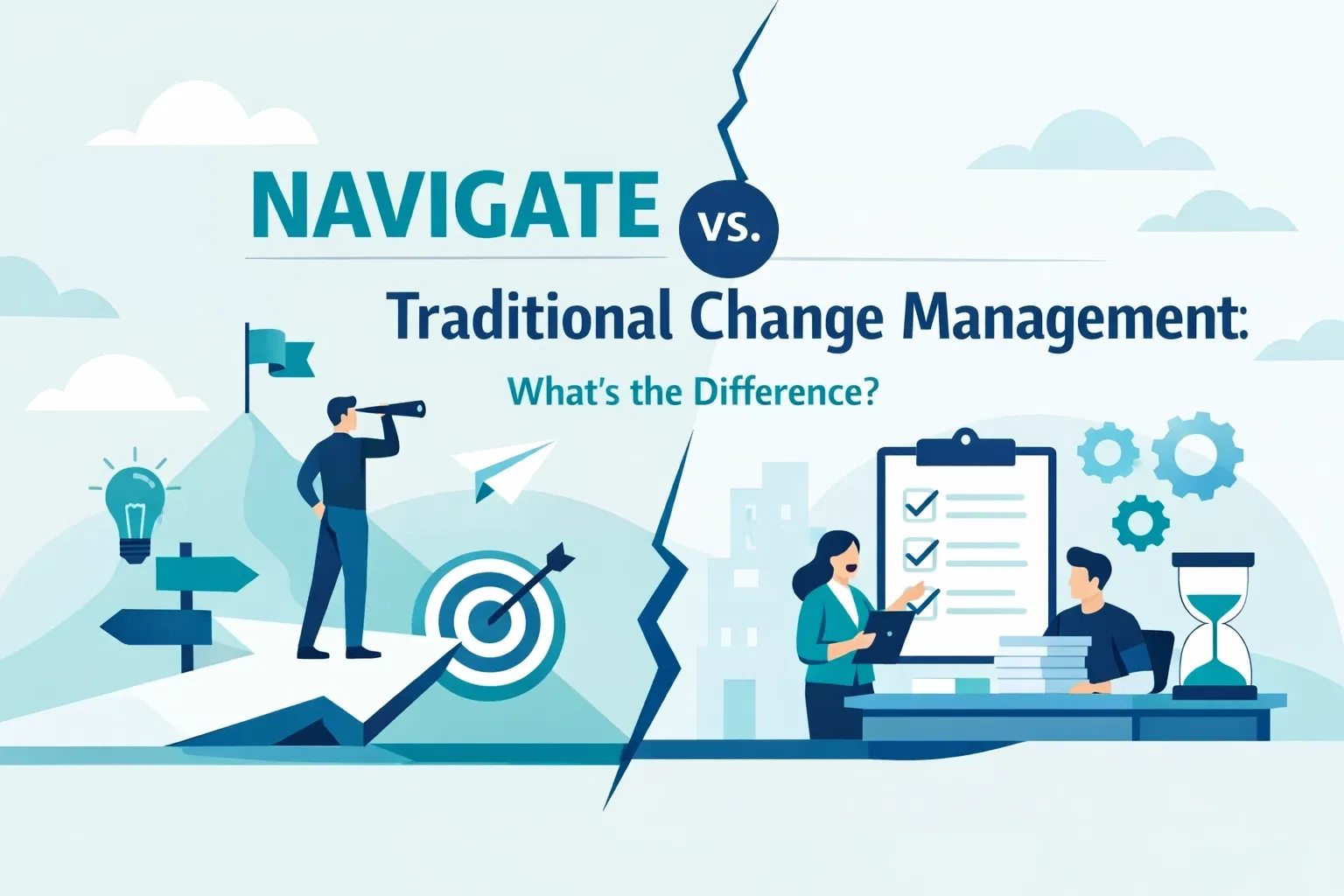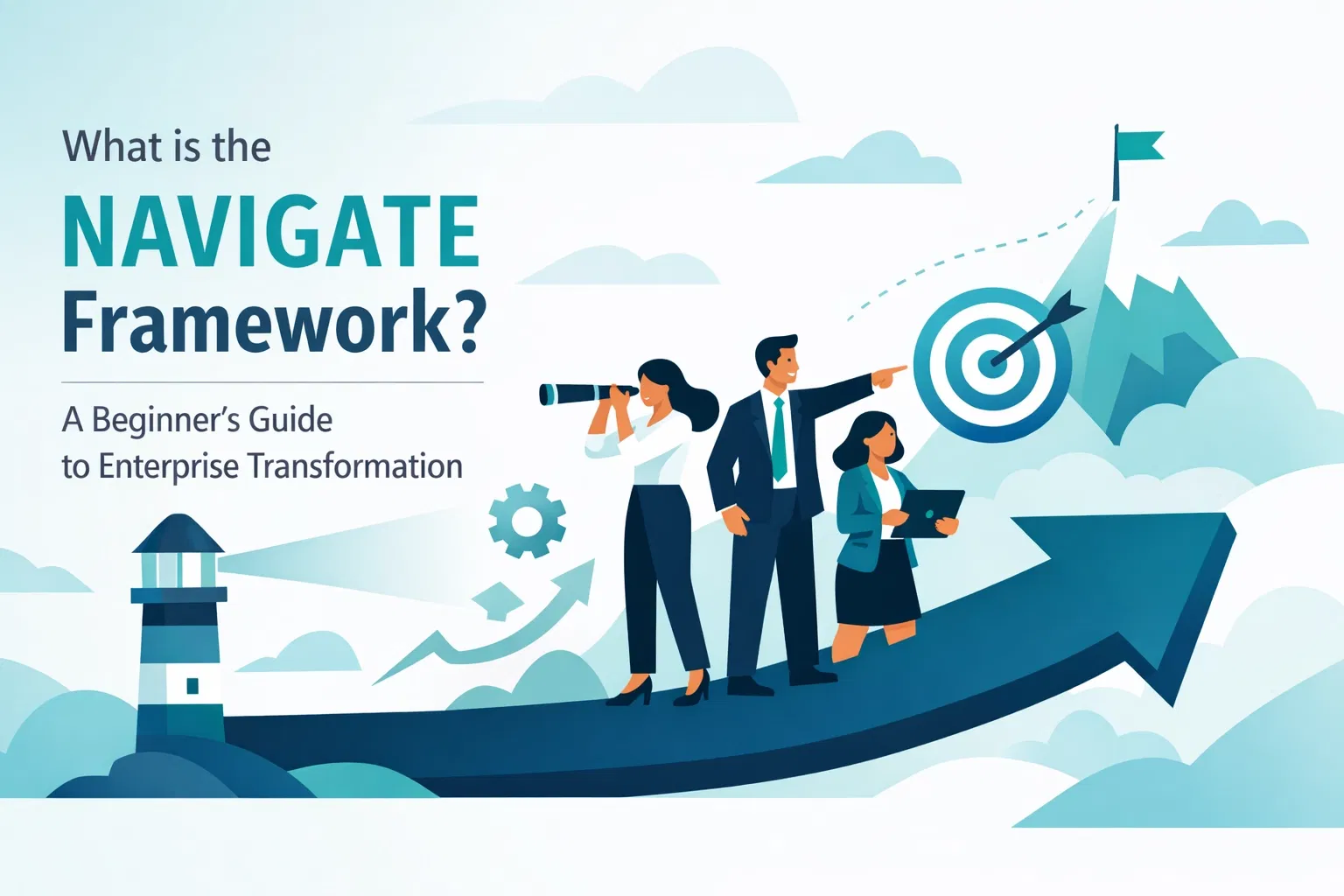
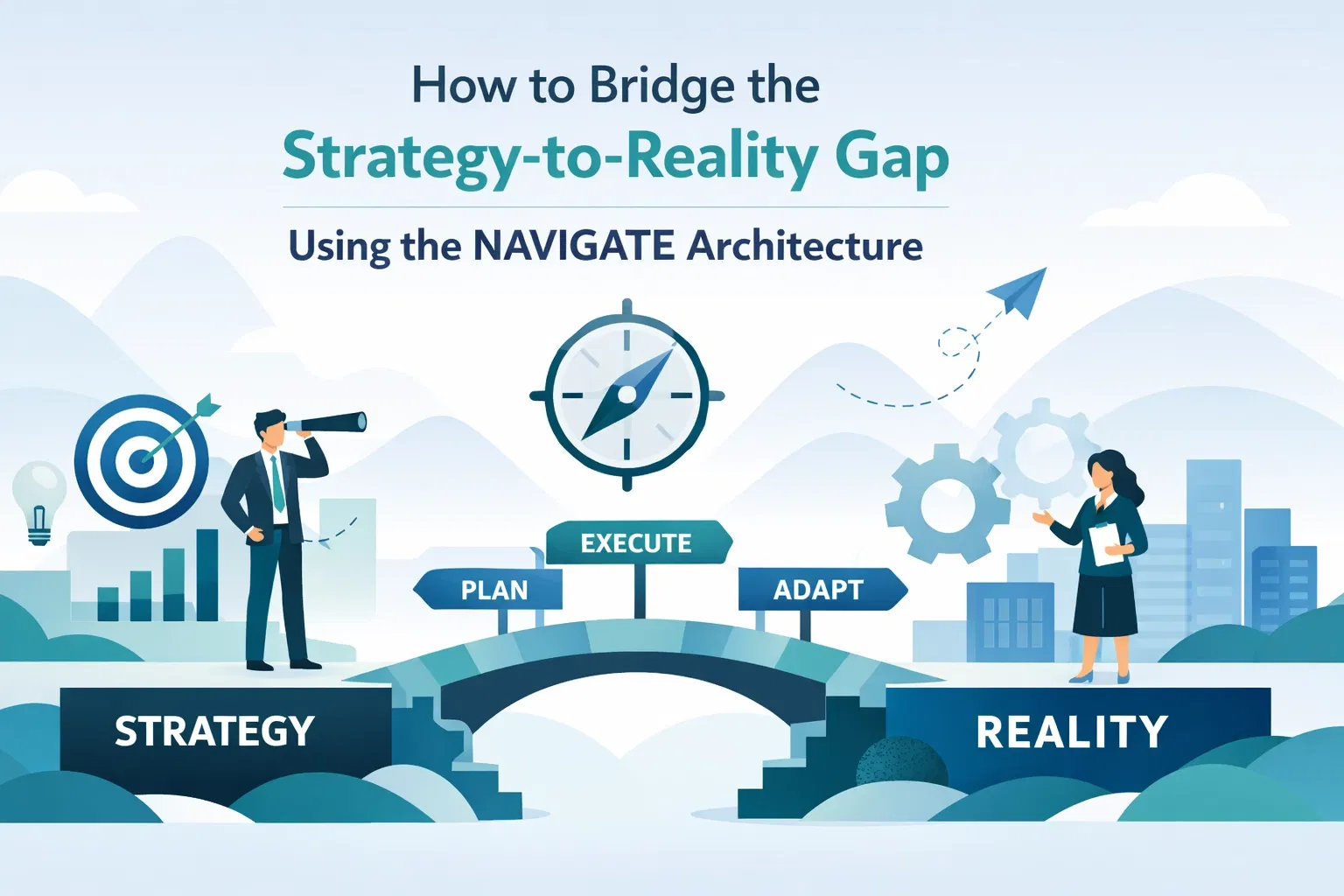
In the realm of enterprise transformation, a recurring and costly phenomenon persists: the strategy-to-reality gap. Organizations frequently invest millions in high-level strategic planning, only to witness those visions dissipate before they reach the operational floor. Research suggests that a significant percentage of strategic initiatives fail not due to poor intent, but due to a lack of structural "connective tissue" between the boardroom and the front line.
To fully appreciate the magnitude of this challenge, one must recognize that a strategy is merely a hypothesis until it is executed through operational processes. At Lean 6 Sigma Hub, we address this systemic failure through the NAVIGATE Architecture. This framework serves as the definitive roadmap for translating strategic intent into measurable, sustainable reality.
The Symphony Orchestra: An Analogy for Enterprise Alignment
The fundamental purpose of NAVIGATE can be understood through the analogy of a symphony orchestra. In this metaphor, the CEO and executive leadership represent the conductor. The Strategy is the musical score: a masterpiece of intent and harmony. However, without a shared methodology, the musicians (the various departments such as Finance, Operations, IT, and HR) may all be playing from different versions of the sheet music, in different tempos, or even in different keys.
A conductor can wave their baton with immense passion, but if the woodwinds are playing a different composition than the strings, the result is cacophony, not music. The NAVIGATE Architecture functions as the master orchestration layer. It ensures that every "player" in the organization is synchronized, following the same rhythmic patterns and technical cues. It provides the architectural rigor required to ensure that the strategic "melody" is heard clearly by the customer.
The Technical Foundation: Why Strategies Fail
Before exploring the solution, we must examine why the strategy-to-execution bridge often collapses. Most organizations suffer from "methodological silos." Lean teams focus on waste, Six Sigma teams focus on variation, and Agile teams focus on speed. While each is valuable, they often operate in isolation.
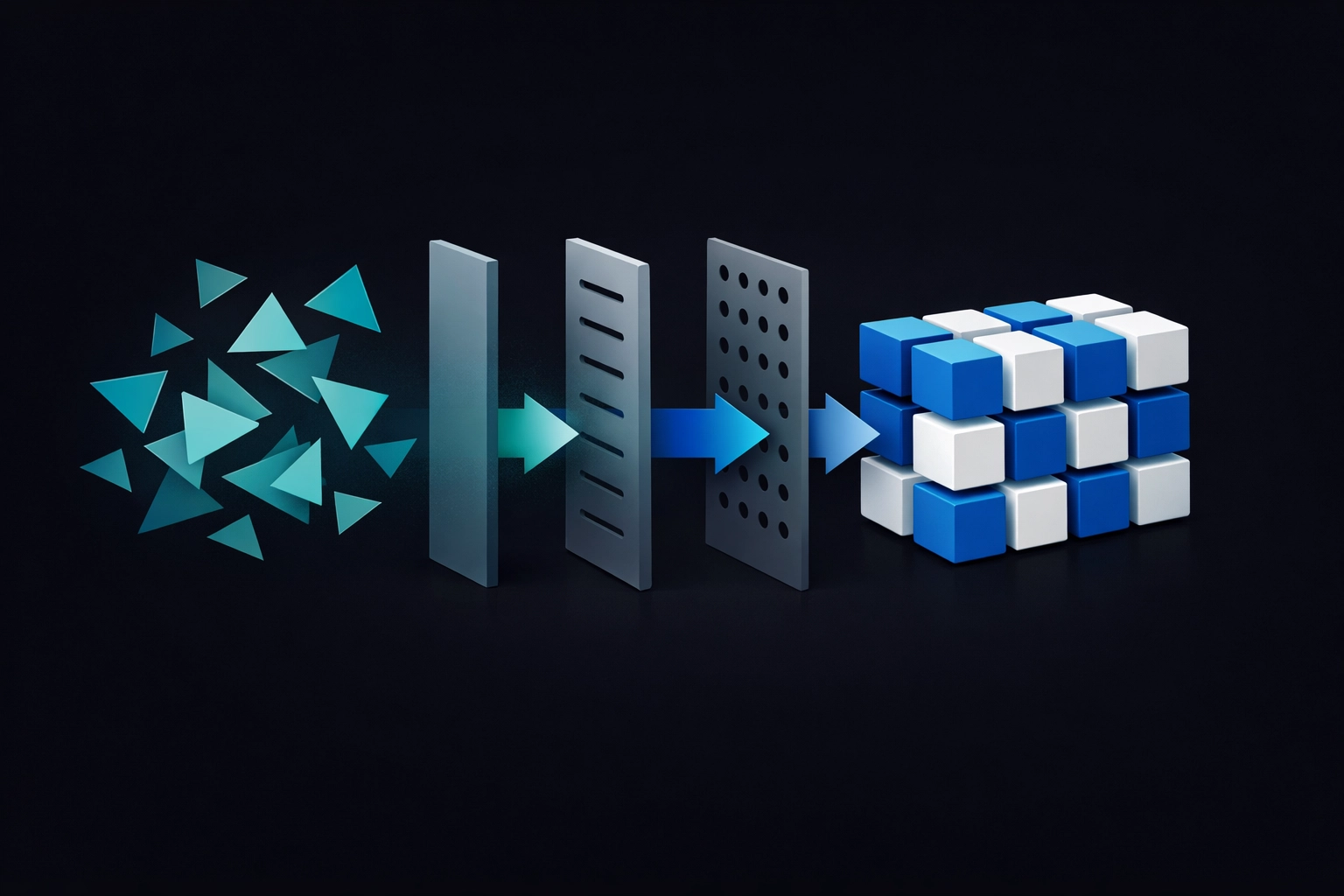
The NAVIGATE framework "absorbs" these disparate methodologies. It does not replace Lean or Six Sigma; rather, it provides the overarching structure: the architecture: that houses them. By establishing a unified stage-gate methodology, NAVIGATE ensures that every project selected has a direct, quantifiable link to the strategic mission.
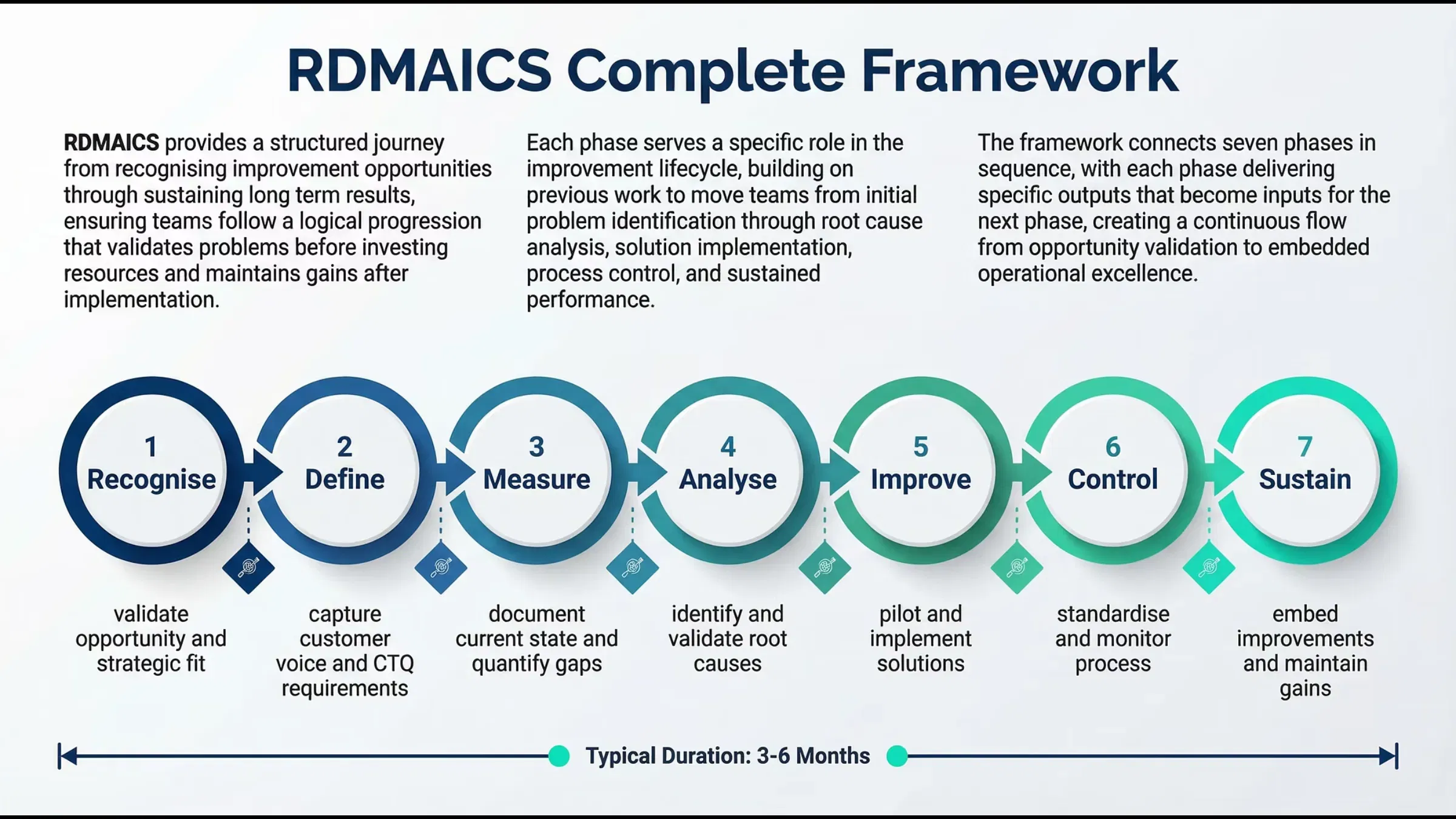
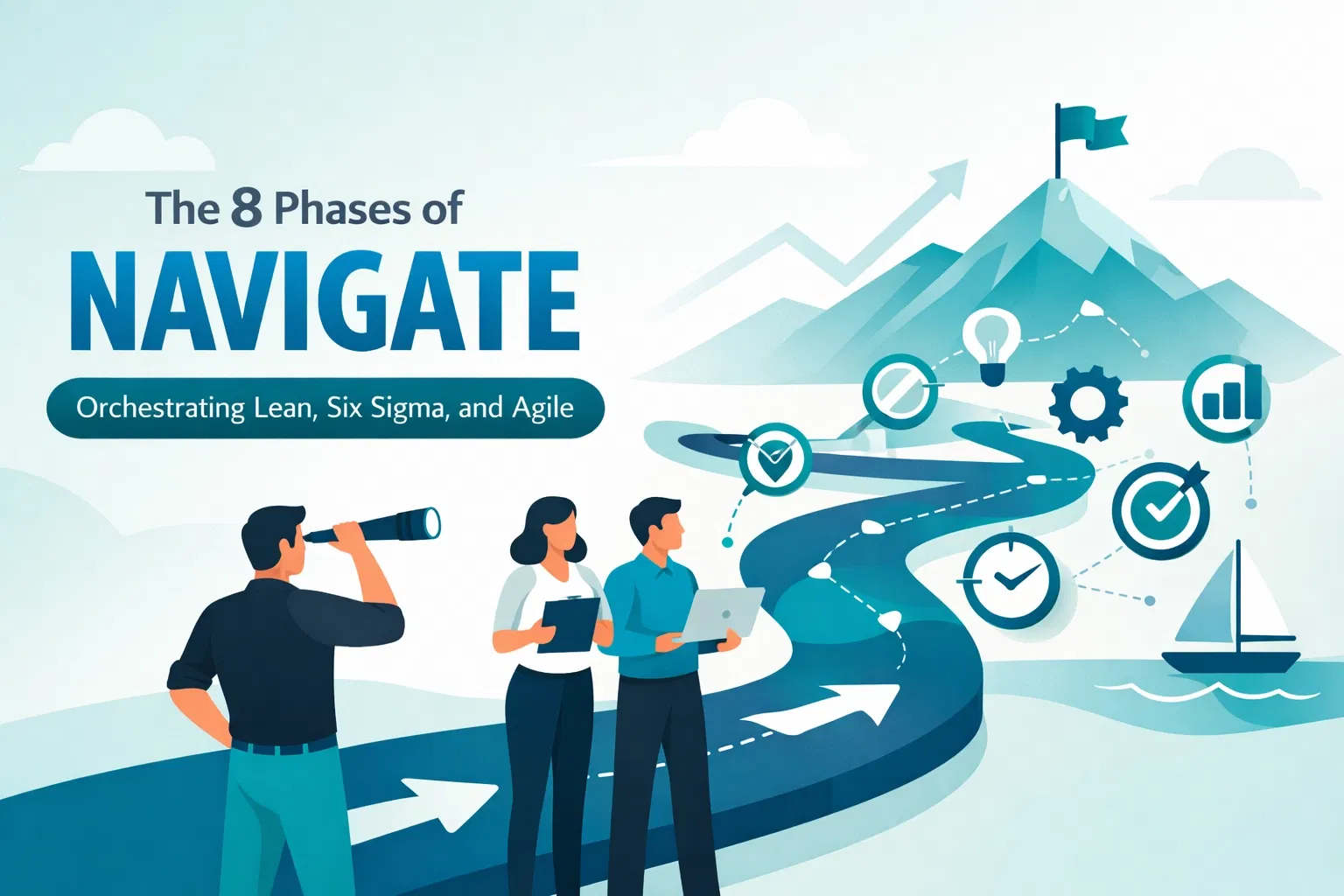
Phase I: Absorbing Strategic Intent (N-A-V)
The first three phases of the NAVIGATE framework are dedicated to "Strategic Absorption." This is where the framework interprets the high-level vision and translates it into a language that the organization can act upon.
1. Need the Shift (N)
In this phase, the organization identifies the "Burning Platform." We move beyond vague desires for "growth" or "efficiency" and define the specific strategic gaps. Utilizing tools like the Project Selection Scoring Calculator, leaders can objectively prioritize initiatives that offer the highest ROI and strategic alignment, rather than those driven by internal politics.
2. Assess & Align (A)
Strategic intent often fails because it ignores the current capability of the organization. During this phase, we conduct a rigorous assessment of the current state. We analyze stakeholder impact to ensure the "human side" of the data is considered. Failure to do so often leads to resistance. Utilizing a Stakeholder Impact Assessment Calculator allows for a data-heavy approach to change management.
3. Validate & Visualize (V)
This is the bridge where the "Score" is written for the orchestra. We translate the Voice of the Customer (VOC) into Critical to Quality (CTQ) requirements. To understand how this translation occurs at a technical level, one should study the process of translating customer feedback into measurable metrics. By the end of this phase, the strategy is no longer an abstract concept; it is a visualized future state with defined targets.
Phase II: Translating Vision to Operations (I-G-A)
Once the intent is absorbed, the NAVIGATE architecture moves into the execution and governance layers. This is where the strategy becomes "reality."
4. Initiate & Implement (I)
Execution is where the "heavy lifting" occurs. The NAVIGATE framework coordinates cross-functional teams to ensure that solutions are built according to the strategic blueprints. In this stage, architectural principles are applied to ensure that the solutions are scalable and do not create technical or process debt.
5. Govern & Guide (G)
Governance is the "Conductor’s Baton" that remains active throughout the implementation. It ensures that as the project progresses, it does not veer off-course. This involves regular toll-gate reviews where progress is measured against the original business case. If a project is no longer aligned with the strategic "score," it is corrected or terminated.
6. Anchor & Automate (A)
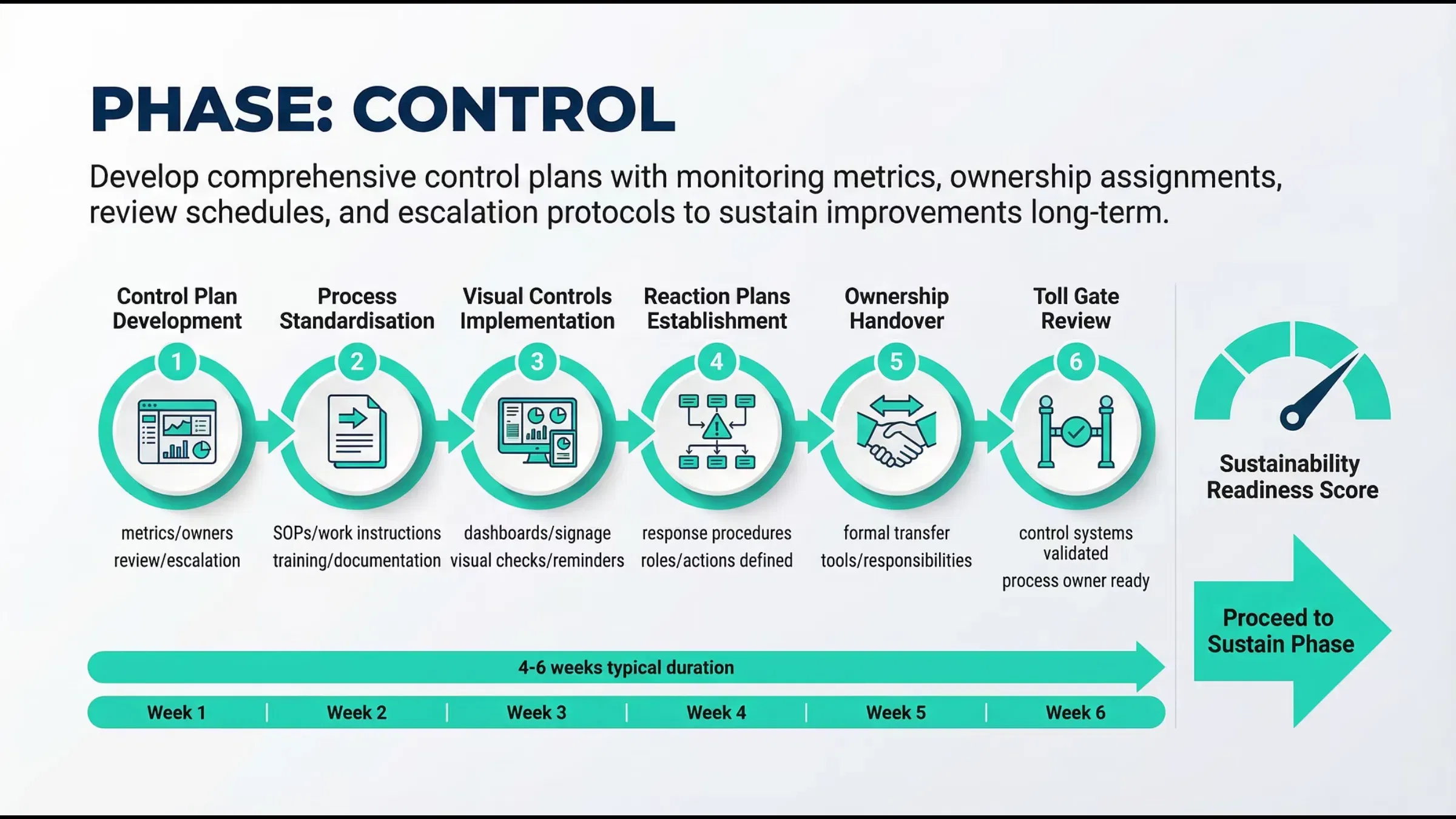
To bridge the gap permanently, the new ways of working must be anchored into the organizational culture. This requires meticulous process documentation. Without proper documentation and standardization, the organization inevitably reverts to its "old music."
Phase III: Realizing and Evolving Value (T-E)
The final stages of the NAVIGATE architecture focus on the long-term sustainability of the strategic shift.
7. Track & Transform (T)
In this phase, we move from project completion to value realization. We utilize baseline metrics established earlier in the process to prove that the strategy has delivered the intended results. This often involves rigorous process audits to verify and validate that the improvements are holding steady.
8. Evolve Continuously (E)
The strategy-to-reality gap is not a one-time fix. As the market changes, the strategy must evolve. NAVIGATE creates a feedback loop where operational insights are fed back up to the executive level, informing the next iteration of the strategy. This fosters a culture where improvements stick, transforming the organization into a lean, agile, and responsive entity.
Hypothetical Case Study: The "Zero-Defect" Strategy
Consider a global manufacturing firm with a strategic goal to reduce operational costs by $15 million (a 22% reduction in waste).
Without NAVIGATE, the firm might launch 50 unrelated "improvement projects" across different plants. After 12 months, costs remain stagnant because the projects were siloed: some improved speed but increased defects, while others reduced defects but slowed down the line.
With the NAVIGATE Architecture:
- Need the Shift: The $15M goal is broken down into specific Pareto-driven targets.
- Validate & Visualize: The team identifies that 60% of the waste comes from a specific "Yield" issue in three key product lines.
- Initiate & Implement: Resources are diverted specifically to these three lines.
- Track & Transform: Using advanced statistical tools, the firm tracks a 19% improvement in first-pass yield within six months, resulting in a documented saving of $11.4M.
The gap is closed because the architecture forced alignment between the $15M "Vision" and the daily "Action" on the factory floor.

Conclusion: The Path to Mastery
Bridging the strategy-to-reality gap is the primary challenge of modern leadership. The NAVIGATE Architecture provides the necessary framework to move beyond the "cacophony" of disconnected projects and toward the "symphony" of a synchronized, high-performing enterprise. By absorbing intent, translating it through rigorous architecture, and anchoring it in operational reality, organizations can finally ensure that their strategic score is played to perfection.
In the realm of professional excellence, understanding the framework is only the beginning. True transformation requires the expertise to lead these complex orchestrations.
Achieve mastery in enterprise transformation and lead your organization to operational excellence by enrolling in our Lean Six Sigma Master Black Belt Training today.