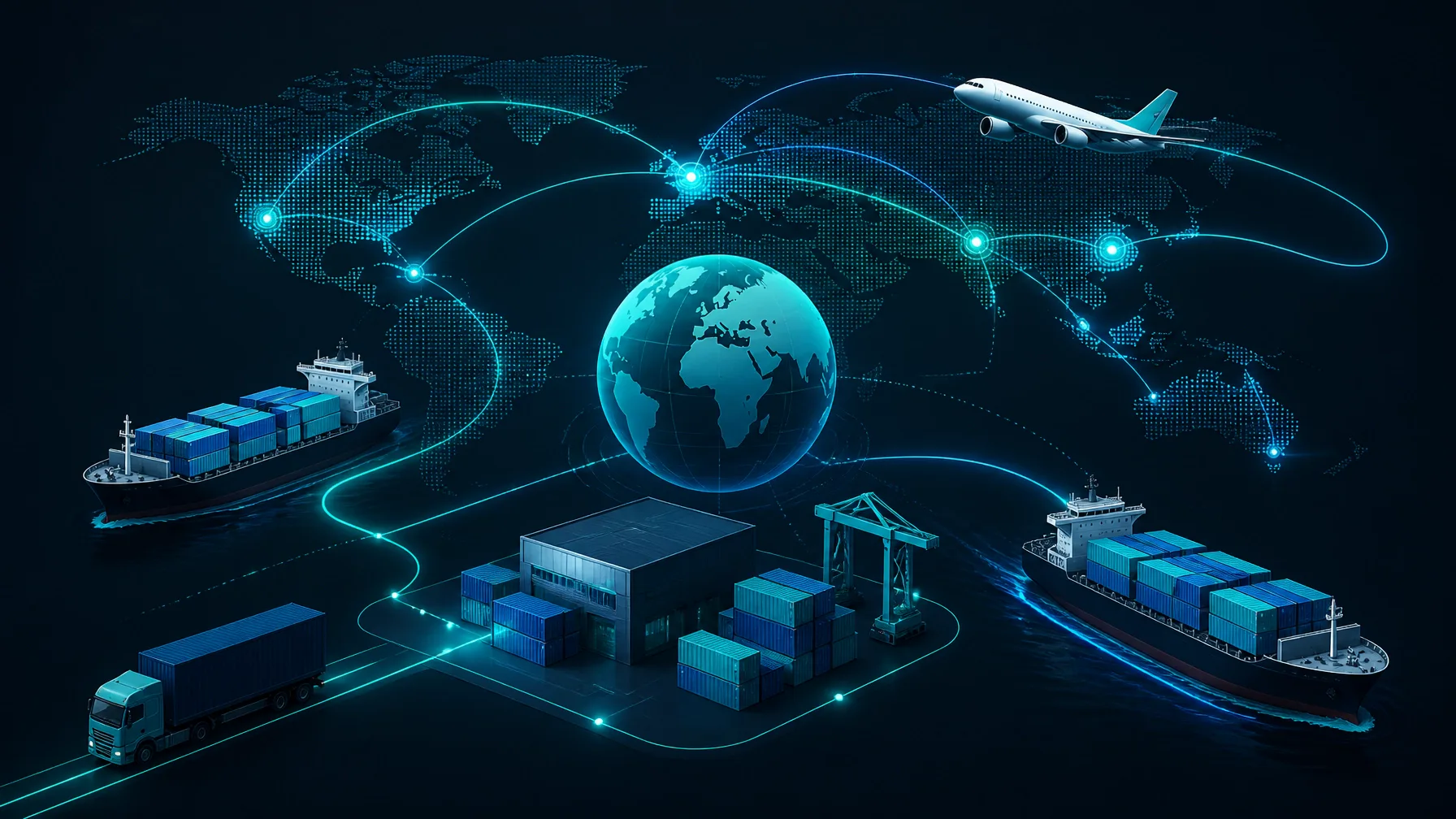
In the realm of global commerce, the ability to scale operations is often the primary differentiator between market leaders and those relegated to obsolescence. While many organizations focus their strategic energy on product innovation or marketing prowess, the truly seasoned subject matter experts recognize that the real competitive advantage lies within the architecture of the supply chain. Lean Logistics serves as the fundamental engine for this transformation, providing the discipline and clarity required to navigate the complexities of international distribution with surgical precision.
To fully appreciate the impact of Lean principles on global scaling, one must move beyond the superficial understanding of "reducing costs." It is an enterprise-wide commitment to identifying value, optimizing flow, and embedding a culture of continuous discipline.
The Strategic Framework of Lean Logistics
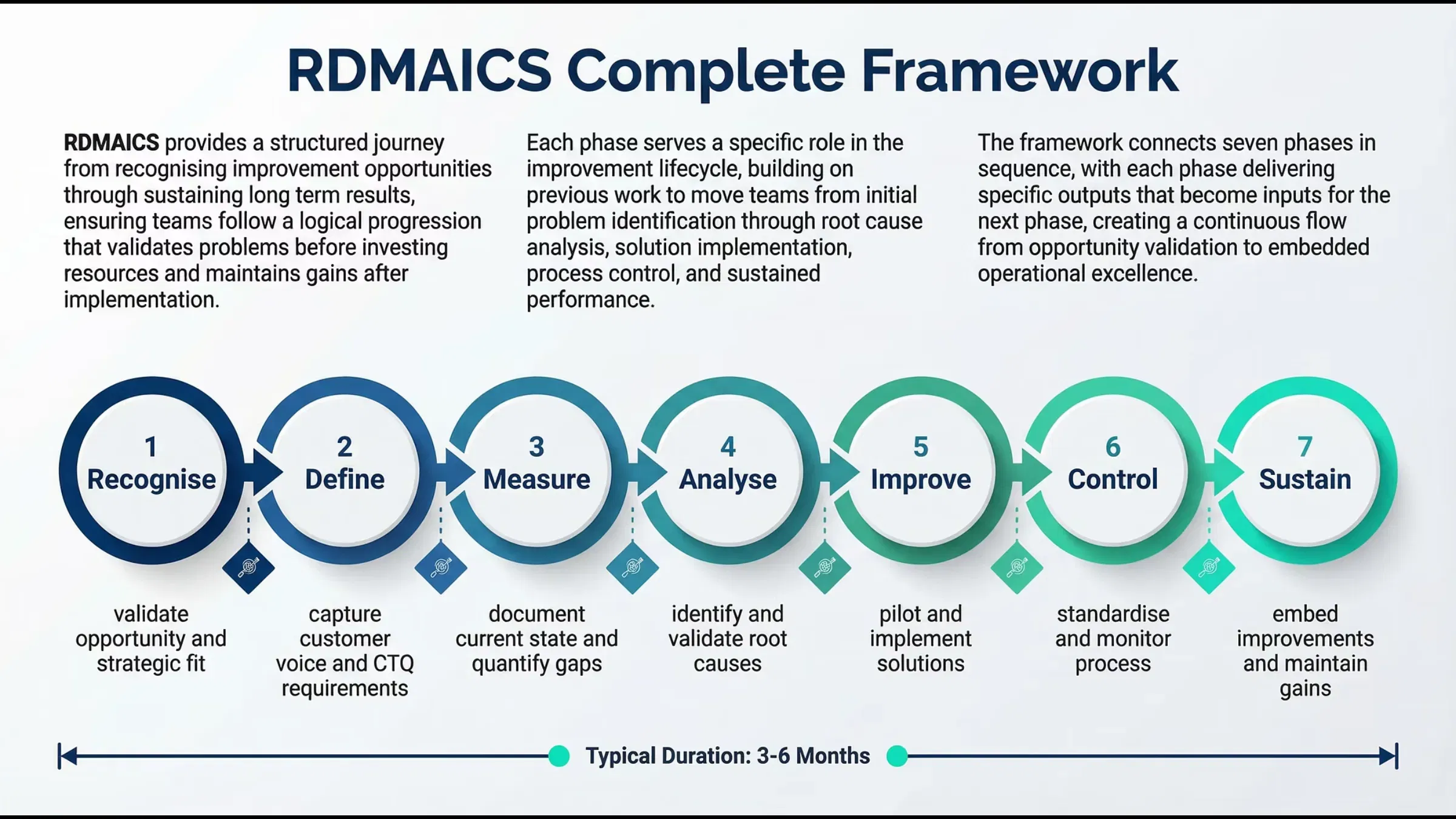
The fundamental purpose of Lean Logistics is the relentless elimination of non-value-added activities: often referred to as waste: within the supply chain. In a global context, this challenge is magnified by geographical distances, regulatory hurdles, and varying market demands. By applying the RDMAICS framework, organizations can systematically recognize opportunities for improvement and sustain them across diverse regions.
At its core, Lean Logistics is governed by five key principles:
- Defining Value: Understanding exactly what the customer requires, whether it is rapid delivery, zero damage, or specific documentation.
- Mapping the Value Stream: Visualizing the entire journey of a product from raw material to the final mile.
- Creating Flow: Ensuring that materials and information move without interruption or "rework loops."
- Establishing Pull: Producing and moving items only in response to real customer demand, effectively eliminating overproduction.
- Pursuing Perfection: A constant cycle of refinement to reach a state of zero waste.
Architecture of Global Scaling: Standard Work and Pull Systems
The greatest obstacle to scaling a global operation is inconsistency. When regional distribution centers operate under disparate protocols, the resulting variation creates a "bullwhip effect" that destabilizes the entire network. To counteract this, organizations must implement Standard Work at every node of the supply chain.
By establishing a unified "playbook" for operations: from container loading techniques to warehouse slotting: a company can replicate its successes in any market. This level of standardization does not imply rigidity; rather, it provides the necessary baseline for meaningful improvement. For instance, finding the perfect balance between standardisation and flexibility is critical for maintaining operational excellence while adapting to local logistics nuances.

Furthermore, the transition from a "push" system to a "pull" system is essential for scaling. In a traditional push system, inventory is moved based on forecasts, which are notoriously inaccurate. A pull system, often supported by Kanban signals, ensures that inventory is only replenished when consumed. This dramatically reduces Work in Process (WIP) and frees up capital that would otherwise be trapped in stagnant stock.
Identifying the Hidden Wastes: The DOWNTIME Perspective
To optimize a global logistics network, one must learn to see the invisible barriers to efficiency. The Lean acronym DOWNTIME provides a sophisticated lens through which to analyze and categorize logistics waste:
- Defects: Shipping errors, damaged goods, or incorrect documentation that lead to costly returns and loss of customer trust.
- Overproduction: Moving more containers than necessary or holding excess safety stock across regional hubs.
- Waiting: Drivers idling at loading docks or cargo sitting at ports due to sluggish customs clearance or poor scheduling.
- Non-utilized Talent: Failing to leverage the on-the-ground expertise of warehouse staff to solve local bottlenecks.
- Transportation: Unnecessary movement of goods, such as "empty miles" in trucking or inefficient routing.
- Inventory: Excess stock that masks underlying process issues and increases storage costs.
- Motion: Inefficient warehouse layouts that require workers to travel excessive distances to pick and pack orders.
- Extra-processing: Redundant inspections or double-entry of data that adds no value to the final delivery.

By systematically addressing these wastes, organizations can significantly reduce their Cycle Time and improve overall process stability. For those looking to master these concepts, pursuing a Lean Six Sigma Black Belt provides the advanced tools necessary to lead high-impact transformations in these complex environments.
Data-Heavy Metrics: The Compass for Operational Excellence
A Lean operation is fundamentally a data-driven operation. Without precise metrics, "improvement" is merely anecdotal. To scale effectively, logistics leaders must monitor a specific set of Key Performance Indicators (KPIs) that reflect the true health of the value stream.
| Metric | Lean Definition | Goal/Benchmark |
|---|---|---|
| OTIF (On-Time In-Full) | Percentage of orders delivered at the promised time with all items present. | > 98% for world-class logistics. |
| Lead Time | Total elapsed time from order placement to delivery. | Minimization through waste elimination. |
| Inventory Turns | How many times a year the inventory is sold and replaced. | Higher turns indicate better capital efficiency. |
| Process Cycle Efficiency | (Value-Added Time / Total Lead Time) x 100. | Identifying and reducing the ratio of waiting time. |
| DPMO | Defects Per Million Opportunities (e.g., mispicked items). | Aiming for 3.4 for Six Sigma level quality. |
Utilizing advanced tools like a Project Charter ROI Calculator allows project leaders to translate these operational wins into hard-dollar savings, providing the financial justification required for enterprise-wide scaling.

Sustaining the Gains: The Governance Framework
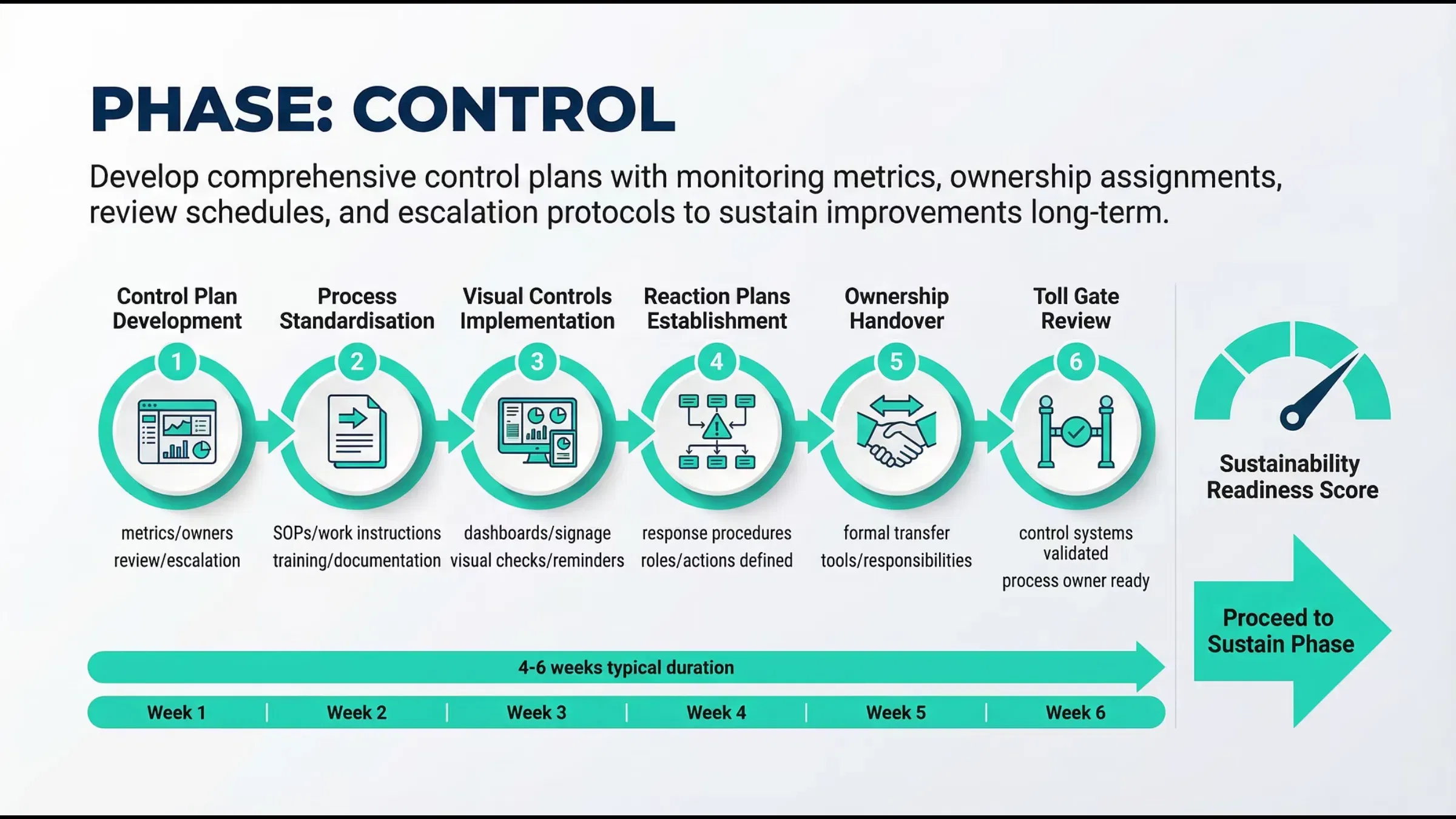
The most significant risk in scaling is regression. It is common for an organization to achieve a temporary "spike" in efficiency during a project, only to see those gains erode over time. This is why the Control Phase of the DMAIC process is non-negotiable.
Implementing robust visual controls, such as Andon lights or digital dashboards, ensures that abnormalities are detected in real-time. When a process deviates from the standard, immediate countermeasures can be taken before the issue escalates into a global supply chain disruption.
Strategic leaders should also look toward Hoshin Kanri to align their logistics improvements with the company's long-term vision. This ensures that every Green Belt or Black Belt project on the floor is directly contributing to the organization's "North Star" goals.
Conclusion: Orchestrating the Future of Logistics
Lean Logistics is not merely a set of tools; it is the strategic backbone for any organization aspiring to lead on a global stage. By mastering the art of waste elimination, standardizing work across borders, and maintaining a relentless focus on customer value, you transform your logistics from a cost center into a powerful lever for growth.
The path to enterprise-wide transformation begins with the right expertise. Whether you are a professional analyst looking to sharpen your skills or a senior leader tasked with driving organizational change, the journey to mastery is essential.
Take the definitive step in your professional development. Enroll in the Lean Six Sigma Master Black Belt Online Training or the Black Belt Certification today to gain the strategic and tactical skills needed to dominate global operations.