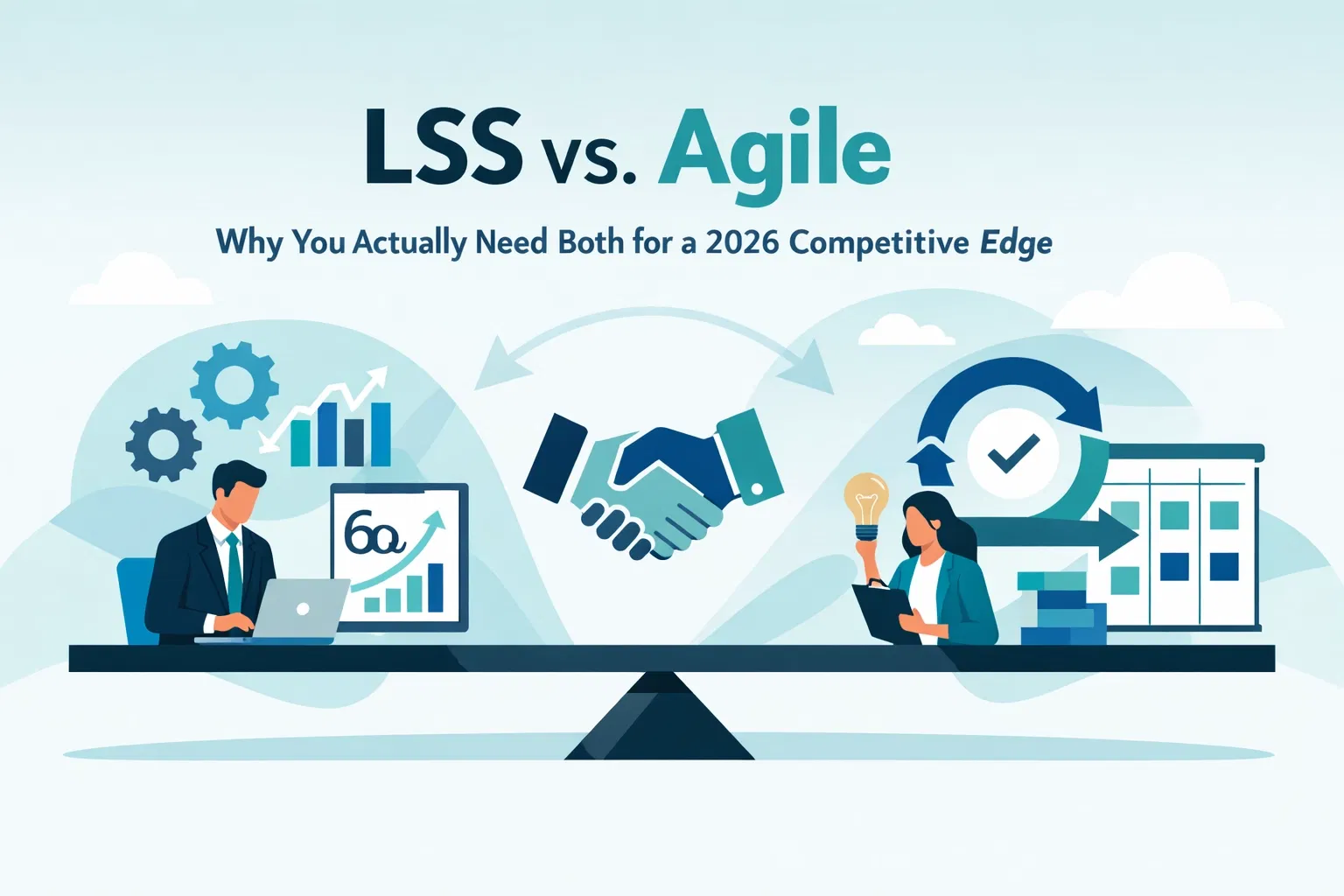
Listen, if you’re still sitting in boardrooms arguing over whether your company should be "Lean" or "Agile," you’re basically bringing a map from 1995 to a self-driving car race. It is 2026. The debate is over. The winners aren’t choosing one; they are smashing them together to create a high-performance hybrid that dominates the market.
For years, these two methodologies were treated like rival sports teams. You were either a data-driven, process-obsessed Lean Six Sigma (LSS) purist, or you were a fast-moving, "fail-forward" Agile enthusiast. But here is the reality check: Lean Six Sigma provides the stability and precision you need to scale, while Agile provides the speed and flexibility to survive a market that changes every time someone tweets.
In this post, we’re diving into why the "LSS vs. Agile" debate is dead and why integrating both is your only real ticket to a competitive edge this year.
The Power of the Anchor: Why Lean Six Sigma Still Rules
Before we talk about speed, we have to talk about stability. You can’t run a marathon if your shoes are falling apart, right? That is where Lean Six Sigma comes in. It is the bedrock of operational excellence.
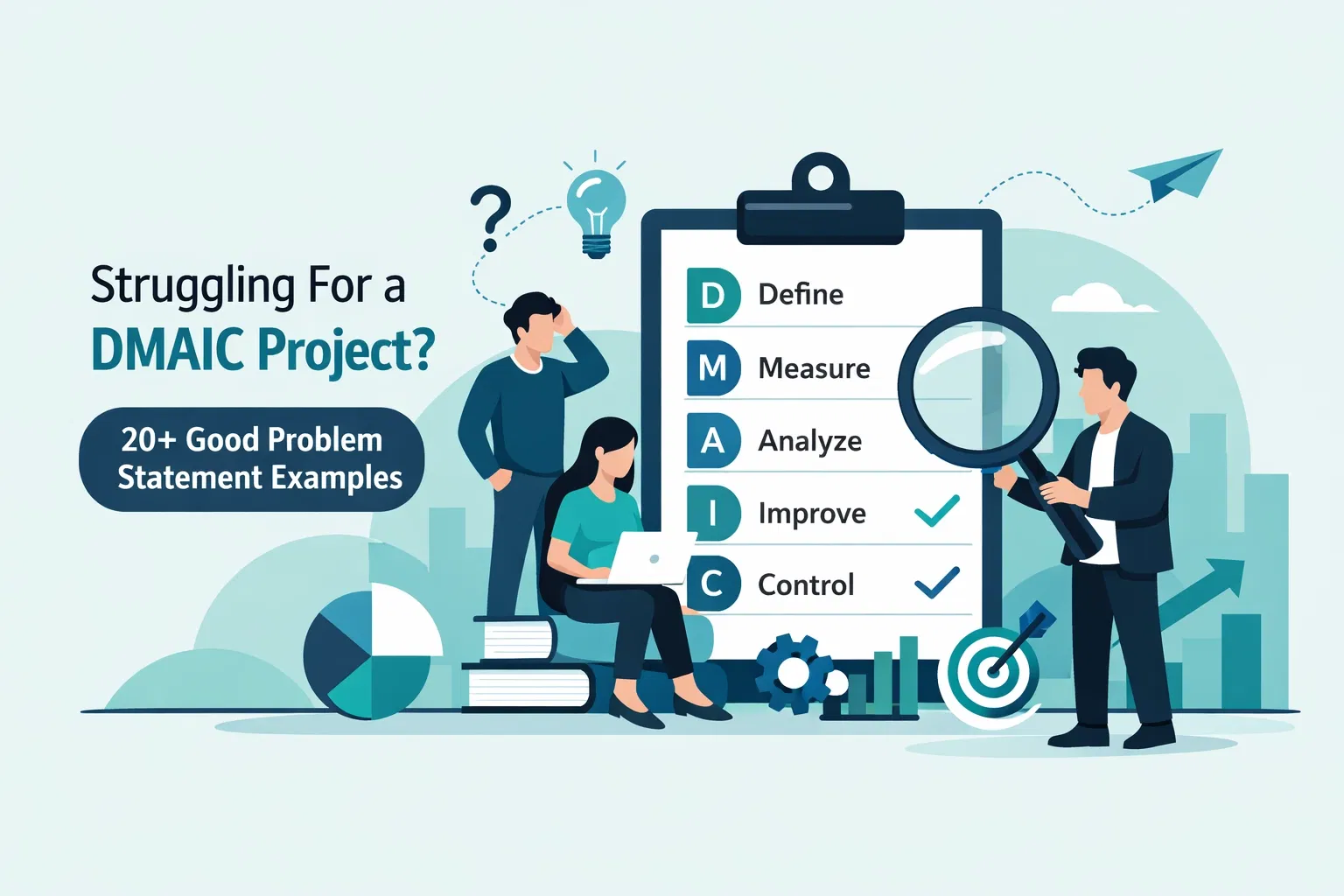
LSS is all about cutting the "fat" (Lean) and killing the "errors" (Six Sigma). It uses the DMAIC framework (Define, Measure, Analyze, Improve, Control) to ensure that every process is optimized to its absolute limit. In 2026, where profit margins are thinner than ever, you can't afford waste.
If you’re just starting out, you need to know where you stand. You can’t improve what you don’t measure. Establishing baseline metrics in Six Sigma is the first step to proving that your "gut feeling" about a process is actually backed by cold, hard data.
The Lean Six Sigma Vibe:
- Goal: Consistency and precision.
- Focus: Reducing variation and eliminating waste.
- Vibe: "Let’s do it right the first time, every time."
The Engine of Speed: Why Agile is Non-Negotiable
On the flip side, we have Agile. Born in the world of software development, Agile is the art of the pivot. It’s built on short "sprints," continuous feedback, and the idea that the world is too unpredictable for a five-year plan.
In 2026, customer expectations change in weeks, not years. If your process is so rigid that it takes six months to change a single feature, you’re already obsolete. Agile allows teams to move fast, test ideas, and get a "Minimum Viable Product" (MVP) into the hands of customers immediately.
The Agile Vibe:
- Goal: Rapid delivery and adaptability.
- Focus: Customer feedback and iterative growth.
- Vibe: "Let’s get it out there, see what happens, and fix it fast."
The Magic Happens in the Middle: Why You Need Both
Think of Lean Six Sigma as the foundation of a house and Agile as the modular furniture inside. If the foundation is cracked (bad processes), it doesn't matter how cool the furniture is; the house is going down. If the foundation is solid but the furniture is bolted to the floor (zero flexibility), you can’t adapt when your family grows.
When you combine them, you get Agile Lean Six Sigma. It’s the ultimate 2026 power move.

1. LSS Stabilizes, Agile Accelerates
Agile is great at moving fast, but if you move fast on a broken process, you just create a bigger mess more quickly. LSS fixes the underlying process so that when you apply Agile sprints, you’re accelerating a well-oiled machine.
2. Turning Customer Noise into Action
Agile is obsessed with the "Voice of the Customer." But how do you turn a million different customer complaints into a measurable plan? You use LSS tools. Translating VOC to CTQ (Critical to Quality) metrics allows you to take that messy Agile feedback and turn it into precise requirements that your team can actually execute.
3. Reducing the Cost of Quality
Agile can sometimes lead to "technical debt": shortcuts taken to meet a deadline. Six Sigma acts as the quality gatekeeper, ensuring that "moving fast" doesn't mean "shipping junk."
Real-World Case: Tech vs. Manufacturing
Let’s look at how this plays out in the wild.
In Software Development:
A team uses Agile to develop a new app. They release updates every two weeks. However, they notice that their server costs are skyrocketing and the app crashes for 2% of users. That’s an LSS problem. They dive into the data, find the root cause of the variation in server load, and use Six Sigma tools to stabilize the back end. The result? A fast-moving app that doesn't break.
In Manufacturing:
A factory uses LSS to ensure that every part produced is within a 0.001mm tolerance. But a customer suddenly wants a custom order with a different material. If the factory is purely "Old School Six Sigma," they might spend three months re-tooling. If they have an Agile mindset, they’ve already built "flexible cells" that allow them to pivot production in days.
Why This is the Career Hack of the Century
If you’re a professional looking to level up in 2026, being "the Lean guy" or "the Agile girl" isn't enough anymore. Companies are looking for "T-shaped" professionals: people who have a deep understanding of process rigor but can operate in a fast-paced, flexible environment.
Getting a lean six sigma certification isn’t just about learning how to use a Minitab chart. It’s about learning how to think. It gives you a framework for problem-solving that most people simply don't have. When you add Agile flexibility to that, you become the most valuable person in the room.
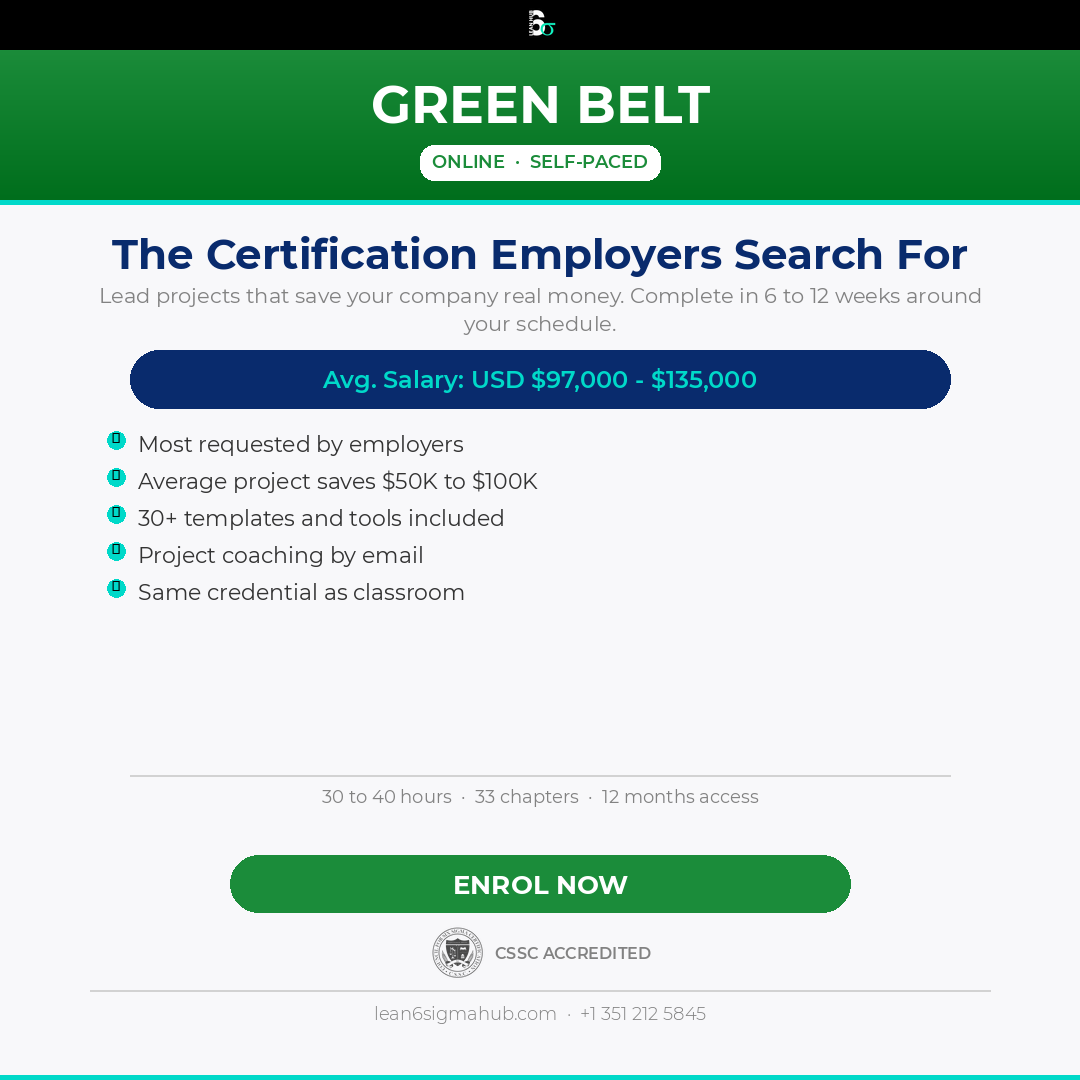
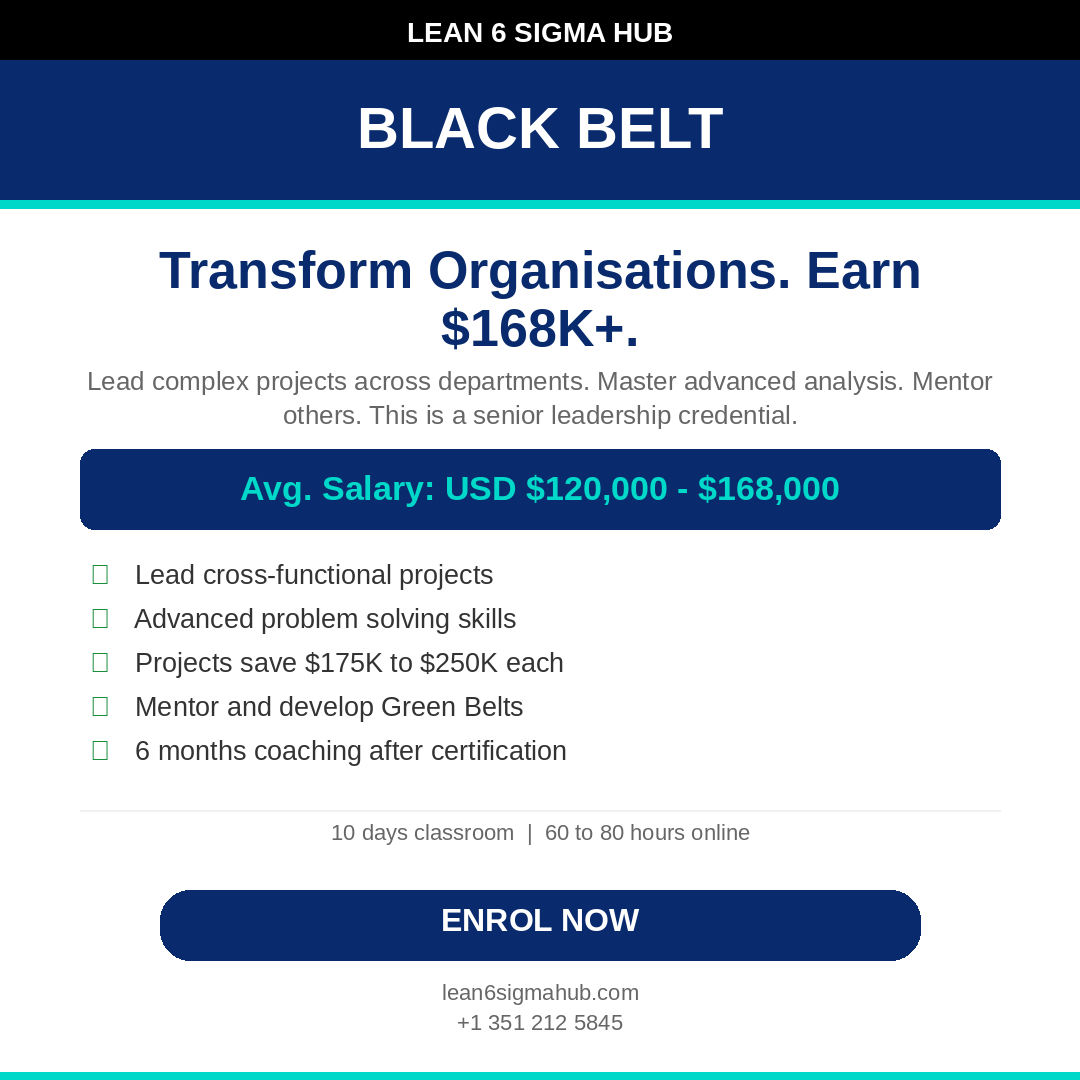
Whether you are looking at a Green Belt to manage departmental improvements or a Black Belt to lead enterprise-wide transformations, the ROI is massive. Use a project charter ROI calculator to see exactly how much value you can bring to a company just by fixing one or two "leaky" processes.
Breaking Down the Silos
The biggest barrier to this "Hybrid" approach isn't the tools: it’s the culture. You’ll often find the "Lean" people sitting in the Quality department and the "Agile" people sitting in IT or Product. In 2026, those silos have to come down.
The best organizations are training their Agile Scrum Masters in basic Lean principles and their Six Sigma Black Belts in Scrum. When these two worlds speak the same language, the speed of improvement is staggering.

How to Get Started (The 2026 Way)
If you're ready to stop choosing and start winning, here is your roadmap:
- Get the Foundation Right: Start with high-quality lean six sigma training. You need the data skills. You need the discipline. You need to know how to spot waste from a mile away.
- Learn to Pivot: Don’t wait for a six-month project to see results. Use Agile "Sprints" to implement your Lean improvements. Break a massive LSS project into smaller, two-week chunks.
- Use the Right Tools: Don’t overcomplicate things. Use calculators for project selection and stakeholder impact to make sure you’re working on the things that actually move the needle.
- Certify Your Skills: In a competitive market, "I know Lean" is a claim. A certification is a fact.
The Bottom Line
The future belongs to the "Efficiently Fast." Not just fast (which is often chaotic) and not just efficient (which is often slow).
Lean Six Sigma gives you the "Efficient." Agile gives you the "Fast."
If you want a competitive edge in 2026, you need to stop treating these as separate religions and start treating them as two halves of the same high-performance engine. It’s time to cut the waste, kill the defects, and move at the speed of light.
Ready to lead the charge? Start your journey today and get the credentials that prove you can handle the complexity of the modern world.
Step up your career and lead the future of industry by securing your Lean Six Sigma Certification today.