In the realm of modern organizational efficiency, the quest to eliminate waste and optimize workflows is a never-ending journey. For decades, Lean Six Sigma practitioners have relied on manual observations, stakeholder interviews, and "brown paper" workshops to map out processes. While these methods are foundational, they often suffer from a significant flaw: they reflect what people think happens, rather than what is actually occurring.
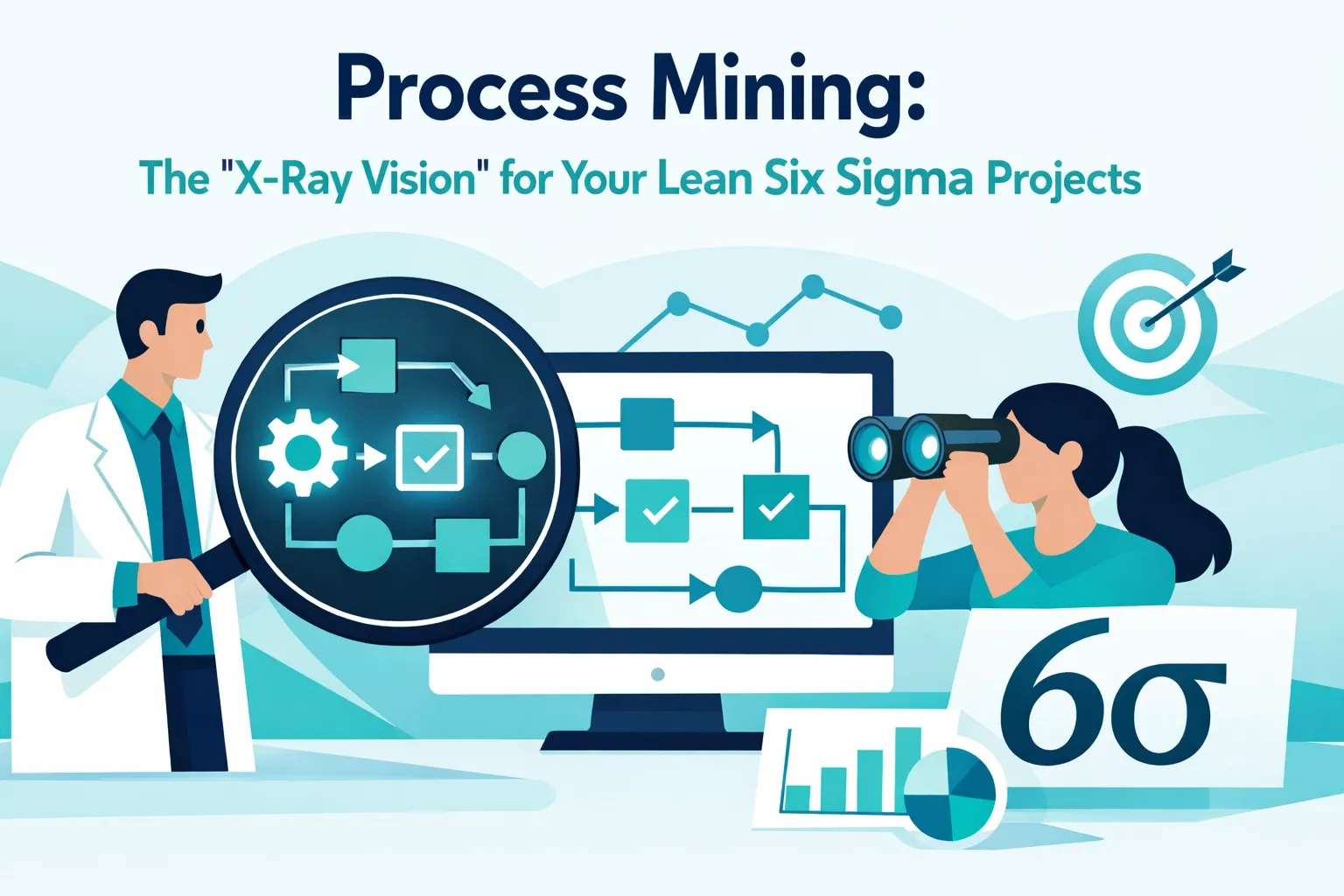
Enter Process Mining. Often described as the "X-ray vision" for business operations, Process Mining is a data-driven technology that uncovers the reality of your workflows with surgical precision. By integrating this tool into your process improvement toolkit, you can transition from anecdotal evidence to objective truth, ensuring your Lean Six Sigma training translates into tangible, high-impact results.
The Limitation of Traditional Mapping
The fundamental purpose of the Define and Measure phases in a DMAIC (Define, Measure, Analyze, Improve, Control) project is to establish a clear baseline. Traditionally, this involves gathering a team in a room and building a SIPOC or a Value Stream Map. While these tools are essential for alignment, they are frequently limited by human bias.
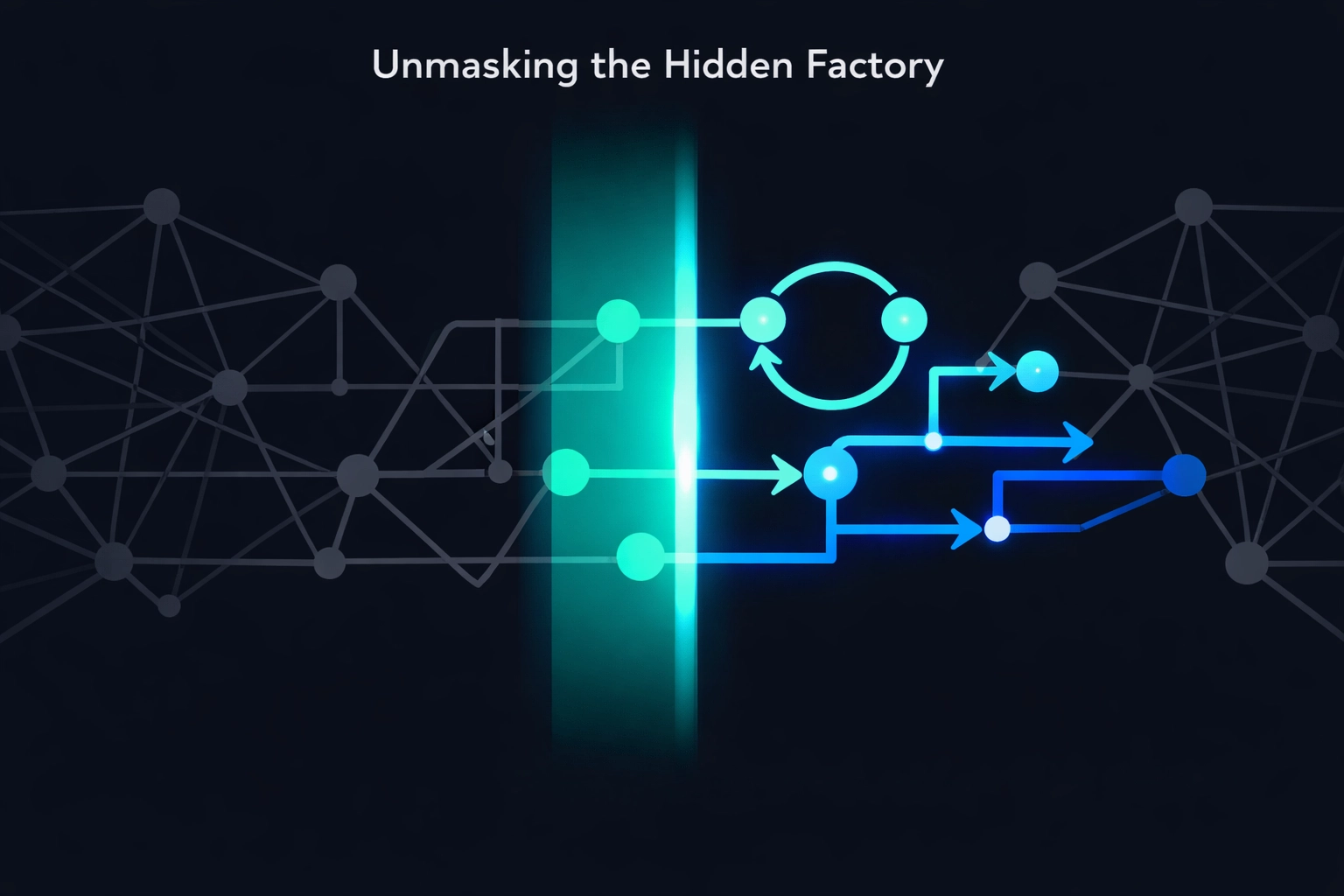
Participants often describe the "happy path": the way the process is supposed to work. They might overlook the "hidden factory": the undocumented workarounds, rework loops, and manual interventions that employees perform to keep things moving. This gap between the perceived process and the actual process is where waste hides. Utilizing a SIPOC complexity score calculator can help identify when a process is becoming too convoluted, but even the best calculator needs accurate data to be effective.
What Exactly is Process Mining?
Process Mining acts as a bridge between data science and process management. It works by extracting "digital footprints" or event logs from the IT systems your business uses every day, such as ERP (Enterprise Resource Planning), CRM (Customer Relationship Management), or ticketing systems.
Every time a task is completed: be it an invoice approved, a ticket closed, or a part moved: the system records three critical pieces of data:
- Case ID: A unique identifier for the specific transaction (e.g., an Order Number).
- Activity: What specifically was done (e.g., "Credit Check Approved").
- Timestamp: Exactly when the activity occurred.
By aggregating thousands of these event logs, Process Mining software automatically reconstructs a visual map of the entire process. It reveals every variation, every bottleneck, and every deviation from the standard operating procedure.

Integrating Process Mining into the DMAIC Cycle
To fully appreciate the synergy between these two disciplines, we must look at how Process Mining enhances each stage of the DMAIC methodology.
1. Define Phase: Instant Scoping
In the Define phase, you are tasked with identifying the project’s scope and goals. Process Mining allows you to instantly visualize the boundaries of your project. Instead of spending weeks interviewing staff to understand the current state, you can generate an objective map in hours. This data-driven approach ensures that the project selection scoring is based on actual volume and frequency rather than gut feeling.
2. Measure Phase: 100% Data Population
One of the core tenets of Lean Six Sigma is making decisions based on data. However, manual data collection is prone to sampling errors and "observer effects." Process Mining provides a 100% view of the population. You aren't looking at a sample of 30 invoices; you are looking at all 50,000 invoices processed over the last year. This provides a precise baseline for cycle times, lead times, and throughput, making your gap analysis in Six Sigma incredibly robust.
3. Analyze Phase: Identifying the Root Cause
This is where the "X-ray vision" truly shines. Process Mining tools can perform "conformance checking," where the software compares the actual event logs against your documented standard process. It highlights exactly where people are deviating and why.
Are approvals taking longer on Friday afternoons? Is a specific vendor causing rework loops in the procurement process? Process Mining identifies these patterns and correlations automatically, allowing the team to focus their root cause analysis on confirmed problem areas rather than fishing for issues.

4. Improve Phase: Simulation and Prediction
Before implementing a change, Lean Six Sigma practitioners often wish they could see the future. Some advanced Process Mining platforms offer "Digital Twin" capabilities. You can simulate the impact of a proposed change: such as automating a specific step: using your real historical data. This allows you to quantify the potential ROI before a single line of code is written or a single person is retrained.
5. Control Phase: Always-On Monitoring
Sustainability is the greatest challenge in any process improvement project. Traditionally, the Control phase relies on manual audits or static dashboards. Process Mining transforms this into continuous monitoring. If the process begins to drift back to old, inefficient habits, the system can trigger real-time alerts. This ensures that the self-control mechanisms are data-driven and proactive.
Unmasking the "Hidden Factory"
In a typical Lean Six Sigma project, the "hidden factory" represents the 20-30% of capacity wasted on correcting mistakes or performing unnecessary steps. Because these steps aren't part of the "official" process, they are rarely caught in traditional workshops.
Process Mining makes the invisible, visible. It might reveal that a "simple" approval process actually has 45 different variations and that 15% of all cases are being sent back to the previous step due to missing information. By seeing these rework loops visually, leadership can see the financial impact of poor quality in real-time.
Practical Benefits for the Modern Lean Six Sigma Professional
The integration of Process Mining into your workflow offers several strategic advantages:
- Objectivity: It removes the "he said, she said" from process discussions. The data is the single source of truth.
- Speed to Value: It significantly reduces the time spent in the Define and Measure phases, allowing teams to move to Analyze and Improve much faster.
- Enhanced ROI Accuracy: By using real-world volumes and cycle times, your project charter ROI calculations become far more credible to executive leadership.
- Compliance and Risk Management: It provides a perfect audit trail, ensuring that regulated processes are being followed to the letter.
For those pursuing a Black Belt certification, mastering these digital tools is becoming a requirement for leading high-level enterprise transformations.
The Future of Lean Six Sigma Training
As organizations become increasingly digital, the "Lean" professional of the future must be as comfortable with data logs as they are with a stopwatch. Traditional Lean Six Sigma training is evolving to include these digital competencies. Whether you are just starting with a Yellow Belt practice exam or you are a seasoned professional looking to sharpen your skills, understanding how to leverage technology to see the "unseen" is the key to career longevity.
At Lean 6 Sigma Hub, we believe that combining the time-tested principles of Lean with the cutting-edge power of Process Mining creates an unbeatable methodology for organizational excellence.

Conclusion
Process Mining is not a replacement for Lean Six Sigma; rather, it is its most powerful modern ally. By providing "X-ray vision" into the actual data of an organization, it allows practitioners to diagnose problems with unprecedented accuracy and treat them with surgical efficiency. In a world where speed and data are the ultimate competitive advantages, can you really afford to rely on manual maps and "best guesses"?
To elevate your career and master the latest tools in process improvement, browse our accredited courses and get started with your professional Lean Six Sigma certification today.