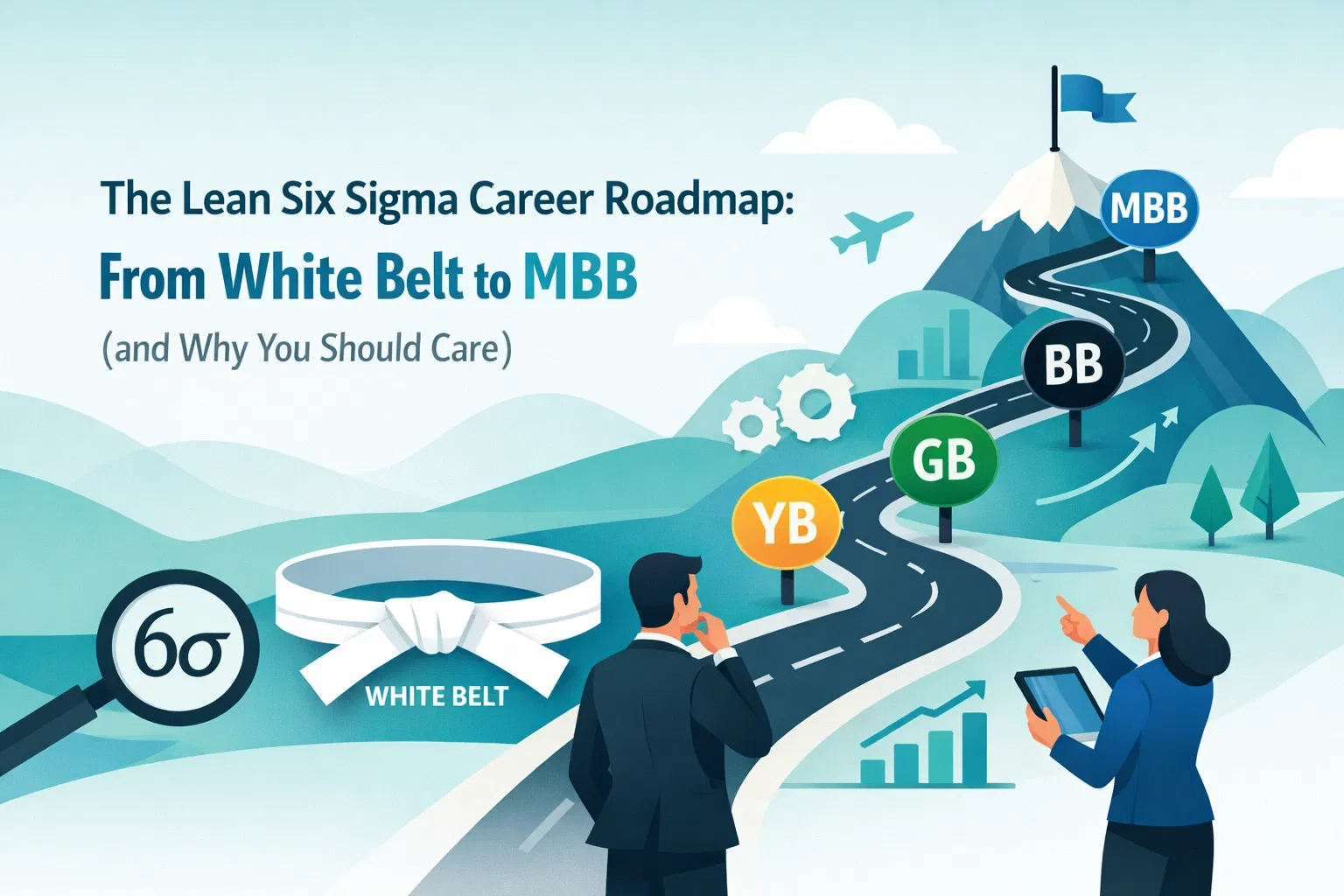
In the realm of operational excellence, the Lean Six Sigma methodology stands as the gold standard for organizations seeking to eliminate waste and reduce process variation. To fully appreciate the professional impact of this framework, one must understand that a Lean Six Sigma certification is not merely a credential; it is a structured roadmap for leadership and technical mastery. The system is organized into "belts," a hierarchy inspired by martial arts, where each level signifies a deeper level of expertise, responsibility, and strategic influence.
For professionals navigating the modern corporate landscape, the fundamental purpose of pursuing these certifications is to become a high-value asset capable of driving measurable financial results. Whether you are an entry-level analyst or a seasoned executive, the transition from one belt to the next represents a significant leap in both skill and earning potential.
The Foundation: Lean Six Sigma White Belt
The journey begins with the White Belt. This level serves as the introductory phase for individuals who require a fundamental understanding of Lean Six Sigma concepts but may not be leading projects themselves.
At the White Belt level, the primary focus is on "awareness." Participants learn the basic vocabulary of process improvement, such as the definition of "waste" (Muda) and the overarching goals of the DMAIC (Define, Measure, Analyze, Improve, Control) framework. While the White Belt does not involve complex statistical analysis, it is essential for fostering a culture of continuous improvement within an organization.

From a career perspective, a White Belt certification demonstrates to employers that you are "quality-conscious." In terms of compensation, professionals with this foundational knowledge typically see a salary range between $45,000 and $65,000. It is an ideal starting point for those who want to enhance their resume without a significant time investment, as many programs can be completed in a single weekend or through a few hours of lean six sigma training.
The Practical Participant: Lean Six Sigma Yellow Belt
The Yellow Belt represents a transition from theoretical awareness to practical application. Yellow Belts are often subject matter experts who participate as core members of a project team. They do not typically lead large-scale initiatives, but they are instrumental in supporting Green and Black Belts by collecting data and identifying "quick wins" in their immediate work areas.
The technical curriculum for a Yellow Belt includes learning how to create process maps and understanding the importance of baseline metrics in Six Sigma. By establishing a clear starting point, Yellow Belts help ensure that any improvements made are measurable and sustainable.
Key benefits of achieving a Yellow Belt include:
- Immediate Workplace Application: The ability to identify and eliminate non-value-added activities in daily tasks.
- Enhanced Career Credential: It signals to management that you are ready for more responsibility.
- Increased Earning Potential: Average salaries for Yellow Belts range from $70,000 to $95,000.
The Project Leader: Lean Six Sigma Green Belt
The Green Belt is often described as the "workhorse" of the Lean Six Sigma hierarchy. This is where the methodology becomes intensely data-driven. Green Belts are professionals who spend approximately 25% to 50% of their time on process improvement projects while maintaining their regular functional roles.
At this level, the practitioner masters the tools required to lead smaller-scale projects. This includes performing root cause analysis, utilizing statistical software for data interpretation, and understanding the nuances of FMEA scoring and Risk Priority Numbers. A Green Belt must be proficient in translating the Voice of the Customer into CTQ metrics to ensure that the project outcomes align with business objectives.
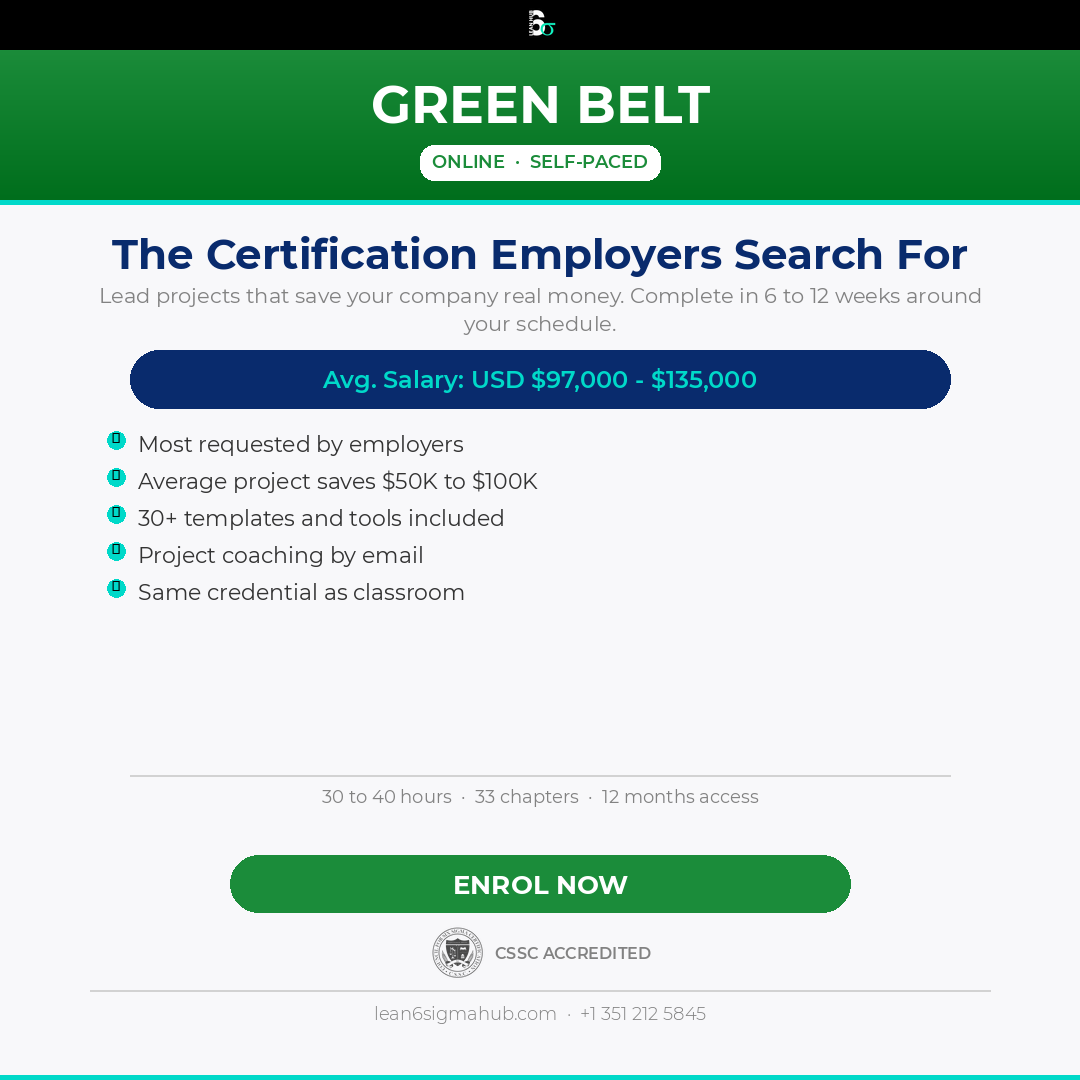
The ROI for a Green Belt certification is substantial. Organizations typically see project savings between $50,000 and $100,000 per initiative led by a Green Belt. Consequently, the market demand for these individuals is high, with average salaries ranging from $97,000 to $135,000. To aid in this transition, practitioners often utilize tools like the Project Charter ROI Calculator to justify the financial viability of their efforts.
The Change Agent: Lean Six Sigma Black Belt
A Black Belt is a full-time professional dedicated to organizational transformation. Unlike Green Belts, Black Belts lead large-scale, cross-functional projects that impact the entire enterprise. They possess an advanced mastery of statistical analysis and are responsible for mentoring Green and Yellow Belts.
The curriculum for a Black Belt involves deep dives into advanced probability, regression analysis, and designed experiments (DOE). Beyond the mathematics, Black Belts are experts in change management. They must be able to document process changes properly to ensure that improvements are institutionalized and do not revert to the previous state once the project concludes.
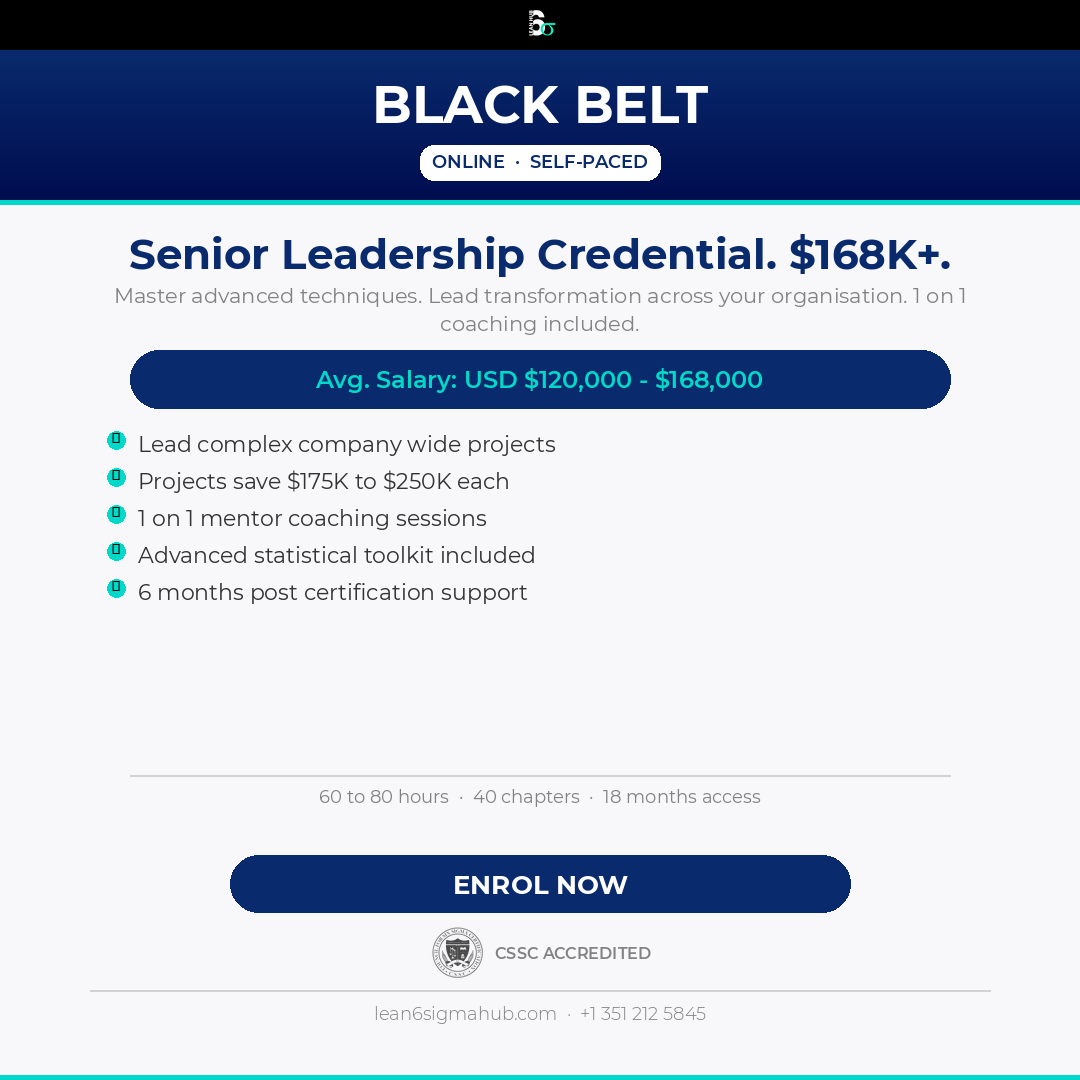
Black Belts are often viewed as the "top tier" of project leadership. The financial impact they deliver is profound, often resulting in $175,000 to $250,000 in savings per project. For the individual, the rewards are equally impressive. A Black Belt certification can command a salary range of $120,000 to $168,000, and it often serves as a prerequisite for senior leadership and operational director roles. Prospective candidates can review a Black Belt sample project to understand the level of rigor required at this stage.
The Strategic Architect: Master Black Belt (MBB)
At the pinnacle of the roadmap sits the Master Black Belt (MBB). This role is less about leading individual projects and more about shaping the overarching strategy of the organization. MBBs function as internal consultants and executive coaches, working directly with the C-suite to deploy Lean Six Sigma across the entire enterprise.
An MBB's responsibilities include:
- Program Deployment: Designing the roadmap for how Lean Six Sigma will be integrated into the company’s DNA.
- Advanced Mentorship: Providing high-level coaching to Black Belts and Green Belts.
- Governance: Establishing standards for conducting process audits and ensuring compliance with quality management systems.
- Complex Problem Solving: Stepping in to resolve the most challenging technical and cultural barriers to efficiency.
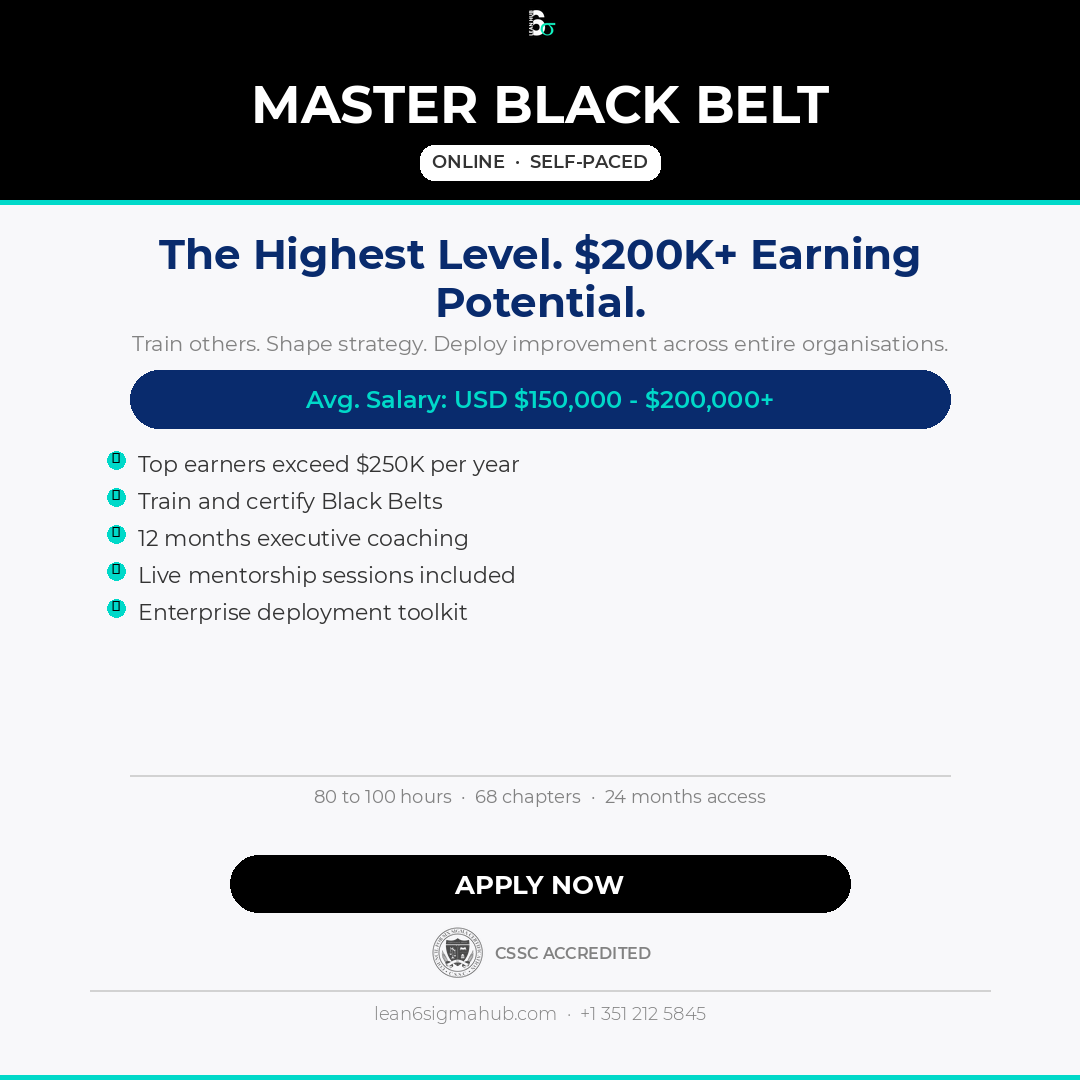
The earning potential for an MBB is elite. With average salaries ranging from $150,000 to over $200,000, and top earners exceeding $250,000, this level represents the ultimate career achievement in process excellence. It is a role defined by strategic vision and the ability to maintain the Control Phase and effective escalation procedures on a global scale.
Why the Roadmap Matters: Cumulative Value and Career Progression
To fully appreciate the Lean Six Sigma career roadmap, one must recognize that each belt builds upon the previous one. You cannot effectively lead a multi-million dollar transformation as an MBB without first understanding the foundational data collection of a Yellow Belt or the project management rigors of a Green Belt.
This progression offers a structured path for career growth that is recognized globally. Unlike many internal company trainings, a Lean Six Sigma certification is portable. Whether you are in healthcare, finance, manufacturing, or technology, the ability to solve complex problems and drive efficiency is a universal currency.
The data is clear: as you ascend the belt levels, your "market value" increases exponentially. This is driven by three primary factors:
- Skill Diversification: Moving from basic problem-solving to advanced statistical modeling.
- Leadership Development: Transitioning from a team member to a mentor and strategic advisor.
- Measurable Results: Your ability to provide concrete evidence of the financial value you have created for your employer.
For those looking to quantify the potential impact of their next project, tools like the Project Selection Scoring Calculator or the Stakeholder Impact Assessment Calculator can provide the data-heavy insights necessary to gain executive buy-in.
Conclusion: Take the Next Step in Your Professional Evolution
The Lean Six Sigma roadmap is more than a series of certificates; it is a commitment to a standard of excellence that separates average performers from industry leaders. By investing in lean six sigma training, you are not just learning a methodology: you are acquiring a mindset that prioritizes efficiency, data-driven decision-making, and continuous growth.
The path from White Belt to Master Black Belt is challenging, but the professional and financial rewards are unparalleled. Whether you are seeking to increase your current salary, pivot to a new industry, or secure a seat at the executive table, Lean Six Sigma provides the framework to get you there.
Pursue your professional development today and secure your future by enrolling in a CSSC-accredited Lean Six Sigma certification program.