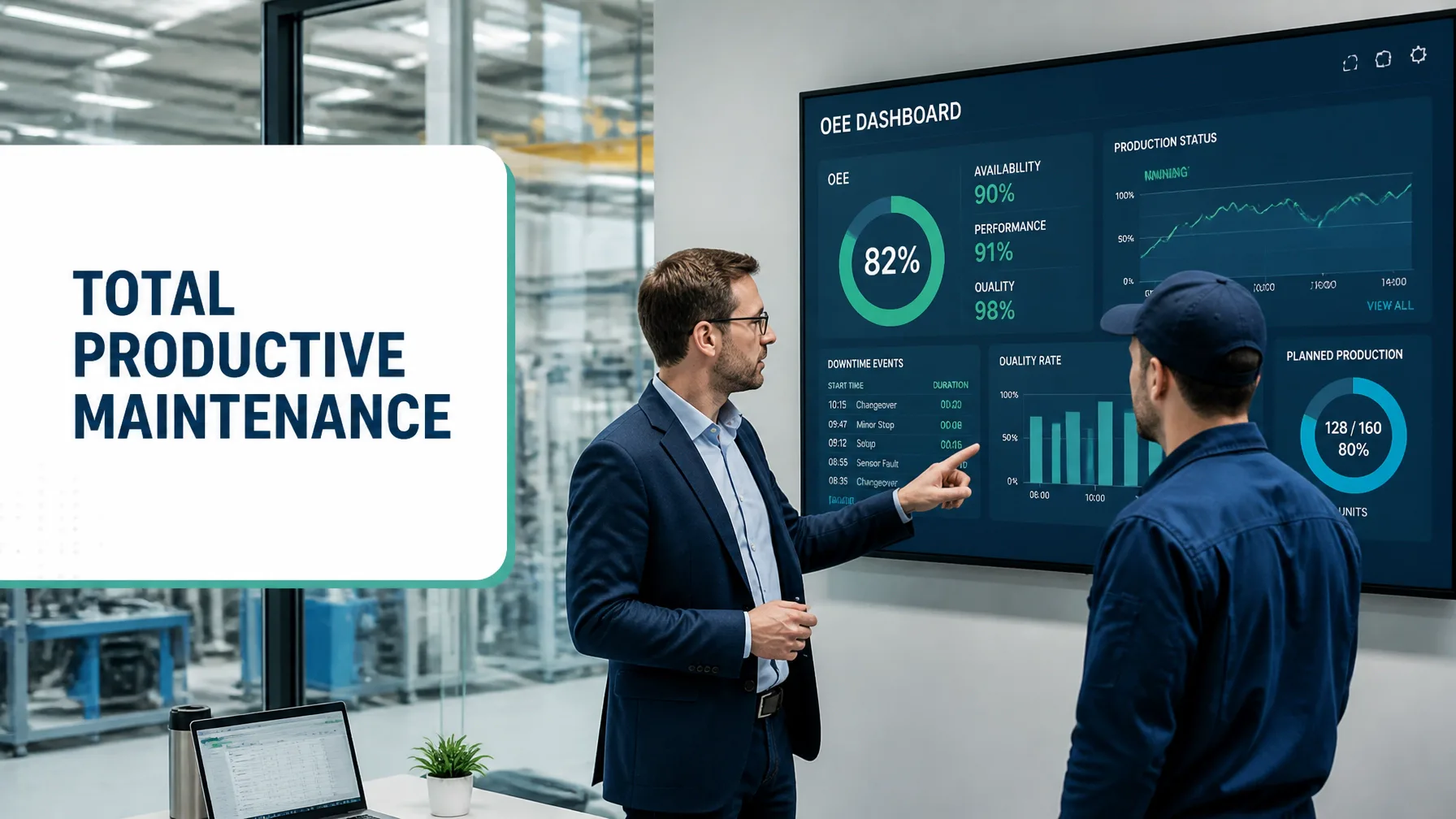
In the realm of operational excellence, few methodologies are as profoundly misunderstood as Total Productive Maintenance (TPM). Organizations frequently relegate TPM to the maintenance department, viewing it as a mechanical checklist of greasing gears, replacing worn-out belts, and reacting to emergency breakdowns. This traditional perspective is not only myopic; it actively erodes profitability.
The fundamental purpose of TPM is to transform equipment maintenance from a reactive chore into an enterprise-wide cultural discipline. When integrated with a rigorous Lean Six Sigma framework, TPM mobilizes the entire workforce: from shop-floor operators to executive leadership: to maximize equipment effectiveness, eliminate chronic waste, and secure enduring competitive advantage. To fully appreciate how operational throughput scales, we must examine the intersection of operator ownership, the Eight Pillars of TPM, and the relentless elimination of the Six Big Losses.
The Paradigm Shift: From "I Operate, You Fix" to True Operator Ownership
In traditional manufacturing and processing environments, a rigid demarcation exists: operators produce goods, and maintenance technicians fix machines. This siloed mentality fosters finger-pointing. When a machine jams or suffers a micro-stoppage, the operator stands idle, waiting for maintenance to arrive, while inventory piles up and OEE (Overall Equipment Effectiveness) plummets.
TPM shatters this artificial divide through Autonomous Maintenance (Jishu Hozen). In a mature TPM culture, operators take direct ownership of their machinery. They perform routine cleaning, lubrication, rigorous visual inspections, and minor adjustments. This daily, hands-on interaction ensures that minor abnormalities are detected and corrected before cascading into catastrophic failures.
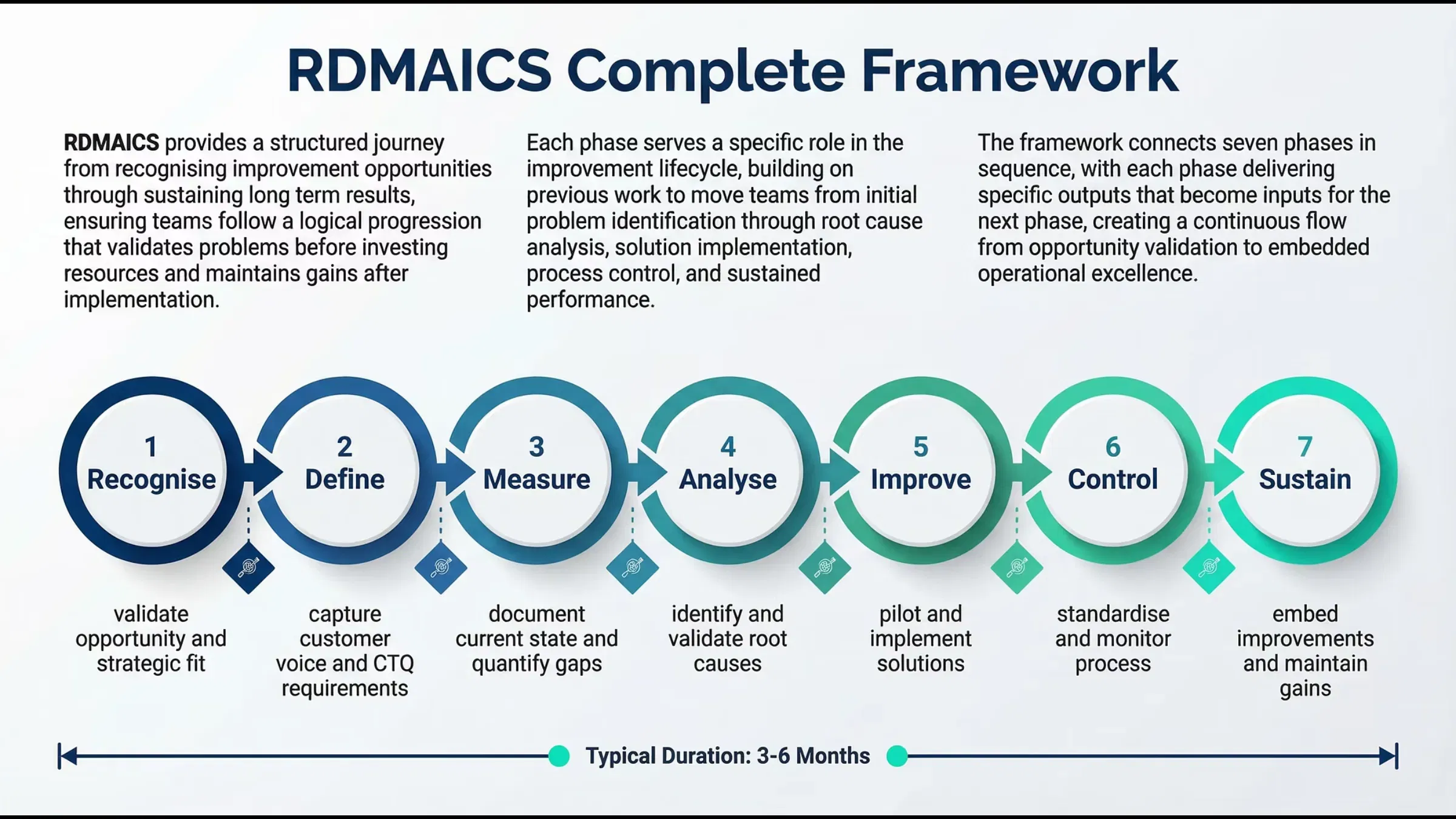
By shifting foundational equipment care to the operators, skilled maintenance technicians are liberated from repetitive grease-gun tasks. Instead, they pivot toward high-value engineering, predictive analytics, and root-cause reliability engineering. This cultural evolution mirrors the core philosophy taught in our Lean Six Sigma Green Belt Online Training, where cross-functional collaboration and data-driven problem-solving dismantle operational silos.
Deconstructing the Eight Pillars of TPM
Total Productive Maintenance is structured around eight core pillars designed to establish a holistic foundation for operational stability. Each pillar targets specific operational vulnerabilities:
- Focused Improvement (Kobetsu Kaizen): Deploying cross-functional teams to tackle chronic equipment losses through structured root-cause analysis and scientific experimentation.
- Autonomous Maintenance (Jishu Hozen): Empowering operators to maintain baseline equipment conditions through standardized cleaning and inspection routines.
- Planned Maintenance: Transitioning from reactive firefighting to predictive and preventive maintenance schedules driven by actual machine reliability data.
- Quality Maintenance: Establishing rigorous process parameter controls to eliminate defects at the source, directly aligning with Six Sigma defect reduction goals.
- Early Equipment Management: Embedding maintainability, reliability, and error-proofing principles into the design and commissioning phases of new capital assets.
- Training and Education: Systematically bridging skill gaps for operators, technicians, and supervisors to ensure operational mastery.
- Safety, Health, and Environment (SHE): Cultivating a zero-accident, zero-hazard workplace as a non-negotiable prerequisite for peak productivity.
- Administrative and Office TPM: Extending Lean and TPM principles into transactional support functions, streamlining information flow and administrative cycle times.
Quantifying the Enemy: The Six Big Losses
To understand why TPM directly impacts financial performance, one must measure the Six Big Losses that erode manufacturing capacity and compress margins:
- Equipment Failures (Breakdowns): Unplanned downtime resulting in zero output and wasted labor.
- Setup and Adjustment Losses: Time consumed during product changeovers, recalibrations, and tooling adjustments.
- Idling and Minor Stoppages: Frequent, short interruptions (under five minutes) caused by jams, sensor trips, or material feeding issues.
- Reduced Speed: Operating machinery below its designed nameplate capacity due to wear, poor lubrication, or suboptimal settings.
- Process Defects: Scrap, rework, and quality losses produced during steady-state manufacturing.
- Reduced Yield (Startup Losses): Scrap generated during the ramp-up phase from initial startup to stable production.

When these losses accumulate unchecked, they manifest as inflated Cost of Poor Quality (COPQ) and eroded EBITDA. TPM provides the systematic toolkit to isolate and eliminate every single one of these loss categories.
Practical Application: A Manufacturing Case Study
Consider a mid-sized automotive component manufacturer experiencing chronic profitability compression. Despite robust sales demand, the plant’s primary stamping line suffered from an abysmal OEE of 48%, driven heavily by frequent minor stoppages, lengthy die-changeover times, and high scrap rates during startup.
Management initiated a comprehensive TPM overhaul, cascading training through our Lean Six Sigma Black Belt Online Training program to build internal leadership capability:
- Phase 1 – Autonomous Maintenance Baseline: Operators were trained to perform daily 10-minute autonomous cleaning and visual inspection checklists. Within 30 days, over 120 minor oil leaks, loose bolts, and misaligned sensors were identified and rectified by operators before causing breakdowns.
- Phase 2 – Focused Improvement (SMED): A cross-functional team applied Single-Minute Exchange of Die (SMED) principles to setup procedures. Die-changeover time plummeted from 145 minutes to 18 minutes.
- Phase 3 – Quality Maintenance Integration: Using statistical process control (SPC) and root-cause problem-solving, the team stabilized critical press parameters, dropping startup scrap by 78%.
The Financial Outcome: Over a 12-month period, the plant’s overall OEE surged from 48% to 79%, unlocking an annualized capacity equivalent to an additional $3.4 million in revenue without purchasing a single new machine.

Bridging TPM and Lean Six Sigma for Enterprise Excellence
TPM is not an isolated initiative; it is the mechanical heartbeat of a world-class Lean enterprise. While Lean eliminates flow waste and Six Sigma eradicates statistical variation, TPM guarantees that the physical assets underpinning the process are reliable, predictable, and fully capable.
For professionals seeking to master these interconnected methodologies, building foundational awareness is the critical first step. For a thorough introduction to basic process improvement principles and DMAIC awareness, explore our Lean Six Sigma Yellow Belt Online Training.
Organizations aiming to build enterprise-wide capability, establish robust governance frameworks, and mentor the next generation of operational leaders should look toward our advanced Lean Six Sigma Master Black Belt Online Training.

Conclusion
Total Productive Maintenance transcends the maintenance shop. When deployed as a cultural revolution, it instills discipline, elevates operator accountability, and unlocks hidden factory capacity that directly bolsters your bottom line. Stop treating equipment reliability as an afterthought and start treating it as your primary competitive weapon.
Ready to transform your plant's operational performance and accelerate your career? Enroll today in our globally recognized, CSSC-accredited Lean Six Sigma Black Belt Online Training program and become the catalyst for enterprise-wide change!