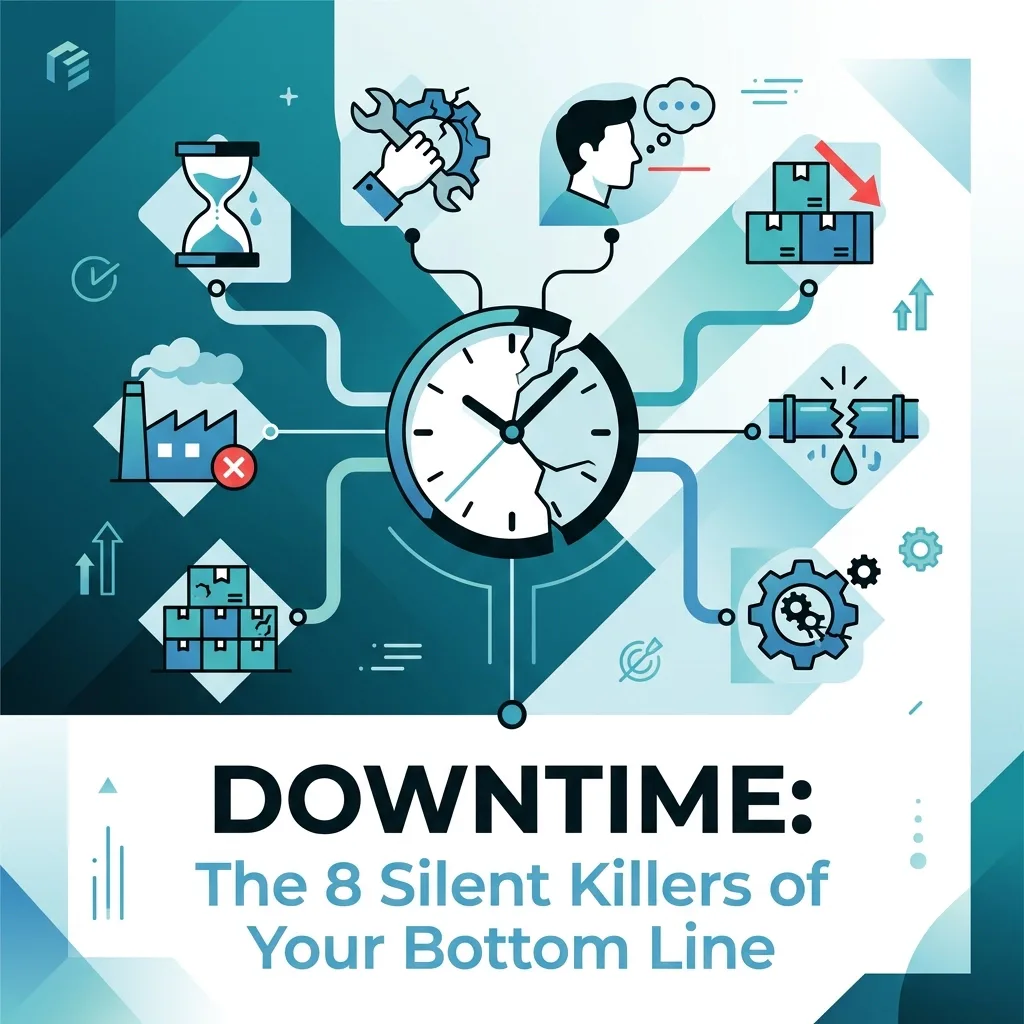
In the world of Lean Six Sigma, we don’t just look for "problems." We look for Waste. Waste is the thief that sits in your boardroom, walks your factory floor, and hides in your spreadsheets, quietly siphoning off your profits while you’re busy looking at top-line revenue. If you want to scale a business or optimize a process, you have to stop the bleeding.
Most managers think they know where their money goes. They look at payroll, rent, and material costs. But they rarely see the 8 Silent Killers that define the difference between a high-performing organization and one that is just spinning its wheels. We use the acronym DOWNTIME to identify these killers.
If you aren't actively hunting these down, they are hunting your margin. Let’s break down the 8 wastes that are destroying your bottom line.
1. Defects: The Cost of Doing it Twice
A defect is anything that doesn’t meet the customer’s requirements. It sounds simple, but the ripples are devastating. When a product is built wrong, or a report contains errors, you aren't just losing the cost of the material. You are losing the labor time it took to make it, the labor time it takes to fix it (rework), and the potential trust of your customer.
In technical terms, this is often categorized under the Cost of Poor Quality (COPQ). If you find yourself constantly putting out fires, you likely have a defect problem. The key to solving this isn't just "working harder"; it’s about establishing robust process documentation so that the "right way" is the only way.
2. Overproduction: The "Just in Case" Trap
Overproduction is often called the "Mother of All Wastes" because it triggers almost every other waste on this list. Overproduction happens when you make more than the customer ordered or make it faster than it’s needed.
Why is this a killer? Because it ties up your cash in products that aren't sold yet. It requires extra storage (Inventory), extra moving (Transportation), and it hides defects. If you produce 1,000 units but only needed 100, and you realize there’s a flaw in the design, you now have 1,000 pieces of scrap instead of 100.
To truly master production levels, you need to understand the balance between quick wins and long-term solutions to ensure your output matches actual demand.
3. Waiting: The Profit Vacuum
Waiting is perhaps the most frustrating waste. It’s the idle time when people, equipment, or information are stuck in limbo.
- An operator waiting for a machine to finish a cycle.
- A manager waiting for an approval email.
- A project team waiting for data to be cleaned.
Every second someone is "waiting" is a second you are paying for zero value. In many service industries, waiting accounts for over 90% of the total lead time. If you want to see where your bottlenecks are, look at where the piles of work are sitting.

4. Non-Utilized Talent: The Forgotten Waste
This is the only waste that doesn't deal with physical objects or time: it deals with human potential. Non-utilized talent occurs when you hire smart people and then give them mind-numbing, repetitive tasks that don't use their brains. Or worse, when you ignore their ideas for improvement.
When you fail to engage your frontline staff in problem-solving, you lose out on the best source of innovation you have. They are the ones who see the waste every day. If you aren't using their insights, you are effectively paying for a Ferrari but only driving it in first gear. This is why we emphasize the importance of lessons learned documentation to capture the collective intelligence of your team.
5. Transportation: Moving for the Sake of Moving
Transportation is the unnecessary movement of materials or information. In a factory, this might be moving pallets from one warehouse to another because the first one is full. In an office, it’s the "digital transportation" of CC’ing twenty people on an email or moving files through five different software platforms.
Transportation adds zero value to the product. The customer doesn't care if the part traveled 5 miles or 500 miles inside your facility; they only care if it works. Every time you move something, you risk damaging it, losing it, or delaying its completion.
6. Inventory: The Graveyard of Capital
Inventory is essentially "cash with a shelf life." Whether it’s raw materials, work-in-progress (WIP), or finished goods, excess inventory is a liability. It takes up space, requires insurance, and: worst of all: it hides process problems.
Think of a river. When the water level (inventory) is high, you can't see the rocks (problems) at the bottom. When you lower the water level, the rocks appear, and you can finally remove them. Reducing inventory forces you to fix your process issues.
If you're struggling to justify the cost of your current stock levels, using a Project Charter ROI Calculator can help you see the actual financial impact of your Lean initiatives.
7. Motion: Physical Wear and Tear
While Transportation refers to the movement of products, Motion refers to the movement of people or equipment.
- Searching for a tool that isn't where it belongs.
- Walking across the office to use the only functional printer.
- Excessive clicking through software screens to find one piece of data.
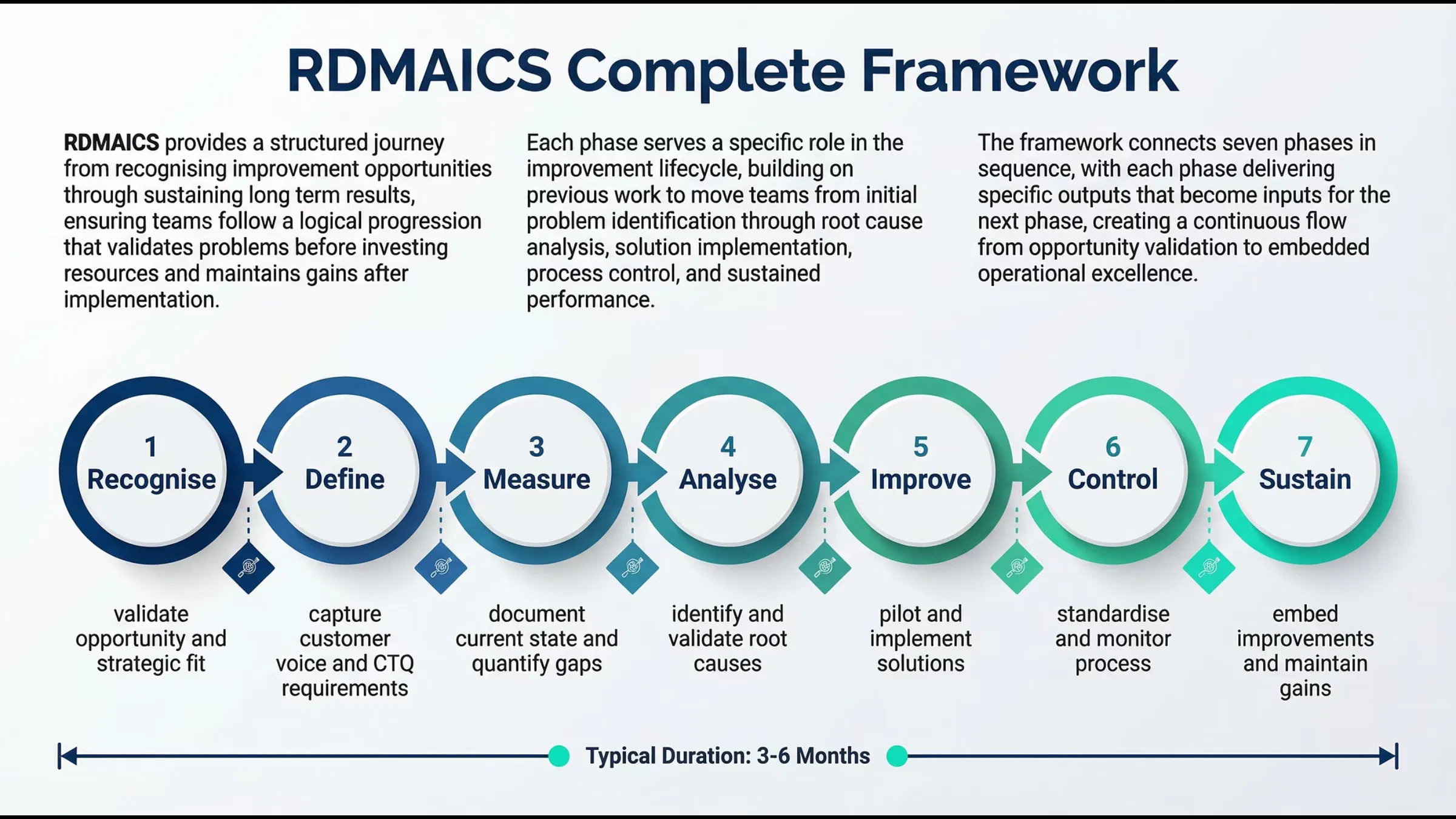
These movements might only take seconds, but multiplied by hundreds of times a day across dozens of employees, they add up to thousands of hours of wasted capacity every year. Optimizing your workspace layout is a fundamental part of the Improve phase in Lean Six Sigma.
8. Extra-Processing: Giving Away Your Margin
Extra-processing: or over-processing: is doing more work than the customer requested or values. This often happens because of "the way we’ve always done it."
- Polishing a part that will be hidden inside a machine.
- Creating a 50-page report when the boss only reads the executive summary.
- Requiring three signatures for a $5 purchase.
If the customer isn't willing to pay for it, it’s waste. Period. You must focus on the Critical to Quality (CTQ) elements that actually drive customer satisfaction and cut everything else.

How to Kill the Killers
Now that you know what DOWNTIME looks like, how do you stop it? You can't just tell people to "be more efficient." You need a system.
- Go to the Gemba: You can't see waste from your office. You have to go to where the work happens.
- Map the Process: Use process mapping to visualize the flow of value. If a step doesn't add value, it’s a candidate for elimination.
- Measure the Impact: Don't guess. Use data. Whether it's a Shapiro-Wilk test for data normality or simple time-tracking, get the facts.
- Standardize: Once you find a better way, document it. If you don't standardize, you will slowly drift back into your old, wasteful habits.
The Bottom Line
DOWNTIME isn't just an acronym; it’s a mindset. The most successful companies in the world: from Toyota to Amazon: are obsessed with identifying and eliminating these 8 wastes. They know that efficiency isn't about working people harder; it's about removing the obstacles that prevent them from doing their best work.
If you’re tired of seeing your profits disappear into the "waste" bucket, it’s time to get serious. Identifying these killers is the first step toward operational excellence. The second step is mastering the tools to eliminate them for good.
Ready to stop the bleeding and become the efficiency expert your company needs? Enroll in our CSSC-accredited Green Belt Certification today and start hunting down the DOWNTIME in your organization.