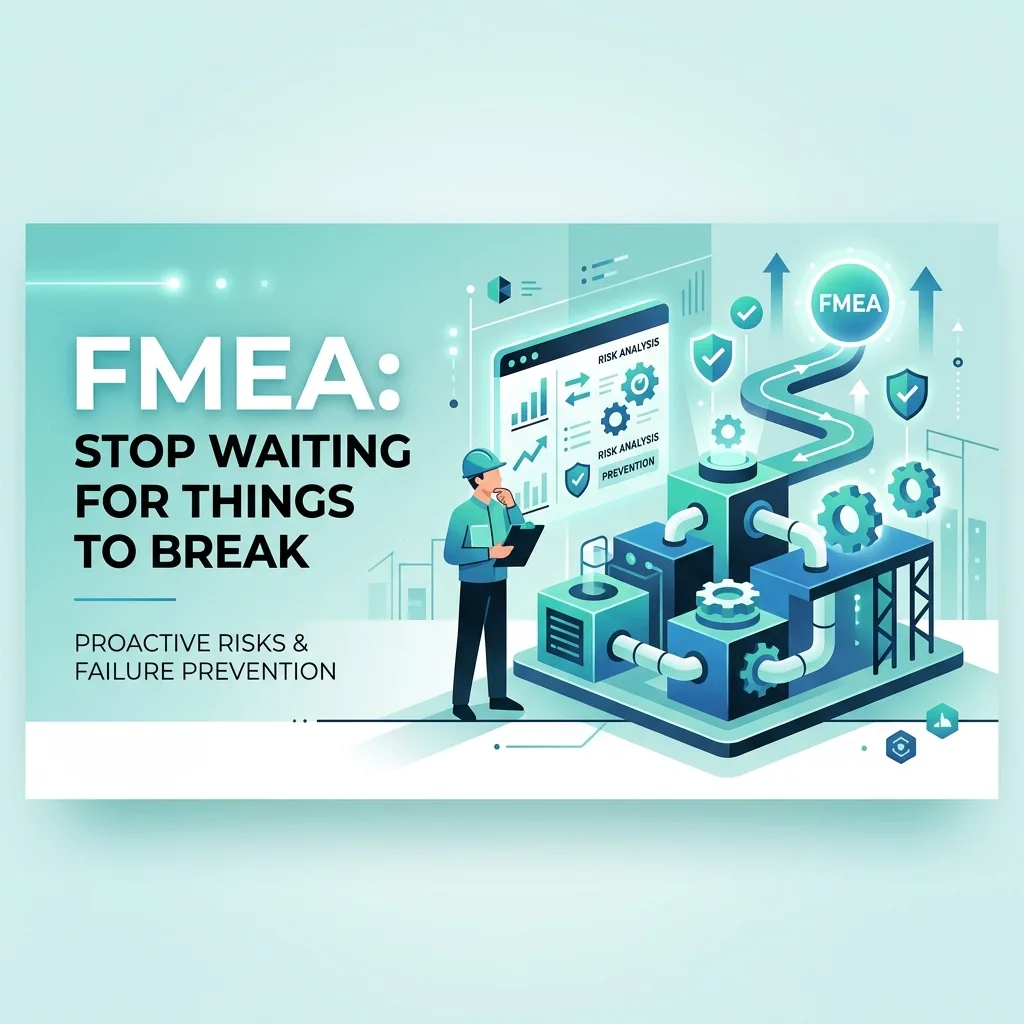
In the world of Lean Six Sigma, there are two types of leaders: those who predict fires and those who spend their entire lives carrying buckets.
If your current management strategy involves waiting for a customer to scream, a machine to explode, or a process to grind to a halt before you take action, you aren’t "managing": you’re reacting. You’re playing a game of whack-a-mole where the moles are made of lost revenue and damaged reputation.
It’s time to grow up. It’s time to stop waiting for things to break and start using Failure Mode and Effects Analysis (FMEA).
FMEA is the proactive powerhouse of the Improve phase. It is the systematic method of looking into the future, identifying every possible way a process could go wrong, and putting a "kill switch" on those risks before they ever see the light of day. If you want to build a bulletproof operation, this is your blueprint.
What is FMEA, Really?
Forget the dry, academic definitions for a second. At its core, FMEA is a structured brainstorm session with teeth. It asks three fundamental questions:
- How could this fail? (Failure Mode)
- If it fails, how bad is the damage? (Effects)
- What are we going to do about it right now? (Action)
Whether you are looking at a product design (DFMEA) or a manufacturing/service process (PFMEA), the goal is the same: identify potential failures and prioritize them based on risk. You aren't just guessing; you are using data and collective expertise to rank your nightmares.
In the realm of Lean Six Sigma concepts and glossary, FMEA sits at the intersection of risk management and continuous improvement. It’s not just a document you fill out to satisfy an auditor; it’s a living tool that dictates how you run your business.

The Anatomy of Risk: Severity, Occurrence, and Detection
To master FMEA, you have to understand the Risk Priority Number (RPN). This is the "secret sauce" that separates minor annoyances from business-ending catastrophes. You calculate RPN by multiplying three scores, usually on a scale of 1 to 10:
1. Severity (S)
How much does it hurt when this goes wrong? If the failure results in a minor typo on an internal memo, the severity is a 1. If the failure results in a product recall or a safety hazard, that’s a 10. You cannot negotiate severity: it is what it is.
2. Occurrence (O)
How often does this happen? If it’s a "once in a blue moon" freak accident, it’s a 1. If your process is so unstable that this happens every Tuesday, it’s a 10. This is where process mapping in the Measure phase helps you understand the frequency of your current headaches.
3. Detection (D)
If this failure happened right now, would you catch it before the customer did? If you have automated sensors and triple-checks, your detection is high (which translates to a low score, like 1 or 2). If you only find out when a customer leaves a one-star review, your detection is a 10.
The Formula: S x O x D = RPN.
A high RPN is a giant red flag waving in your face. It tells you exactly where to focus your resources. If you have an RPN of 500, you don't walk: you run to fix it.
Why Proactive is the Only Way to Fly
Most amateurs think they are saving money by skipping the FMEA process. They think, "We'll fix it if it breaks." This is a lie.
The Cost of Poor Quality (COPQ) increases exponentially the further a failure travels. Fix a design flaw on a napkin? It costs you $1. Fix it during a pilot? It costs $100. Fix it after 10,000 units are in the hands of customers? It costs $1,000,000 and potentially your job.
By using FMEA during your tollgate reviews, you ensure that you aren't just moving to the next phase of a project with "fingers crossed." You are moving forward with a calculated understanding of your risks.

Step-by-Step: How to Run a High-Attitude FMEA
Don't just gather people in a room and start shouting. You need a process. Here is how a Master Black Belt does it:
- Assemble the Avengers: You need people who actually do the work. Don't just invite managers. Bring in the operators, the engineers, and the customer service reps who hear the complaints.
- Define the Scope: Are you looking at a specific machine or the entire supply chain? Use your SIPOC to set the boundaries.
- List the Functions: What is the process supposed to do?
- Brainstorm Failure Modes: For every function, list everything that could go wrong. Be pessimistic. If the "human element" is a factor, assume humans will make mistakes.
- Assign Scores: Rate Severity, Occurrence, and Detection for every single failure mode.
- Calculate RPN: Do the math. Rank them from highest to lowest.
- Take Action: This is where most people fail. They fill out the spreadsheet and then put it in a drawer. If the RPN is high, you must change the process.
- Re-evaluate: After you’ve implemented your quick wins or long-term solutions, recalculate the RPN. Did it go down? If not, try again.
Real-World Example: The "Cold Pizza" Crisis
Imagine you run a high-end pizza delivery service. Your Critical to Quality (CTQ) requirement is "Pizza must arrive at 65°C."
- Failure Mode: Delivery driver gets lost.
- Effect: Pizza arrives cold (40°C). Customer demands a refund.
- Severity: 8 (High impact on revenue and brand).
- Cause: Drivers using outdated paper maps or phone GPS with dead zones.
- Occurrence: 7 (Happens multiple times a night).
- Detection: 3 (We have a tracker, but dispatch doesn't look at it unless the customer calls).
- RPN: 8 x 7 x 3 = 168.
Action Taken: Implement a rugged, vehicle-mounted GPS system with offline maps and an automated "off-route" alert for dispatch.
New RPN: Severity stays 8, but Occurrence drops to 2 and Detection drops to 1. New RPN = 16. Crisis averted.

Don't Let FMEA Become a Paperweight
The biggest mistake you can make is treating FMEA as a "one and done" task. It’s a living document. Every time you have a lessons learned session, those insights should flow back into your FMEA.
If you find a new way for a process to fail, add it. If you improve your detection by using optimization plots, update your scores.
Properly documenting your process changes is the only way to ensure that the risks you "killed" stay dead. Without documentation, you’re just relying on memory, and memory is the first thing to fail when things get busy.
Stop Guessing, Start Certifying
Look, you can keep playing detective every time something breaks, or you can become the strategist who prevents the disaster in the first place. High-level Lean Six Sigma practitioners don't just "fix things": they design systems that are difficult to break.
Whether you are looking to lead massive cross-functional teams or just want to stop your own department from being a chaotic mess, mastering FMEA is a non-negotiable skill. It is the difference between being a "worker" and being a "leader."
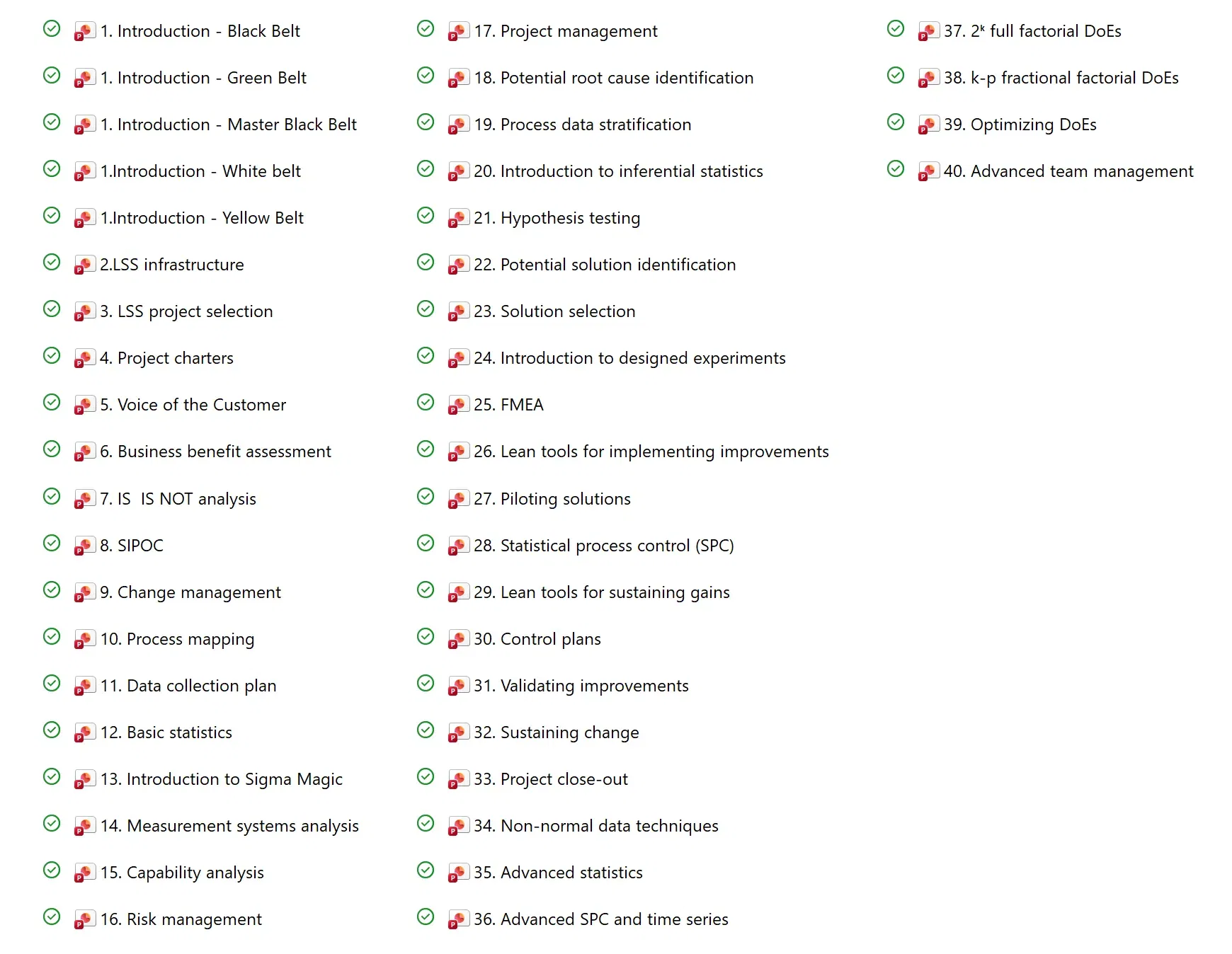
At Lean 6 Sigma Hub, we don't just teach you how to fill out a spreadsheet. We teach you how to think three steps ahead of the competition. Our Black Belt and Green Belt programs are designed to give you the tools: like FMEA, SPC, and DOE: to transform your career and your company’s bottom line.
Stop waiting for the next breakdown to define your day. Take control of your processes and your professional future.
Ready to stop reacting and start leading? Enroll in our Black Belt Certification program today and learn how to master the tools that the world’s most efficient companies use to stay on top.