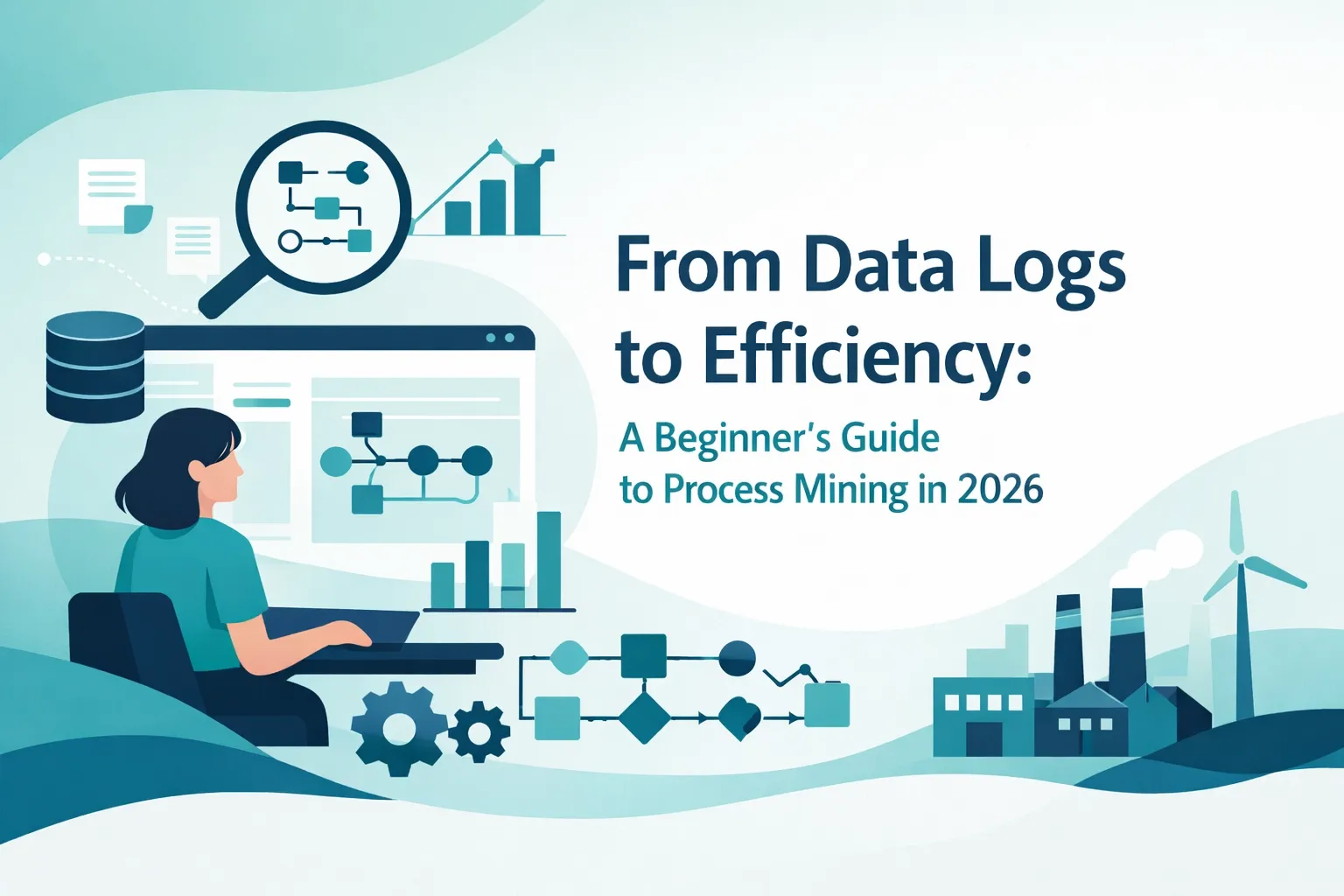
In the realm of modern organizational management, the ability to visualize the actual flow of work: rather than the perceived flow: has become the ultimate competitive advantage. As we navigate the complexities of 2026, the traditional methods of interviewing stakeholders and drawing manual flowcharts are being supplemented, and often replaced, by a high-precision methodology known as Process Mining.
For professionals pursuing lean six sigma online training, understanding process mining is no longer optional; it is a fundamental requirement for the digital age. This guide serves as a comprehensive introduction to how data logs are transformed into operational efficiency and how you can integrate these insights into your six sigma certification journey.
The Fundamental Purpose of Process Mining
The fundamental purpose of process mining is to bridge the gap between data science and process management. Historically, Lean Six Sigma practitioners relied heavily on "Voice of the Employee" to map processes. While valuable, this subjective data often misses the nuances of reality: the "shadow processes" that occur when systems don't align with human behavior.
Process mining functions as an "X-ray" for your business. By extracting data from existing Information Technology (IT) systems, it creates an objective, evidence-based view of how processes are actually performing. This data-driven transparency allows for the identification of bottlenecks, deviations, and rework loops with a level of precision that manual observation simply cannot match.

The DNA of Process Mining: Understanding Event Logs
To fully appreciate how process mining operates, one must understand its primary fuel: the Event Log. Every time an action is performed within a modern enterprise system: whether it is an ERP, CRM, or a dedicated workflow tool: a digital footprint is left behind.
An event log typically consists of three critical data points:
- Case ID: A unique identifier for a specific instance of a process (e.g., an Order Number or a Patient ID).
- Activity: The specific task or step that was performed (e.g., "Invoice Approved" or "Quality Check Completed").
- Timestamp: The exact date and time the activity occurred.
By aggregating these three elements across thousands of transactions, process mining software can reconstruct the entire journey of a process. This allows practitioners to conduct a thorough gap analysis in Six Sigma, comparing the theoretical "happy path" against the messy reality of day-to-day operations.
Navigating the Three Pillars of Process Mining
In the sophisticated landscape of 2026, process mining is categorized into three distinct functional areas. Each plays a vital role in a comprehensive continuous improvement strategy.
1. Discovery
This is the most common entry point for beginners. Discovery involves taking raw event logs and generating a process model without any prior architectural assumptions. It uncovers the "As-Is" state, revealing exactly where time is lost. For those just starting their lean six sigma online training, discovery provides the visual proof needed to justify a project during the "Define" and "Measure" phases.
2. Conformance
Once a standard operating procedure (SOP) is established, Conformance checking compares the actual event logs against the predefined "To-Be" model. This identifies non-compliant behavior or "maverick" processes. It is an essential component when establishing project governance structures, ensuring that the process remains within its intended boundaries.
3. Enhancement
The final pillar involves using historical data to predict future performance and suggest optimizations. Enhancement doesn't just show you what went wrong; it provides the analytical foundation to improve the process, often integrating with automation tools to eliminate repetitive, low-value tasks.

The Strategic Intersection: Process Mining and Lean Six Sigma
A common misconception is that process mining replaces Lean Six Sigma. On the contrary, process mining acts as a powerful accelerant for the DMAIC (Define, Measure, Analyze, Improve, Control) framework.
- Define & Measure: Instead of spending weeks manually mapping a SIPOC, process mining provides an instant, data-backed visualization of the process scope.
- Analyze: Practitioners can use variant analysis to see why certain "cases" take longer than others. This moves the focus from guessing "why" to analyzing the data of "what" actually happened.
- Improve: By identifying the exact location of bottlenecks, teams can apply Lean tools like 5S or Kaizen specifically where they will have the highest ROI. You can even use a project charter ROI calculator to project savings based on mined data.
- Control: This is perhaps where process mining shines brightest. It allows for real-time monitoring. Instead of waiting for a monthly report, the control phase becomes a live dashboard that alerts the process owner the moment a deviation occurs.
A Beginner’s Roadmap: Launching Your First Journey
Embarking on a process mining initiative requires a structured approach. To ensure success, follow these professional protocols:
- Identify the Business Problem: Do not mine data for the sake of mining. Start with a specific pain point: such as a high cycle time in procurement or a high error rate in shipping.
- Locate the Data Source: Determine which systems house the relevant event logs. Ensure the data is accessible and that you have the necessary permissions.
- Select Your Tools: In 2026, the market offers a range of options from enterprise leaders like Celonis and IBM to more accessible solutions like Microsoft Power Automate.
- Extract and Cleanse: Data is rarely perfect. You will likely need to clean the logs to ensure timestamps are consistent and Case IDs are unique.
- Analyze and Iterate: Use the software to visualize the process. Look for the "spaghetti" in the process map: the areas where lines cross and loop back: as these are your primary opportunities for improvement.
For those looking to practice their analytical skills before diving into a full-scale corporate project, exploring a Lean Six Sigma hypothetical project can be an excellent way to build confidence.

Why 2026 is the Year to Master This Skill
The convergence of AI and process mining has made these tools more intuitive than ever. Natural Language Processing (NLP) now allows practitioners to ask questions of their data, such as "Show me all cases where the approval took more than 48 hours," and receive an immediate visual response.
As organizations strive for "Hyper-Efficiency," the demand for professionals who can interpret these digital fingerprints is skyrocketing. Achieving a six sigma certification that includes a deep understanding of data-driven discovery is the most effective way to future-proof your career.
Practical Tools to Support Your Journey
Beyond the high-level software, Lean Six Sigma practitioners should utilize specialized calculators and templates to quantify their findings. For instance, once process mining identifies a potential improvement area, use a Project Selection Scoring Calculator to prioritize it against other initiatives.
If you are currently preparing for your exams, utilizing Six Sigma Flash Cards can help reinforce these technical concepts, ensuring you are ready to apply them in a professional setting.

Conclusion: Taking the First Step
Process mining is no longer a futuristic concept; it is the standard for process excellence in 2026. By shifting from anecdotal evidence to hard data logs, you empower your organization to make decisions with surgical precision.
Whether you are a seasoned Black Belt or just beginning to explore process improvement, the journey from data logs to efficiency starts with a commitment to continuous learning. The digital transformation of the industry means that the most successful professionals will be those who can speak the language of both Lean Six Sigma and Data Science.
Begin your journey toward professional excellence today. Start with our free training modules and take the first step toward your globally recognized certification.