In the rapidly evolving landscape of 2026, the velocity of technological disruption and market volatility has rendered traditional change management models largely insufficient. For decades, organizations relied on linear frameworks designed for a slower, more predictable era. However, as we operate in an environment defined by hyper-connectivity and AI-driven shifts, the "siloed" approach to organizational change: where technical process improvement and human transition management are treated as separate entities: has become a primary driver of transformation failure.
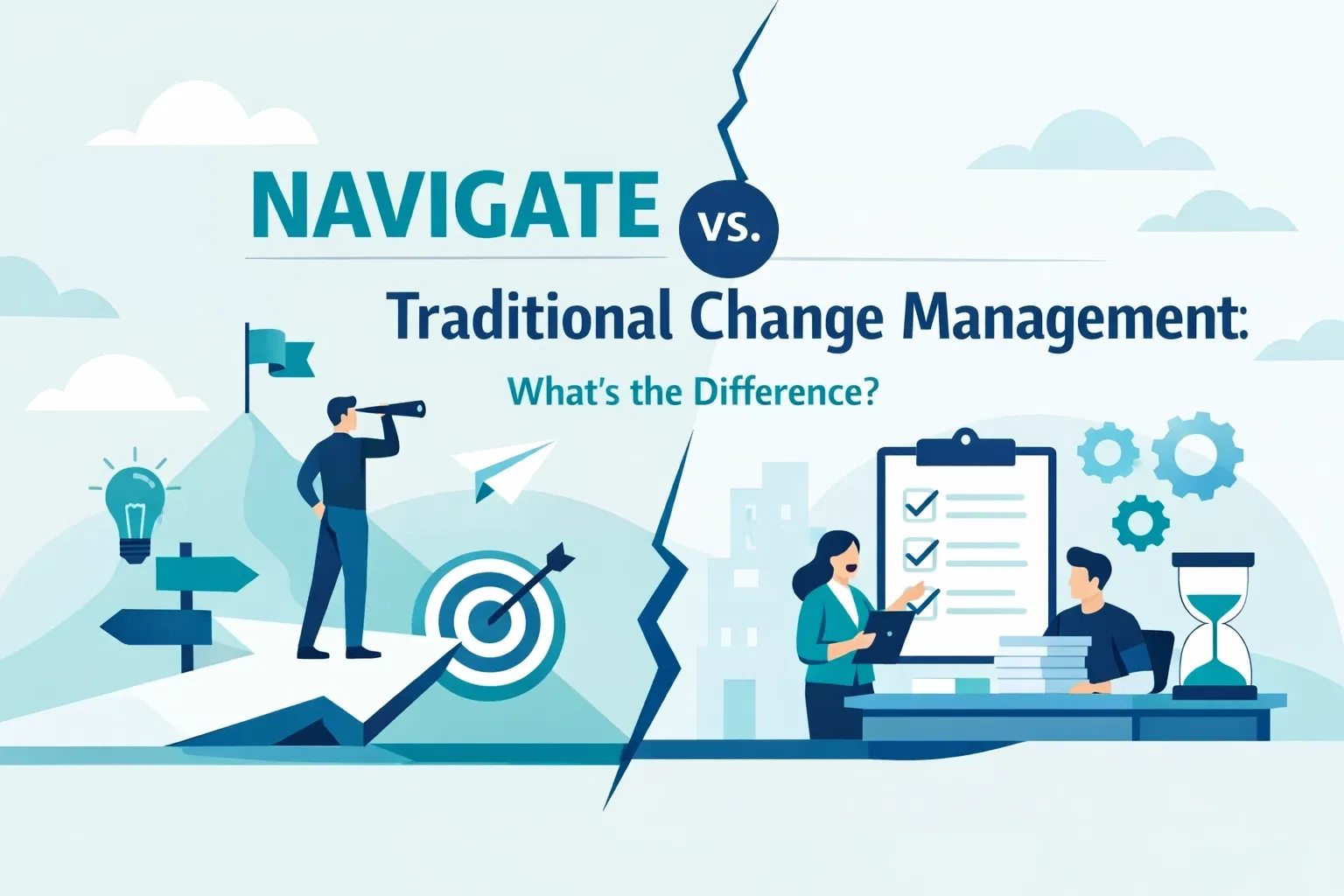
To address these modern complexities, the NAVIGATE framework was developed. Unlike traditional models that focus heavily on either the "people side" or the "process side," NAVIGATE provides an integrated, 8-phase architecture that bridges the gap between Lean Six Sigma rigor and behavioral psychology. To fully appreciate the superiority of this integrated approach, one must examine the fundamental differences between NAVIGATE and the conventional methodologies that preceded it.
The Limitations of Traditional Change Management
Traditional change management frameworks, such as Kotter’s 8-Step Process or the ADKAR model, were revolutionary for their time. Their fundamental purpose was to address the emotional and psychological journey of employees during transitions. While these models are effective at identifying the need for "buy-in," they often operate in a vacuum, detached from the technical data and operational realities of the business.
In a traditional setting, the "Change Management" team often works in parallel with the "Process Improvement" or "Project Management" teams. This results in several critical issues:
- Anecdotal Over Data-Driven: Traditional models often rely on qualitative feedback and sentiment analysis rather than hard operational metrics.
- Reactive Implementation: Change management is frequently brought in as an afterthought once a solution has already been designed, leading to friction and resistance.
- Sustainability Gaps: Without a direct link to the technical control phases of a project, "anchoring change in the culture" remains a vague aspiration rather than a measurable outcome.
To bridge these gaps, organizations must shift toward an integrated architecture. Using a project selection scoring calculator is just the first step; the true challenge lies in the execution of the change itself.
The NAVIGATE Framework: An Integrated 8-Phase Approach
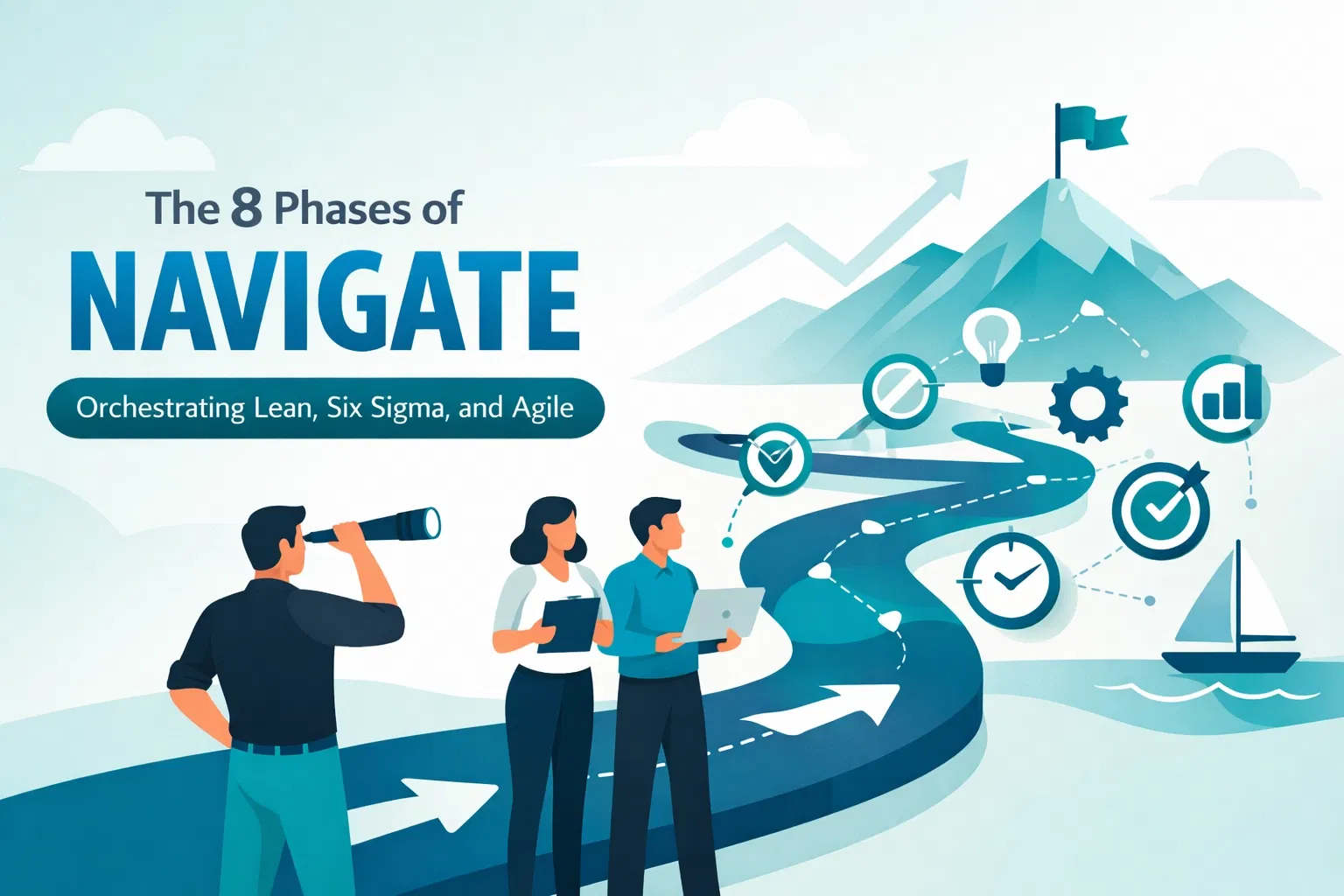
NAVIGATE is an industry-agnostic framework designed to orchestrate Lean, Six Sigma, and Agile methodologies within a single, cohesive change management structure. The acronym represents eight distinct phases that ensure both technical excellence and cultural adoption.
1. Need the Shift
Traditional models start with "creating a sense of urgency." NAVIGATE goes further by requiring a data-backed justification for change. This involves establishing baseline metrics to prove the "Need" exists not just emotionally, but financially and operationally.
2. Align the Leadership
One of the most frequent causes of failure is a disconnect between executive vision and middle-management execution. NAVIGATE utilizes a stakeholder impact assessment calculator to identify potential friction points within the leadership hierarchy early in the process.
3. Visualize the Future
In this phase, the organization translates the high-level vision into specific, measurable requirements. This is where tools like the translation from VOC to CTQ become vital. By visualizing the "To-Be" state through the lens of the customer, the change becomes objective rather than subjective.
4. Ignite the Culture
This is where NAVIGATE integrates behavioral psychology. Rather than just "communicating" the change, the framework focuses on "nudging" behaviors. It utilizes psychological safety and micro-incentives to prepare the workforce for the technical changes to come.
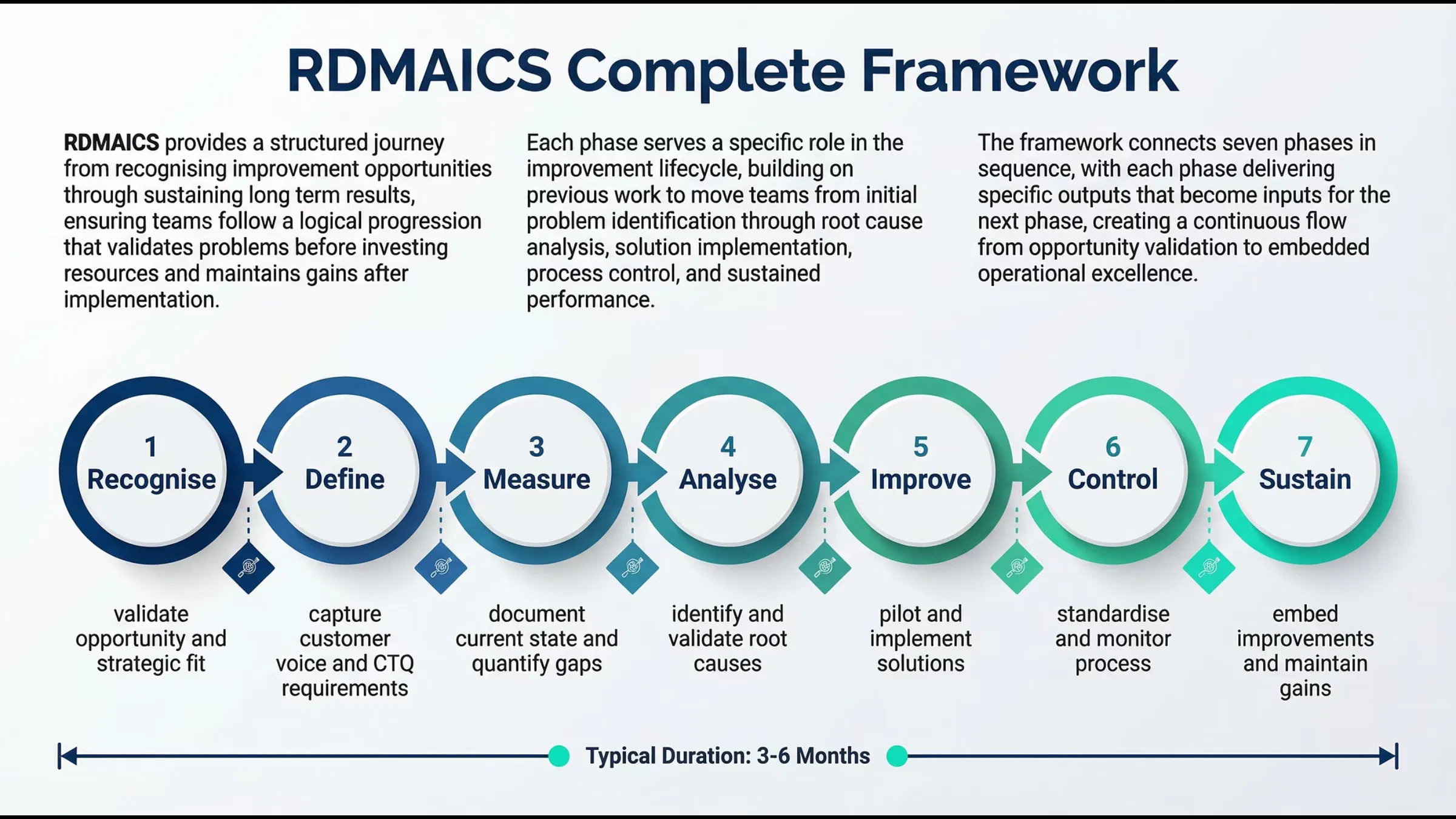
5. Generate the Solution
Unlike traditional change models that ignore the "how" of the solution, NAVIGATE embeds the design process. This involves rigorous risk assessment using FMEA scoring to ensure the proposed changes won't introduce new defects into the system.
6. Activate the Change
This phase focuses on scaling solutions from pilot to full implementation. Traditional models often fail here because they lack the technical roadmap for deployment. NAVIGATE treats activation as a structured rollout with specific checkpoints.
7. Track the Impact
In the realm of modern transformation, real-time progress tracking is non-negotiable. NAVIGATE utilizes dynamic dashboards to monitor the adoption rate and the technical performance of the new process simultaneously. If the data deviates from the expected ROI, the framework allows for rapid course correction.
8. Evolve Continuously
The final phase focuses on building a culture where improvements stick. This is not a "close-out" phase but a transition into a permanent state of Kaizen, where the new way of working becomes the standard operating procedure.
Key Differentiators: Why NAVIGATE Wins in 2026
Behavioral Psychology Integration
Traditional change management often treats "resistance" as a problem to be overcome through persuasion. NAVIGATE treats behavior as a data point. By applying principles of behavioral economics and cognitive psychology, NAVIGATE designs the "path of least resistance" into the new process itself. This makes adoption a natural consequence of the system's design rather than a forced compliance measure.
Real-Time Progress Tracking
In 2026, waiting for quarterly surveys to gauge the success of a transformation is a recipe for disaster. NAVIGATE leverages real-time analytics to track both the technical health of the process and the behavioral health of the organization. By integrating how to conduct process audits into the change framework, leaders gain immediate visibility into whether the transformation is delivering its promised value.
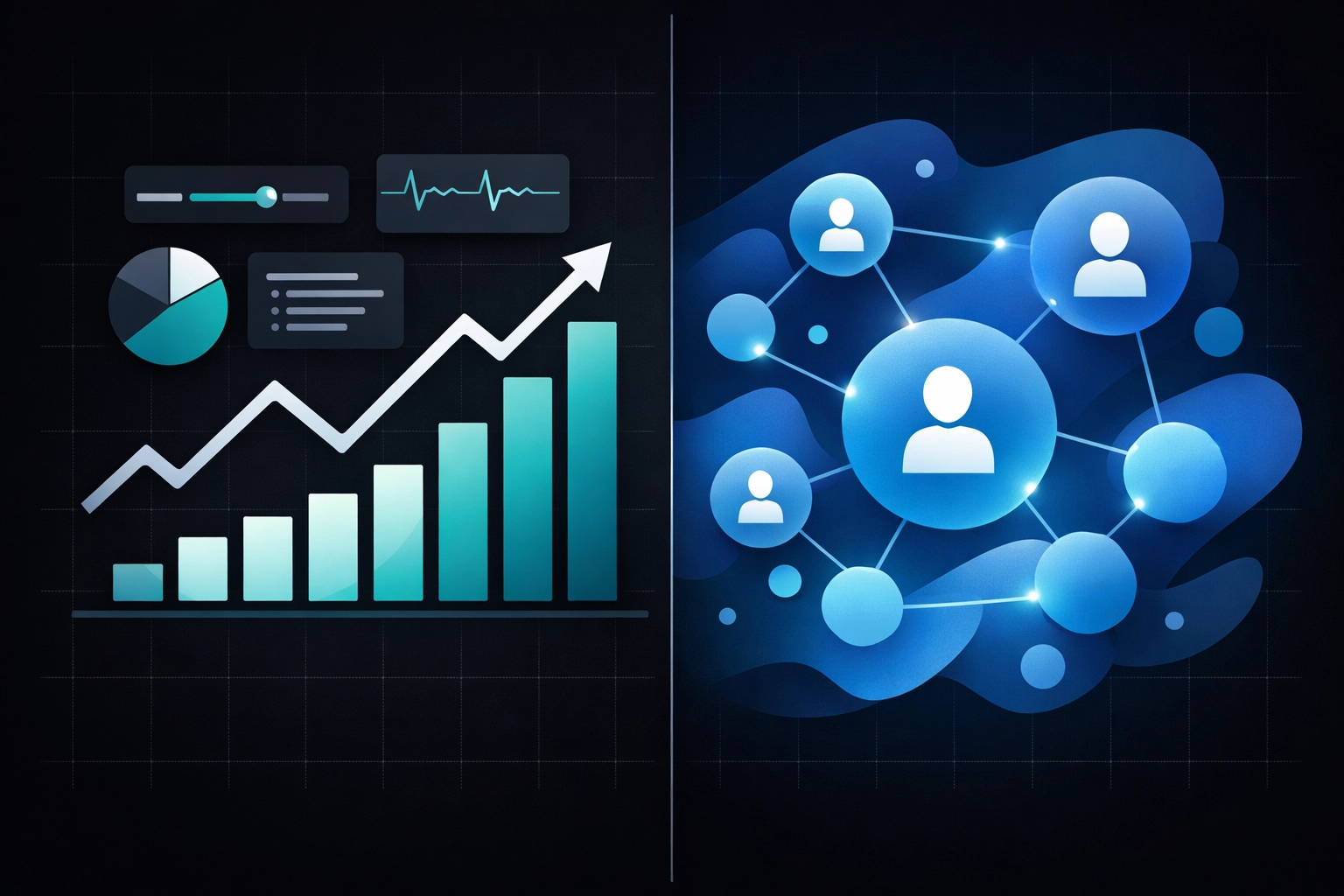
Description: A high-tech operations center dashboard showing side-by-side metrics of process efficiency (technical) and employee adoption rates (behavioral), illustrating the real-time tracking capabilities of the NAVIGATE framework.
Cultural Anchoring vs. Superficial Change
Traditional models often focus on the "honeymoon period" of a project. NAVIGATE is built for longevity. It insists on properly documenting process changes and creating effective escalation procedures. This ensures that when the project team leaves, the improvements don't vanish with them.
Industry-Agnostic and Built for Complexity
Whether in healthcare, manufacturing, or digital finance, the NAVIGATE framework remains robust. Its strength lies in its modularity; it provides a standard architecture while allowing for the use of specific tools: like a SIPOC complexity score calculator: where they add the most value. In the complexity of 2026, where a single change in a supply chain can have ripple effects across an entire global enterprise, having an integrated "map" like NAVIGATE is the only way to ensure successful navigation through the storm of transformation.
Conclusion: The Path Forward
The choice between traditional change management and the NAVIGATE framework is the difference between surviving a change and mastering it. Traditional methods are no longer sufficient for the multi-dimensional challenges of modern business. By integrating Lean Six Sigma precision with behavioral science, NAVIGATE offers a superior path to sustainable enterprise transformation.
For professionals looking to lead these efforts, achieving a high level of certification is essential. Mastery of these integrated frameworks requires more than just theoretical knowledge; it requires the practical skills to orchestrate complex organizational shifts.
If you are ready to elevate your career and lead your organization through the complexities of modern transformation, explore our Lean Six Sigma Master Black Belt certification. Gain the tools, the architecture, and the executive coaching necessary to master the NAVIGATE framework and drive multi-million dollar impacts.
Enroll in the Lean 6 Sigma Hub Master Black Belt Program Today