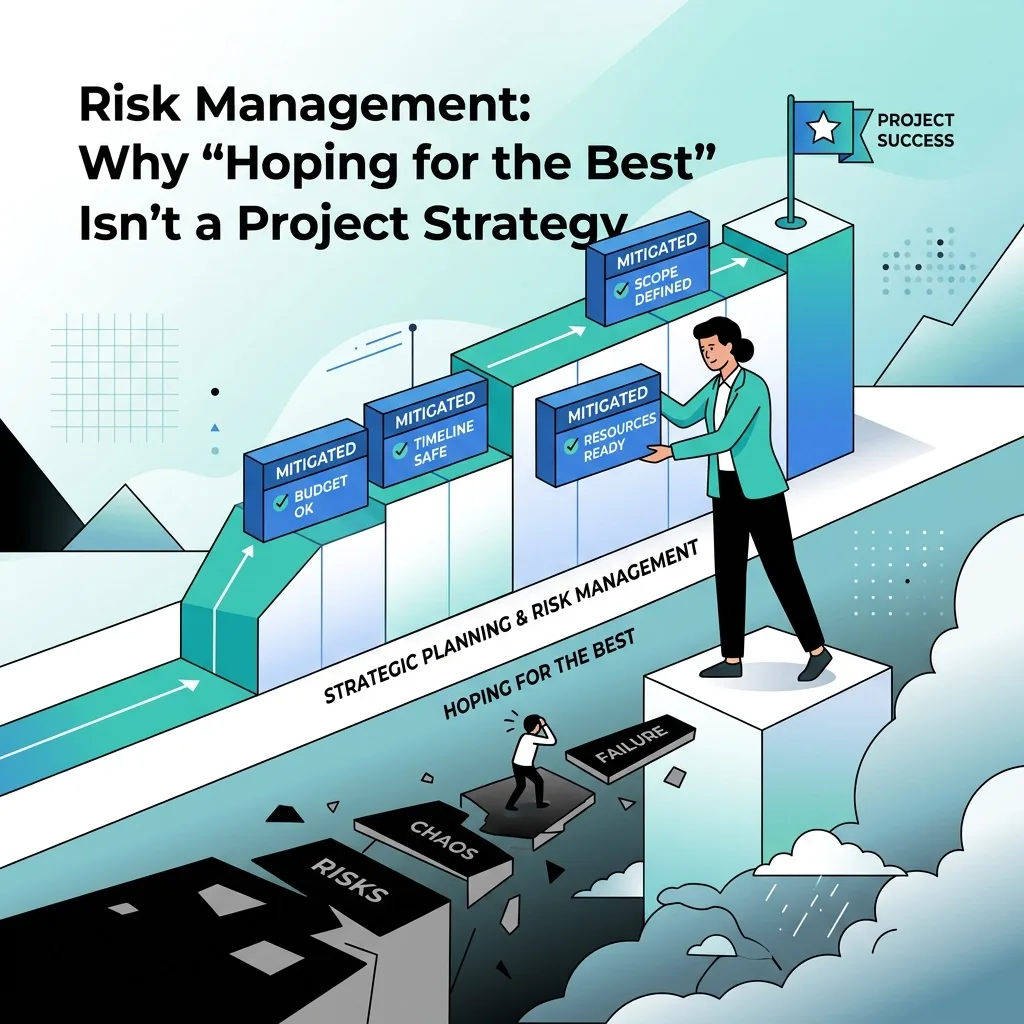
In the realm of professional project execution, there is a pervasive and dangerous sentiment that often masquerades as "agility" or "positive leadership." This sentiment is the belief that a project will succeed simply because the team is talented, the goals are noble, and the timeline is aggressive. However, in the disciplined world of Lean Six Sigma, we recognize this for what it truly is: a total abdication of managerial responsibility.
"Hoping for the best" is not a strategy; it is a confession of negligence.
To fully appreciate the gravity of this failure, one must understand that every process possesses inherent variability and every project exists within an environment of uncertainty. To ignore these factors is to invite catastrophe. If you are not actively identifying, quantifying, and mitigating risks, you are not managing a project: you are merely spectating its inevitable decline.
The Fundamental Purpose of Risk Management
The fundamental purpose of risk management is not to eliminate uncertainty: that is an impossibility: but to achieve calculated decision-making in the face of the unknown. Within the Lean Six Sigma framework, risk management is a rigorous, data-driven discipline designed to protect the Critical to Quality (CTQ) requirements of the customer.
A professional risk management strategy requires a systematic approach:
- Identification: Exhaustive cataloging of every potential failure mode.
- Analysis: Quantitative evaluation of likelihood and impact.
- Prioritization: Ranking risks based on their potential to derail cost, schedule, or quality.
- Response: The execution of deliberate strategies: Avoidance, Mitigation, Transfer, or Acceptance.
- Monitoring: A continuous feedback loop that treats the risk register as a living document.
Without these steps, your project is exposed. You are not "lean"; you are brittle. You are not "fast"; you are reckless.
The FMEA Reality Check: Quantifying Failure
In Lean Six Sigma, we do not guess at risk; we use the Failure Mode and Effects Analysis (FMEA). This is the gold standard for professionals who refuse to rely on hope. The FMEA forces a team to look at every step of a process: often defined initially through a SIPOC map: and ask, "How could this fail?"
The FMEA process assigns a Risk Priority Number (RPN) based on three metrics:
- Severity: How badly does this failure hurt the customer or the business?
- Occurrence: How likely is this failure to happen?
- Detection: How likely are we to catch this failure before it reaches the customer?
When you multiply these factors, you get a cold, hard number. An RPN of 500 demands immediate action; an RPN of 20 might be tolerable. This is the difference between emotional management and professional leadership. If your project meetings do not involve a review of RPNs and mitigation status, you are effectively "hoping" your way through the budget.
The Silent Killer: Unmanaged Assumptions
One of the most frequent points of failure in project management is the "unmanaged assumption." These are the silent beliefs that underpin your project plan but have never been tested against reality.
Common professional delusions include:
- "The sponsor will remain engaged throughout the duration."
- "The vendor will meet the specified lead times without oversight."
- "Subject Matter Experts (SMEs) will be available 30% of their time."
- "The current IT infrastructure can handle the increased data load."
In Lean Six Sigma, an assumption is merely a risk that hasn't been documented yet. To combat this, elite practitioners use tools like the Stakeholder Impact Assessment Calculator to determine if the human elements of the project are actually aligned with the technical requirements. If your assumption is that "users will adopt the new process," but your impact assessment shows high resistance, you have a high-severity risk that no amount of "hope" will resolve.

Strategic Risk Response: Beyond "Fixing It Later"
Once risks are identified and prioritized, a professional must choose a response. There are four primary strategies used in high-level Lean Six Sigma deployments:
1. Risk Avoidance
This involves changing the project plan to eliminate the risk entirely. If a specific technology is too unstable, you choose a proven alternative. If a vendor is unreliable, you find another. Avoidance is often the most cost-effective strategy, yet it is frequently ignored by managers who fear that changing the plan looks like "giving up." In reality, it is the highest form of strategic pivot.
2. Risk Mitigation (Reduction)
This is the most common response in the Improve phase of DMAIC. Mitigation aims to reduce the probability or the impact of a risk. This might involve additional training, more rigorous testing, or the implementation of bottleneck identification protocols to ensure that process constraints do not lead to total system failure.
3. Risk Transfer
Transferring risk involves shifting the financial or operational burden to a third party. This is seen in insurance policies or fixed-price contracts. While this protects the project’s budget, it does not necessarily protect the project's timeline or quality. A professional knows that even if a vendor pays a penalty for a late delivery, the project still suffers a delay.
4. Risk Acceptance
Conscious acceptance is not the same as ignoring a risk. Acceptance means you have quantified the risk, documented it, and decided that the cost of mitigation outweighs the potential impact. You must establish a "trigger point": a specific metric that, if reached, will activate a pre-planned contingency.
Why "Hope" Erodes Organizational Credibility
When a project manager relies on hope, they create a culture of reactivity. When the "unexpected" inevitably occurs, the team descends into a cycle of blame, defensiveness, and "firefighting." This is the antithesis of a Lean culture.
Consider the Project Closure Checklist. Projects that rely on hope rarely make it to a clean closure. Instead, they limp across the finish line with significant "technical debt," unresolved defects, and a disillusioned workforce. By failing to manage risk, you are essentially asking your organization to pay a "learning tax": a recurring cost caused by repeating the same foreseeable mistakes project after project.

Integrating Risk into the Project Rhythm
To move beyond the "hope" strategy, risk management must become a habitual part of the project's operating rhythm. This requires more than a one-time document at the start of the project.
- Standing Agenda Item: Every project status meeting must begin with a review of the top five risks and their current RPNs.
- Clear Ownership: Every risk must have a single owner who is accountable for monitoring the triggers and executing the mitigation plan.
- Data-Driven Indicators: Use Normal Distribution analysis and control charts to detect early warning signs of process shifts before they become full-blown project failures.
- Continuous Scanning: The environment changes. A risk that was "low" in the Define phase may become "critical" during the Improve phase.
Conclusion: The Professional Mandate
The difference between a technician and a leader is the ability to anticipate and manage the unknown. If your current project strategy relies on everything going "according to plan," you are not leading; you are gambling with your company’s resources.
Lean Six Sigma provides the tools: FMEA, SIPOC, SPC, and rigorous data analysis: to replace hope with certainty. Professionalism demands that you stop making excuses for "unforeseen" events that were entirely predictable with a basic risk register.
Stop hoping. Start calculating. Elevate your career by mastering the disciplines that separate successful executives from perpetual firefighters.
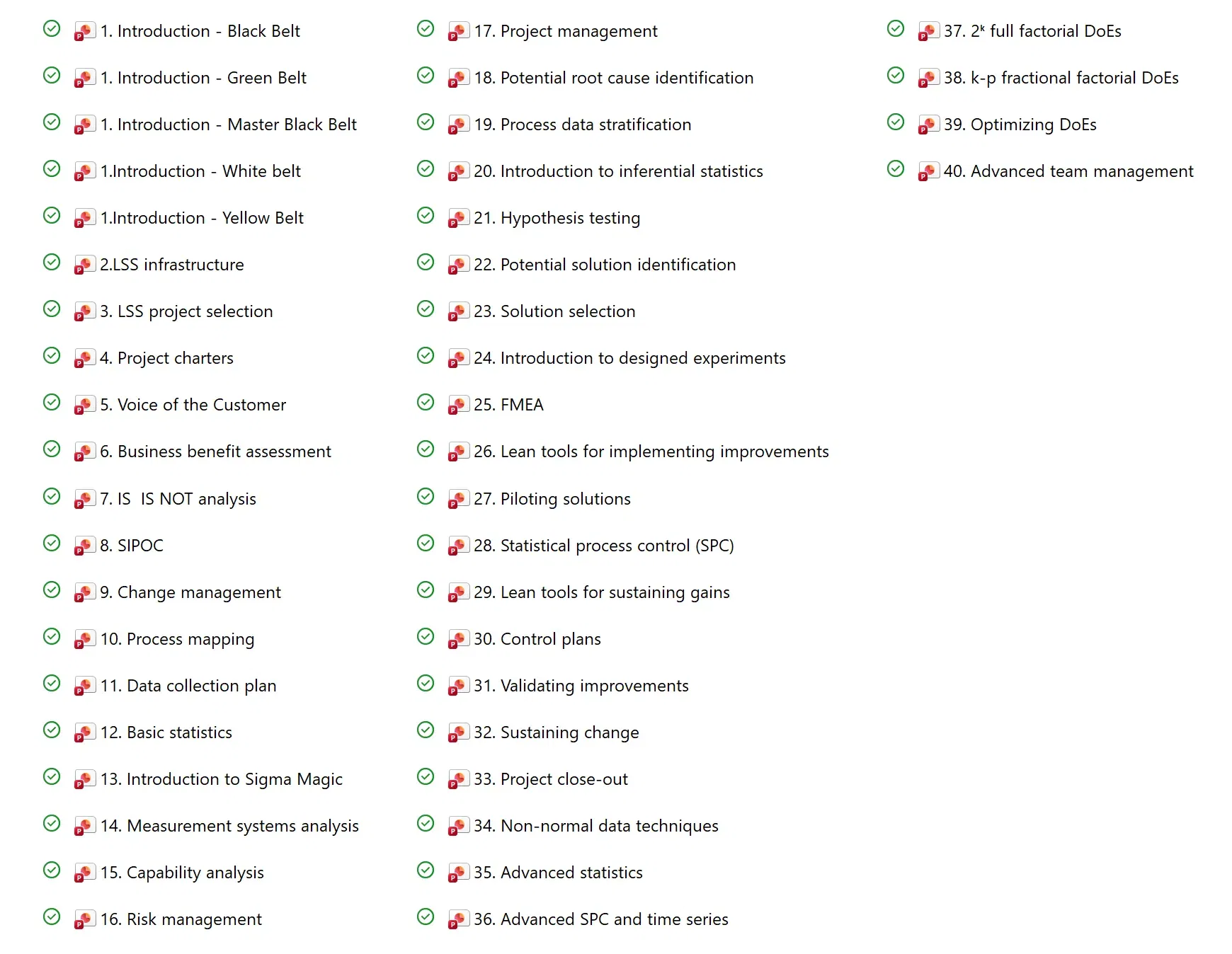
To gain the technical expertise required to manage multi-million dollar projects with precision, enroll in our Lean Six Sigma Black Belt Certification today and lead your organization with data, not dreams.