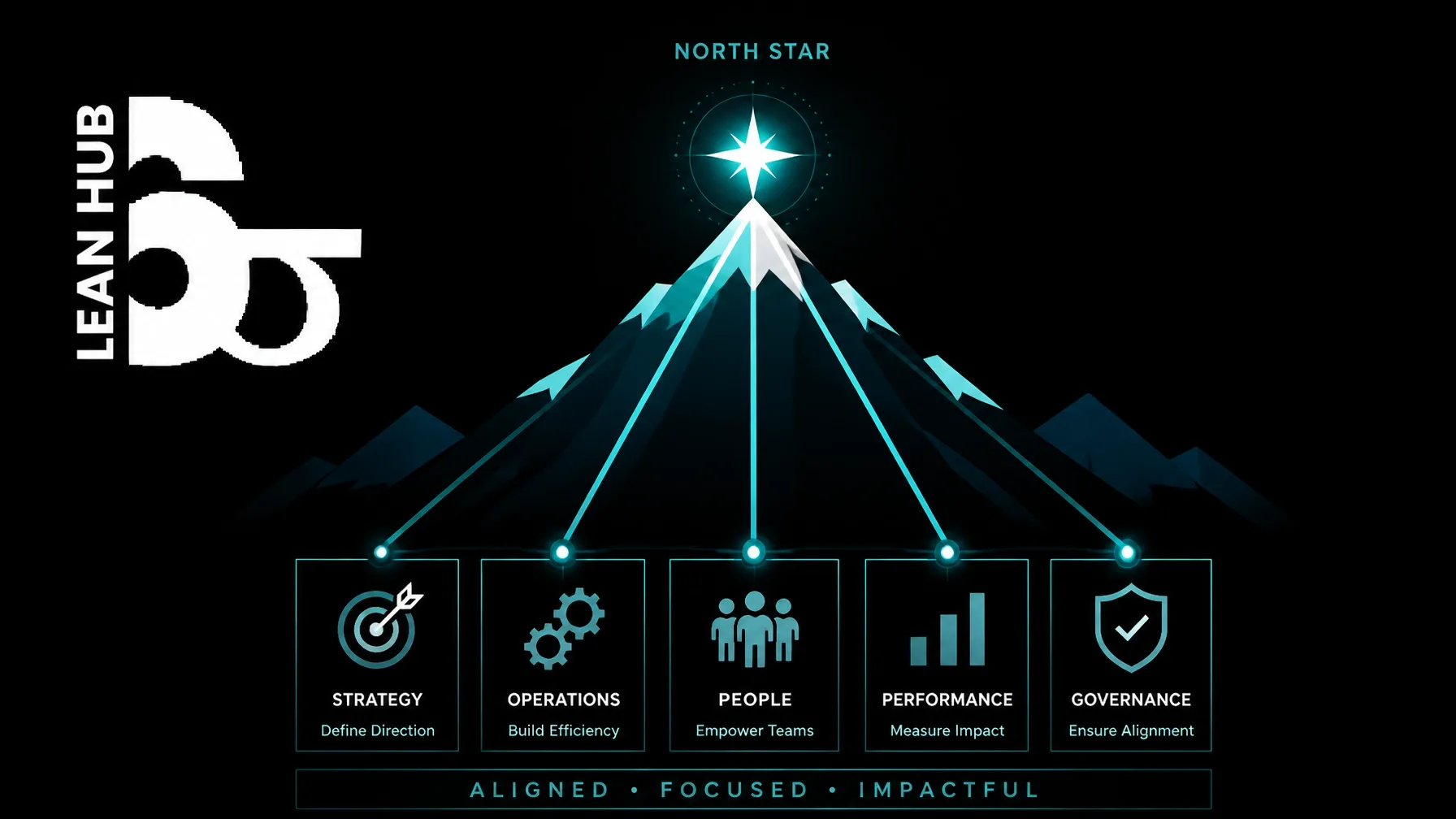
In the realm of modern enterprise management, the most pervasive challenge is not a lack of vision, but rather a catastrophic disconnect between the boardroom’s aspirations and the shop floor’s execution. This "Strategy-Execution Gap" is where multi-million dollar initiatives go to die. To bridge this divide, elite organizations leverage a sophisticated framework known as Hoshin Kanri.
The fundamental purpose of Hoshin Kanri: often referred to as Policy Deployment: is to ensure that every individual, from the CEO to the front-line operator, is pulling in the same direction. It is the architectural blueprint that transforms a vague "North Star" vision into a series of disciplined, measurable, and tactical actions.
Decoding the Hoshin Kanri Framework
The term "Hoshin Kanri" translates roughly from Japanese to "compass management" or "policy deployment." While traditional strategic planning often results in a 50-page document that gathers dust on a shelf, Hoshin Kanri is a living, breathing system of alignment.
At its core, the methodology relies on a visual engine called the X-Matrix. This tool is not merely a spreadsheet; it is a holistic representation of an organization's strategic intent, and to fully appreciate its power, one must understand how it synthesizes four critical dimensions:
- Breakthrough Objectives (South): High-level, 3-to-5-year goals that define the organization's future state.
- Annual Objectives (West): The specific milestones that must be achieved this year to stay on track for the breakthroughs.
- Improvement Priorities (North): The tactical projects or Lean Six Sigma initiatives required to hit those annual goals.
- Key Performance Indicators (East): The hard data and metrics used to track progress and ensure accountability.

The Architecture of Strategic Alignment: The X-Matrix
To implement Hoshin Kanri effectively, leadership must resist the urge to pursue dozens of disparate goals. True strategic excellence requires a "vital few" focus. An effective Level-1 X-Matrix usually targets no more than 3 to 5 breakthrough objectives.
The logic is simple: when everything is a priority, nothing is. By mapping the relationships between these quadrants: using correlation symbols to show how a specific initiative in the North directly impacts a metric in the East: executives create a transparent chain of causality. This transparency eliminates "orphan projects" that consume resources without contributing to the organization's North Star.
The Art of "Catchball": Negotiation for Excellence
Alignment cannot be mandated from the top down; it must be negotiated. This is achieved through a process called Catchball.
The fundamental purpose of Catchball is to create a two-way communication loop between different levels of management. The executive team "throws" the draft strategy to the next level of leadership. Those leaders then analyze the feasibility, identify potential bottlenecks, and "throw" the refined plan back with suggested adjustments.
This iterative negotiation ensures two things:
- Feasibility: The goals are grounded in operational reality.
- Ownership: Because the tactical teams helped define the "how," they are emotionally and professionally invested in the outcome.

Practical Application: The "Apex Logistics" Case Study
To ground these theoretical concepts in reality, consider the hypothetical case of Apex Logistics, a global transport firm facing a 12% decline in profit margins due to rising fuel costs and inefficient routing.
Using Hoshin Kanri, the executive team defined their North Star as becoming the "Most Efficient Logistics Provider in EMEA by 2028."
The Level-1 X-Matrix was built as follows:
- Breakthrough Objective (South): Reduce total operational cost per mile by 22% over 3 years.
- Annual Objective (West): Achieve a 7.5% reduction in fuel consumption and a 15% reduction in vehicle idle time within the first 12 months.
- Improvement Priorities (North): Implementation of an AI-driven dynamic routing system and a Black Belt-led project to optimize warehouse loading sequences.
- KPIs (East): Liters per 100km, Average Idle Time per Vehicle, and On-Time Delivery (OTD) percentage.
The Outcome:
By cascading this matrix to the regional hubs through the Catchball process, Apex Logistics didn't just "talk" about efficiency; they operationalized it. Within 18 months, the company realized a $12.4 million saving in fuel costs and improved their OTD from 88% to 96.4%. This was not achieved through luck, but through the clinical alignment of every driver’s daily route with the CEO's three-year vision.
Bridging the Boardroom and the Shop Floor
The ultimate success of Hoshin Kanri is found when a front-line worker can look at a visual dashboard and understand exactly how their daily performance affects the company’s long-term survival. This is the hallmark of a high-maturity Lean organization.
In this environment, Master Black Belts serve as the architects of the system. They facilitate the X-Matrix development, coach managers through the Catchball process, and ensure that the statistical tools used on the shop floor are generating the right data for the executive review.

Strategic Governance: The Review Cadence
Hoshin Kanri is not a "set it and forget it" activity. It requires a rigorous governance framework.
- Monthly Reviews: Tactical teams review progress on initiatives and KPIs, identifying variances and deploying countermeasures where necessary.
- Quarterly Executive Reviews: Senior leadership reviews the Level-1 X-Matrix to ensure that the annual objectives are still aligned with shifting market conditions.
- Annual Reflection (Hoshin Kanri Hansei): A deep-dive analysis of what worked, what failed, and why, which then informs the next year’s cycle.
This disciplined cadence prevents the strategy from becoming obsolete and ensures the organization remains agile enough to pivot without losing its fundamental alignment.
Conclusion: Lead the Transformation
Hoshin Kanri is the difference between a company that dreams of excellence and one that systematically engineers it. It demands a high level of discipline, a commitment to transparency, and a deep understanding of process improvement methodologies.
For executives and senior leaders, the path to mastering this level of organizational architecture begins with advanced certification. Only by understanding the technical nuances of data-driven decision-making can you effectively lead a Hoshin Kanri deployment.
Take the definitive step in your leadership journey by enrolling in our CSSC-accredited Lean Six Sigma Black Belt or Master Black Belt training today. Master the tools that drive global enterprise excellence.