In the modern corporate landscape, efficiency is no longer just a "nice-to-have" attribute; it is the fundamental engine of profitability. When organizations look to trim the fat and optimize their operations, they often turn to the proven methodology of Lean Six Sigma. But while many executives understand the high-level concepts of waste reduction, few realize the granular financial impact a single certified professional can have.
If you are considering a lean six sigma green belt training program, or if you are a manager trying to justify the cost of certifying your team, the question always comes down to the bottom line: What is the actual Return on Investment (ROI)?
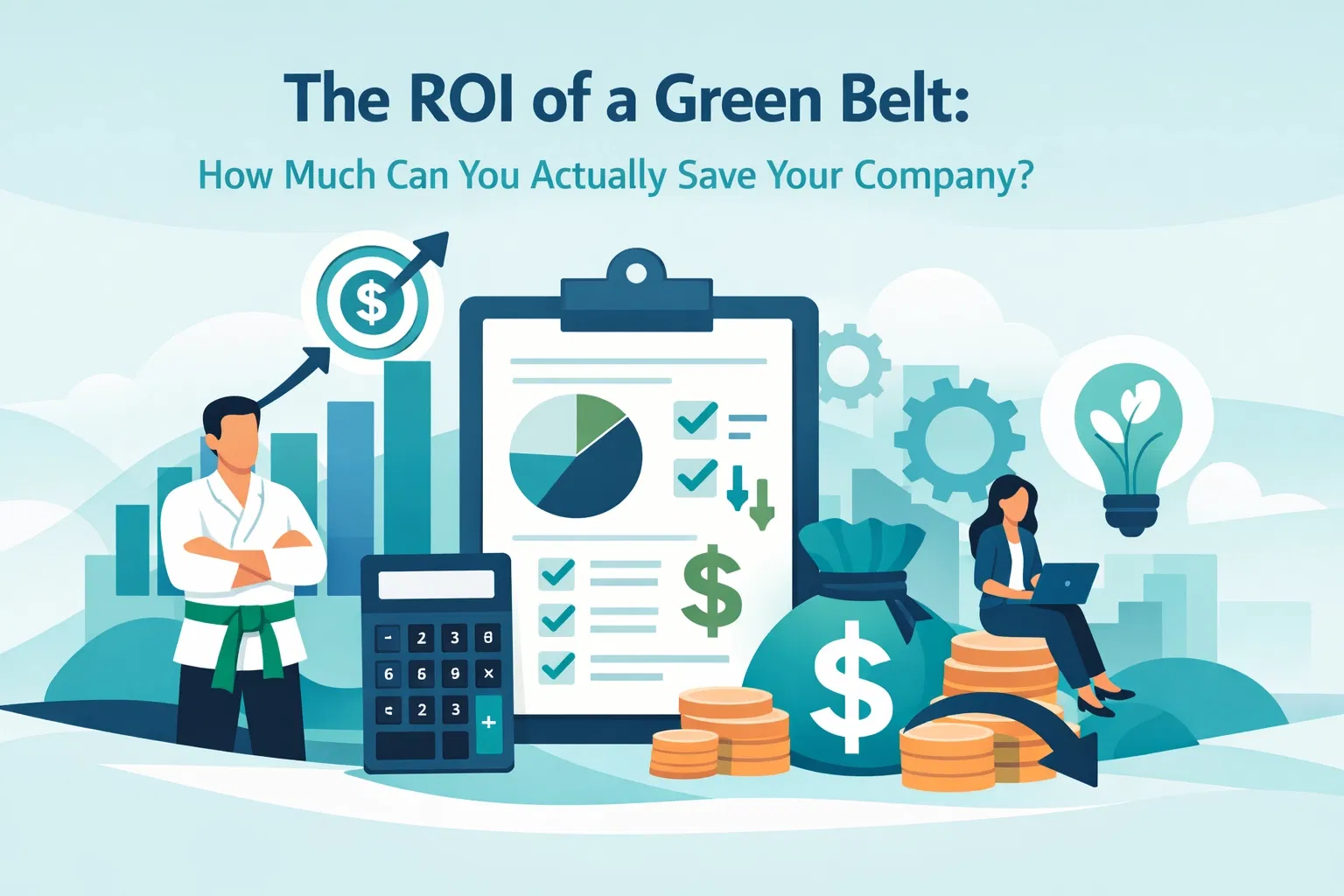
According to industry data and real-world applications, the answer is staggering. A single Green Belt project can deliver an average of $68,000 in ROI over a brief 8-to-12-week window. For organizations that commit to a culture of continuous improvement, the returns typically range from 4.5x to 6x their initial investment.
Understanding the Green Belt Advantage
The Lean Six Sigma Green Belt is often described as the "workhorse" of the methodology. While Black Belts focus on high-level strategy and cross-functional transformations, Green Belts are the tactical leaders who execute medium-scale projects. They are the individuals on the ground using data to solve the specific problems that drain a company’s resources every single day.
When you pursue a lean six sigma certification, you aren't just learning a set of tools; you are shifting your entire decision-making paradigm. Instead of relying on "gut feel" or "the way we’ve always done it," a Green Belt uses a rigorous, data-driven framework to identify the root causes of inefficiency.
The Financial Breakdown: Hard vs. Soft Savings
To fully appreciate the ROI of a Green Belt, we must distinguish between "Hard Savings" and "Soft Savings." In the realm of professional training and certification, Lean 6 Sigma Hub emphasizes that both are vital for organizational health, but hard savings are what show up directly on the balance sheet.
Hard-Dollar Returns
These are tangible reductions in expenses that can be directly traced back to a project. Examples include:
- Reduced Material Waste: Using Lean principles to minimize scrap and rework.
- Lower Labor Costs: Improving process cycle times so the same amount of work can be done in fewer man-hours.
- Decreased Inventory Carrying Costs: Implementing Just-in-Time (JIT) methods to free up cash flow tied up in warehouse stock.
- Lower Energy Consumption: Optimizing manufacturing processes to use fewer utilities.
Soft Savings
While harder to quantify, these are equally important for long-term ROI:
- Improved Employee Morale: Removing "friction" from a person's daily job reduces burnout.
- Enhanced Brand Reputation: Fewer defects mean happier customers and fewer negative reviews.
- Risk Mitigation: Identifying potential failures before they result in costly lawsuits or safety incidents.
To calculate the potential impact of a specific project, many professionals use a Project Charter ROI Calculator to forecast the financial gains before the work even begins.
Case Study: The Power of Incremental Improvement
Let’s look at a hypothetical (but data-heavy) example inspired by real Green Belt outcomes. Imagine a financial services company processing 20,000 transactions per month. Before intervention, they have a 5% defect rate: meaning 1,000 transactions require manual correction.
A Green Belt lead, utilizing their lean six sigma green belt training, applies the DMAIC (Define, Measure, Analyze, Improve, Control) framework. By narrowing down the root cause of these defects, they reduce the error rate from 5% to 2.5%.
- Direct Cost Savings: If each error costs $6.00 to fix, the company saves $3,000 per month.
- Efficiency Gains: The project also identifies a bottleneck that was slowing down cycle times. By cutting the cycle time from 8 minutes to 6 minutes per transaction across 20,000 units, the company saves roughly $16,675 per month in labor costs.
Combined, this single project generates $19,675 per month in savings, or roughly $59,000 over the course of a 12-week project window. When you consider that the cost of training is a fraction of this amount, the ROI multiplier becomes undeniable.

Leading Medium-Scale Projects
The true value of a Green Belt lies in their ability to lead projects without requiring full-time dedication to process improvement. Most Green Belts spend about 20% of their time on Six Sigma projects while maintaining their regular job duties. This allows them to apply their skills directly to their specific department: whether that is HR, IT, Finance, or Manufacturing.
To ensure success, Green Belts utilize tools like the SIPOC Complexity Score Calculator to gauge the scope of their work. Keeping a project "medium-scale" is the key; if the scope is too broad, the project stalls. If it’s too narrow, the ROI isn’t worth the effort.
Data-Driven Decision Making: The End of "Guesswork"
The fundamental purpose of Lean Six Sigma is to replace anecdotal evidence with statistical reality. A Green Belt is trained to look at the Voice of the Process (VOP) and the Voice of the Customer (VOC) to find the "Sweet Spot" of quality.
By using a Voice of Customer Priority Matrix Calculator, a Green Belt can mathematically determine which process improvements will yield the highest satisfaction for the end-user. This ensures that the company isn't just "saving money" by cutting corners, but is actually improving the product.
Essential Data Tools for Green Belts:
- Data Collection Plans: Before you can save money, you need accurate data. Using a Data Collection Plan Checklist is a non-negotiable step for any successful project.
- Stakeholder Impact Assessments: Projects often fail not because of the data, but because of people. Tools like the Stakeholder Impact Assessment Calculator help Green Belts manage the "change management" side of the ROI equation.

The Training ROI Multiplier
Organizations typically see 5 to 10 times the training cost returned through the improvement projects completed during the certification process itself. Many lean six sigma certification programs, including those offered by Lean 6 Sigma Hub, require a capstone project. This means that before you even receive your certificate, you have likely already paid for the course several times over by saving your company money.
Furthermore, companies that apply Green Belt methods to their "top-line" activities: like sales and marketing: often see a 10–30% increase in sales without increasing their budget. They do this by streamlining the lead-to-customer pipeline and reducing "handoff" friction between departments. Understanding handoff points in cross-functional processes is a core skill taught in the Define phase of the training.
Career ROI for the Individual
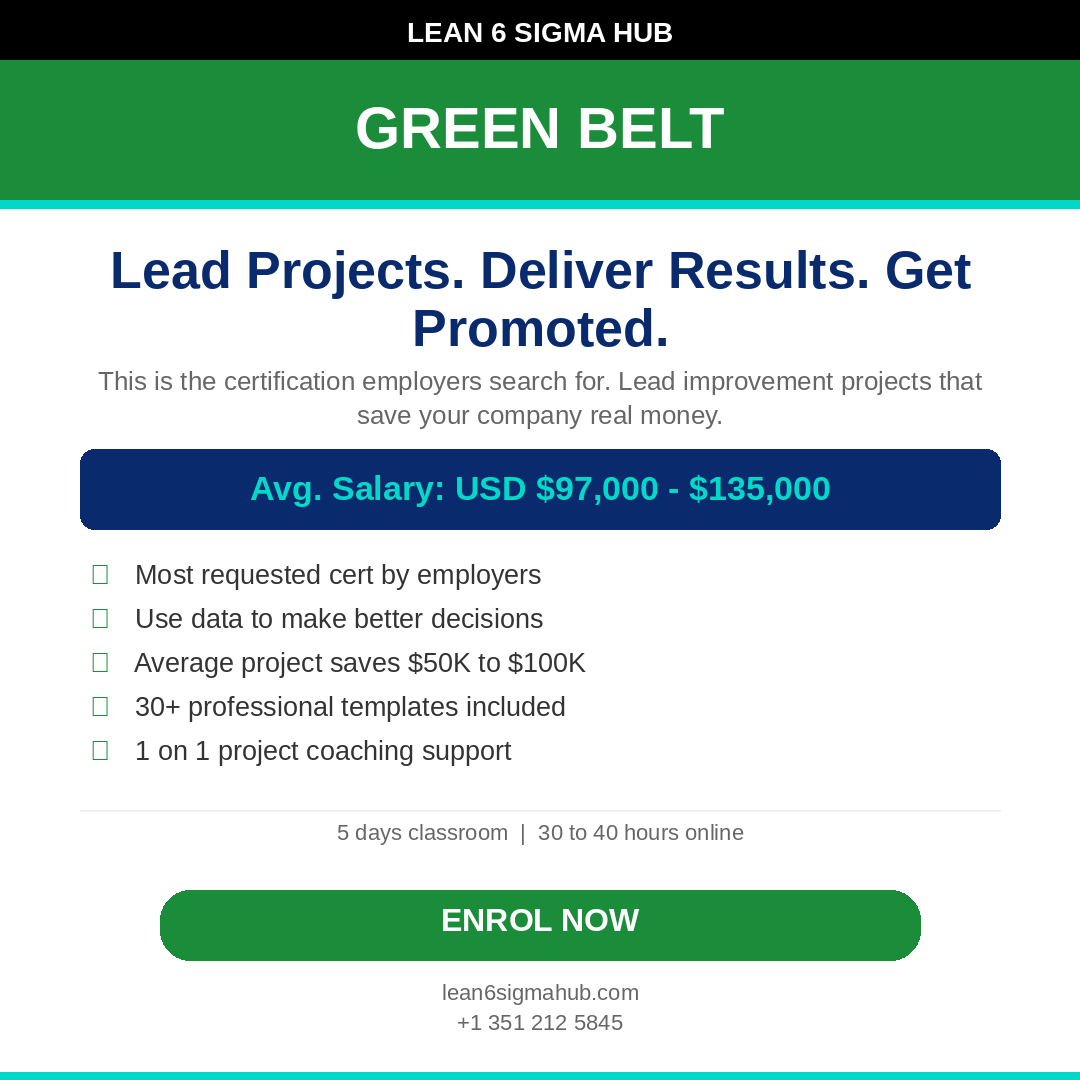
While the company gains financial efficiency, the individual gains significant career leverage. The average salary for a Green Belt certified professional ranges from $97,000 to $135,000, depending on the industry and location.
For many, the path starts with a simple self-assessment. If you are curious about your current knowledge level, you can take a Free Lean Six Sigma Green Belt Practice Exam to see where you stand. This credential acts as a "seal of approval" for your problem-solving abilities, signaling to employers that you are a candidate who understands how to drive value.

Conclusion: Start Your ROI Journey
The numbers don't lie. Whether you are looking at the $68,000 average savings per project or the 4.5x return on training costs, the Lean Six Sigma Green Belt is one of the most effective investments a professional or a company can make. By moving from reactive problem-solving to proactive, data-driven optimization, you position yourself and your organization for sustainable, long-term growth.
In the realm of professional development, there is no tool more powerful than the ability to translate process efficiency into hard currency. If you are ready to stop guessing and start measuring, it is time to take the next step in your career.
Pursue your Lean Six Sigma Green Belt certification today and start delivering measurable value to your organization.