
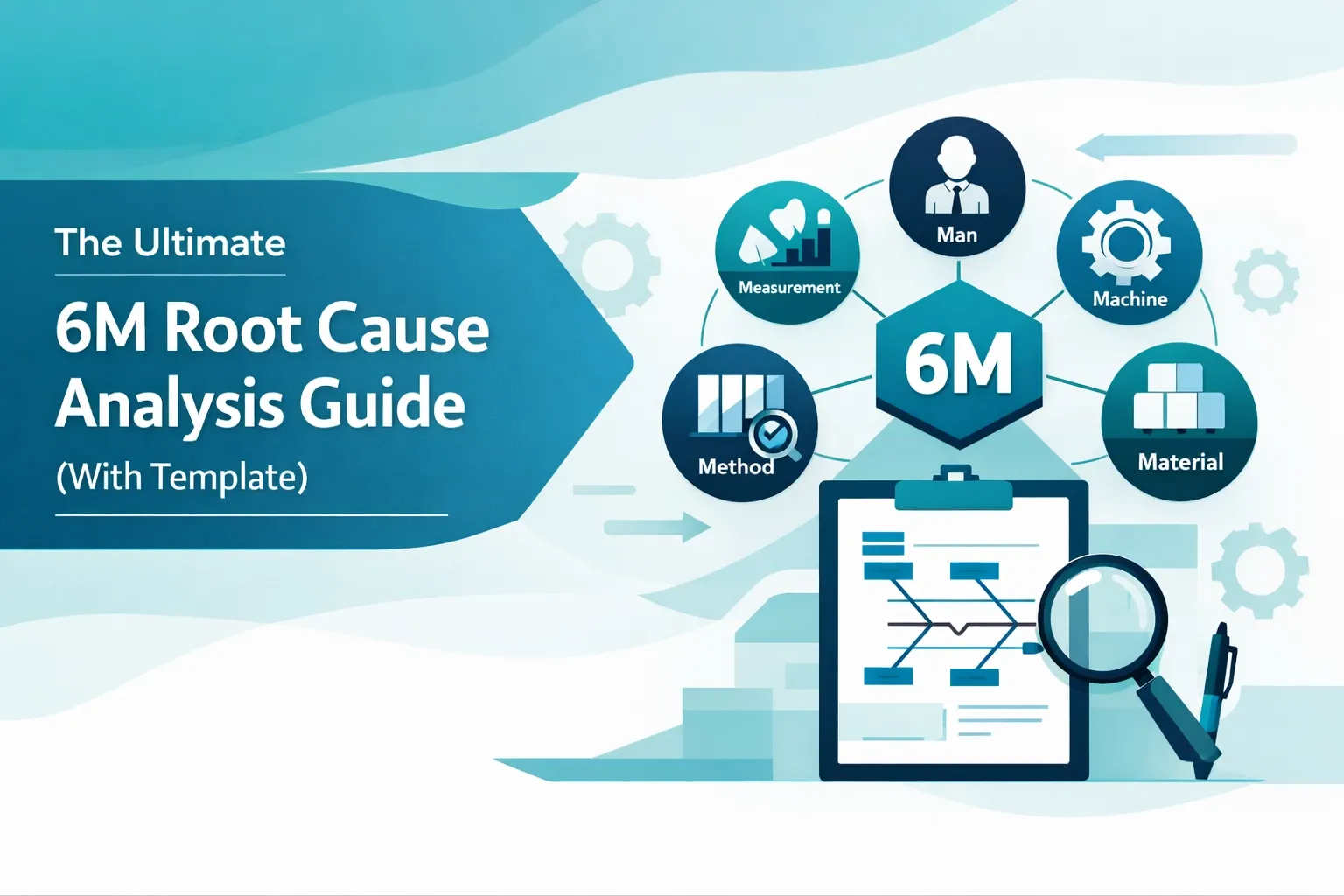
In the realm of process improvement, identifying a problem is only the first step. The fundamental purpose of any Lean Six Sigma practitioner is not merely to acknowledge a defect, but to surgically dismantle it to reveal its origin. Without a structured approach, teams often fall into the trap of "band-aid" solutions: addressing symptoms while the underlying disease remains untouched. To fully appreciate the complexity of modern operational challenges, one must utilize the 6M root cause analysis template and guide.
The 6M framework, often visualized through the Ishikawa (Fishbone) diagram, is a systematic methodology used to categorize potential causes of a problem into six distinct branches. By segregating variables into these logical buckets, organizations can ensure no stone is left unturned during the investigative phase of the DMAIC (Define, Measure, Analyze, Improve, Control) cycle.
The Genesis of the 6M Framework
The 6M method was originally popularized within the manufacturing sector, but its utility has since expanded into healthcare, finance, and software development. The logic is simple yet profound: every process output is the result of specific inputs. If the output is defective, the error must lie within one of the primary input categories.
To achieve sustainable organizational excellence, practitioners must look beyond the surface. This is particularly relevant when performing DMAIC for governance and ethics improvement, where root causes are often obscured by cultural or systemic complexities.
Decoding the 6 Ms: A Technical Breakdown
To effectively use a 6m root cause analysis template and guide, one must understand the technical nuances of each category.
1. Manpower (Personnel)
This category examines the human element. It is not about assigning blame, but about identifying gaps in capability or environment.
- Competency: Does the staff possess the required certification or training?
- Fatigue: Are long shifts leading to an increase in human error?
- Communication: Was the instruction misinterpreted due to a lack of clarity?
- Staffing Levels: Is the process under-resourced, forcing shortcuts?
2. Methods (Processes)
Methods refer to the procedures, rules, or instructions that govern how a task is performed.
- Standard Work: Does a Standard Operating Procedure (SOP) exist, and is it being followed?
- Process Flow: Are there unnecessary steps creating opportunities for error?
- Handoffs: Are there friction points where information or materials are lost between departments? When planning process changes, refer to an implementation timeline to ensure methods are integrated correctly.
3. Machines (Technology & Equipment)
In the age of Industry 4.0, the "Machine" category is broader than ever. It includes heavy machinery, software, and even AI algorithms.
- Maintenance: Is the equipment serviced according to the manufacturer’s schedule?
- Calibration: Are the tools providing accurate outputs?
- Tooling: Are the right tools being used for the specific job?
- Software Glitches: Are digital workflows failing due to legacy system incompatibility?
4. Materials (Inputs)
Materials include the raw components, information, or semi-finished goods required to complete the process.
- Quality: Did a supplier provide a batch of sub-standard raw materials?
- Variability: Is there too much variation between different material lots?
- Availability: Are delays caused by material shortages leading to rushed production?
5. Measurement (Data & Metrics)
The Measurement category investigates the data used to evaluate the process. If your "thermometer" is broken, you cannot accurately judge the "temperature" of your operations.
- Data Integrity: Is the data collection method biased?
- Gauge R&R: Is there too much variation in how different people take measurements?
- Metric Choice: Are we measuring the right Key Performance Indicators (KPIs)? Effective dashboard design is essential to ensure measurements are visible and actionable.
6. Mother Nature (Environment)
Environmental factors are often overlooked but can have a significant impact on process stability.
- Workspace Conditions: Is the temperature, humidity, or lighting affecting the product or the people?
- Market Shifts: Are external economic factors influencing process performance?
- Physical Constraints: Does the layout of the facility impede the natural flow of work?

Integrating 6M into the Fishbone Diagram
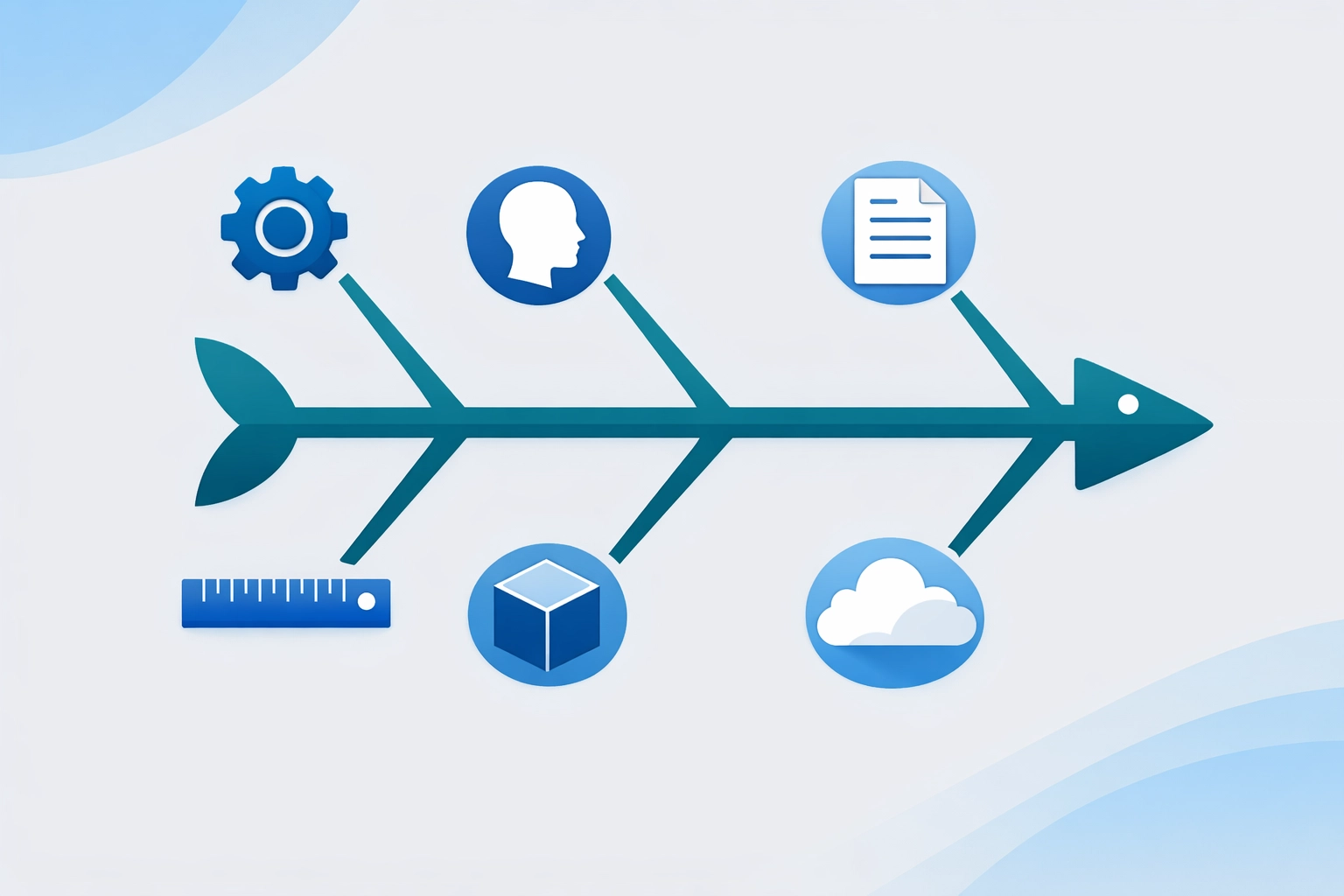
The visual power of the 6M framework is realized through the Fishbone (Ishikawa) diagram. To construct this, the problem statement (the "Effect") is placed at the "head" of the fish. A central spine is drawn, with six "bones" branching out, each labeled with one of the 6 Ms.
When brainstorming, teams populate these branches with potential causes. This visual hierarchy allows for a holistic view of the problem, preventing the common mistake of focusing exclusively on one area (like Manpower) while ignoring others (like Measurement).
To ensure your problem statement is robust before starting your 6M analysis, you might find it useful to review 15 good problem statement examples.
Step-by-Step Guide: How to Conduct a 6M RCA
To execute a flawless root cause analysis using the 6M methodology, follow this rigorous protocol:
- Define the Problem with Precision: State the issue clearly using data. Use the "What, Where, When, and How Much" format.
- Assemble a Cross-Functional Team: Include subject matter experts from the shop floor to senior leadership to ensure diverse perspectives.
- Draw the 6M Skeleton: Use a whiteboard or digital collaboration tool to map out the six branches.
- Brainstorm Potential Causes: Encourage a "no-blame" environment. List every possible factor within each of the 6 M categories.
- Apply the "5 Whys" Technique: For every cause identified on the fishbone, ask "Why?" repeatedly (usually five times) to drill down to the fundamental root.
- Prioritize and Validate: Not every cause is a root cause. Use data, such as a SIPOC complexity score, to narrow down the most likely culprits.
- Develop Corrective Actions: Once the root cause is validated, design a solution that prevents recurrence.
- Calculate ROI: Before implementation, use a project charter ROI calculator to ensure the solution is financially viable.

Comparing 6M with Modern Trends: AI and Automation
As we move deeper into 2026, the "Machine" and "Measurement" categories of the 6M framework are being revolutionized by Artificial Intelligence. Traditional root cause analysis often relied on historical data and human intuition. Today, we are seeing a shift toward AI vs human analysis in hypothesis testing, where machine learning can identify patterns across the 6 Ms that the human eye might miss.
However, the fundamental structure of the 6M remains indispensable. AI can process the data, but the 6M framework provides the human-centric context required to implement changes effectively.
Why 6M is Essential for Professional Certification
For those pursuing a Lean Six Sigma Green Belt or Black Belt certification, mastering the 6M RCA is a non-negotiable requirement. It is a core component of the "Analyze" phase of DMAIC and is frequently tested in professional exams.
Employers value practitioners who can demonstrate a disciplined approach to problem-solving. By utilizing a 6m root cause analysis template and guide, you demonstrate that you are a data-driven leader capable of delivering significant project savings: often ranging from $50,000 to over $250,000 per project.
Conclusion
The 6M root cause analysis is more than just a tool; it is a mindset of thoroughness and operational excellence. By categorizing potential issues into Manpower, Methods, Machines, Materials, Measurement, and Mother Nature, you ensure a comprehensive investigation that leads to permanent solutions rather than temporary fixes.
Whether you are troubleshooting a manufacturing defect or optimizing a service workflow, the 6M framework provides the structure needed to navigate complex organizational challenges.
Ready to elevate your problem-solving skills and boost your career potential? Take the first step toward mastery by exploring our accredited certification programs.