In the modern industrial landscape, the fundamental purpose of any world-class operation is to maximize value while ruthlessly eliminating waste. However, many organizations remain tethered to a traditional, "firefighting" mentality regarding their most critical assets. This reactive approach: fixing machines only when they fail: is a significant contributor to the Cost of Poor Quality (COPQ) and a primary driver of operational instability.
To fully appreciate the necessity of high-performance manufacturing, one must embrace a paradigm shift toward Total Productive Maintenance (TPM). TPM is not merely a maintenance schedule; it is a holistic, plant-wide philosophy designed to achieve "perfect production." The objective is clear: zero breakdowns, zero minor stops or slow-running, zero defects, and zero accidents. When maintenance evolves from a back-office expense into a front-line strategic advantage, the result is a formidable competitive edge.
The 8 Pillars of TPM: A Framework for Reliability
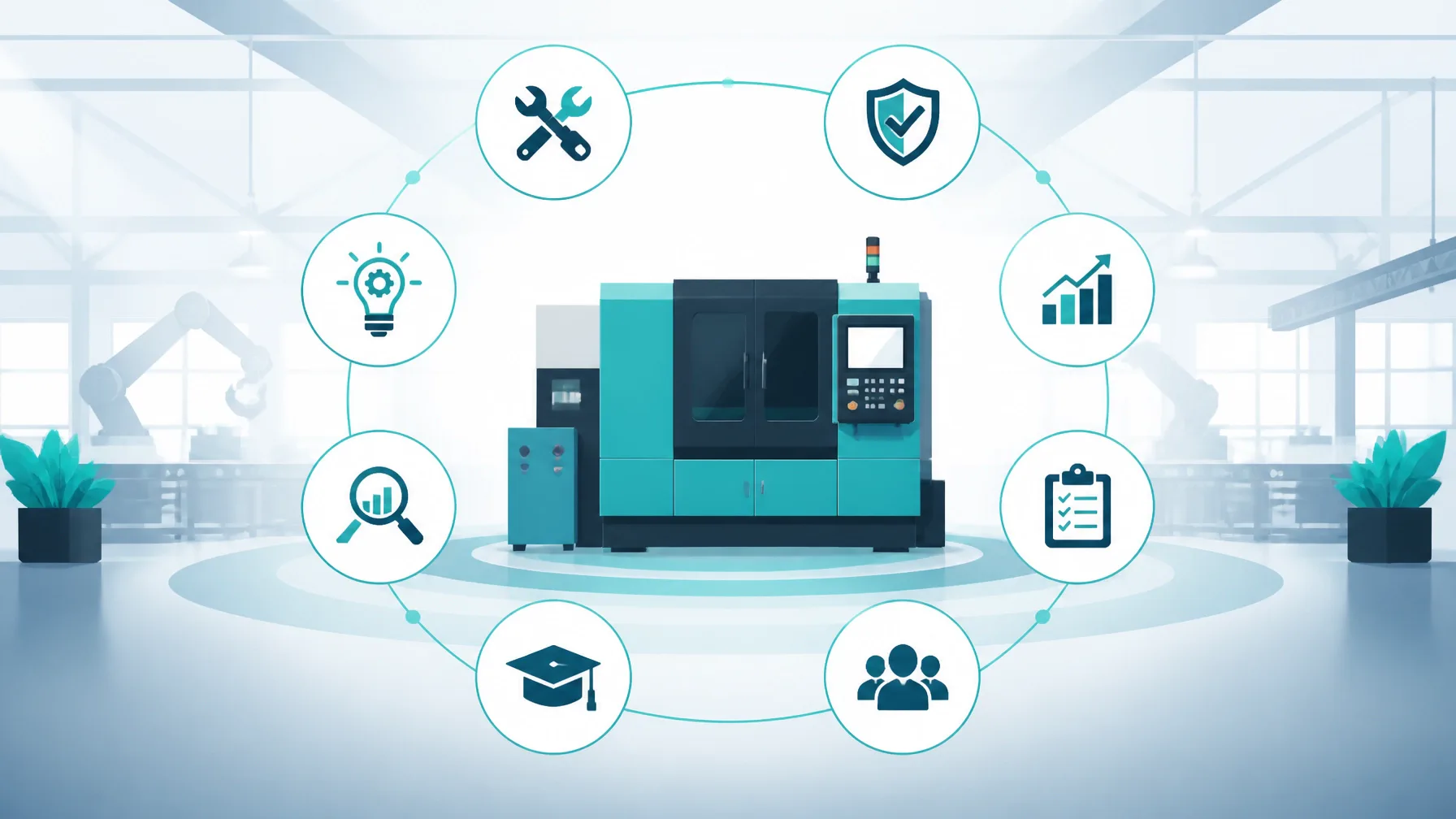
The structural integrity of a TPM program rests upon eight foundational pillars. These pillars are designed to integrate maintenance responsibilities into the daily fabric of the organization, ensuring that equipment reliability becomes a shared objective rather than the sole burden of a specialized department.
1. Autonomous Maintenance (Jishu Hozen)
The cornerstone of TPM is Autonomous Maintenance, which empowers equipment operators to take ownership of their machinery. By performing routine tasks such as cleaning, lubrication, and basic inspection, operators develop a heightened sensitivity to abnormalities. This proactive stance ensures that minor issues are detected and rectified before they escalate into catastrophic failures.
2. Planned Maintenance
While operator involvement is crucial, a structured Planned Maintenance schedule is essential for long-term health. This involves using historical data and Mean Time Between Failures (MTBF) to schedule maintenance activities during non-peak hours, thereby minimizing the impact on Cycle Time and overall throughput.
3. Quality Maintenance
TPM aligns maintenance activities directly with quality outcomes. The Quality Maintenance pillar focuses on the "maintenance of quality." It establishes machine conditions that prevent defects from occurring in the first place. By controlling the Critical X inputs of the equipment, organizations can ensure a high First Pass Yield (FPY).

4. Focused Improvement (Kaizen)
Utilizing the Kaizen philosophy, small, cross-functional teams systematically target specific losses. Whether addressing "hidden" wastes like minor stops or optimizing changeover times, Focused Improvement ensures that the process is constantly evolving toward perfection.
5. Early Equipment Management
This pillar leverages historical maintenance data to inform the design and procurement of new machinery. The goal is to ensure that new equipment is reliable, easy to maintain, and reaches stable performance levels in record time, significantly reducing the ramp-up period.
6. Education and Training
TPM is a people-centric methodology. To succeed, organizations must invest in rigorous training to close skill gaps among both operators and maintenance technicians. A well-trained workforce is the most effective tool for sustaining gains made during the Improve Phase of a DMAIC project.
7. Safety, Health, and Environment (SHE)
A truly excellent maintenance program prioritizes the well-being of the workforce. By eliminating unsafe conditions and focusing on ergonomics, the SHE pillar ensures that productivity never comes at the cost of human safety.
8. TPM in Administration
Finally, TPM principles are applied to administrative and support functions. By reducing waste in procurement, scheduling, and logistics, the organization ensures that the production floor is supported by a lean, efficient office environment.
Strategy vs. Reactive Maintenance: The High Cost of Firefighting
To understand the strategic value of TPM, one must contrast it with the standard reactive maintenance model. Reactive maintenance is inherently chaotic. It results in unplanned Downtime, which disrupts production schedules and forces the organization into expensive, emergency repairs.
The fundamental purpose of moving toward a strategic TPM model is to transform maintenance into a predictable, value-adding activity. In a reactive environment, the OEE (Overall Equipment Effectiveness) of a facility often hovers between 40% and 60%. In a TPM-driven environment, world-class organizations regularly achieve OEE scores exceeding 85%. This delta represents millions of dollars in recovered capacity and avoided costs.

Scenario: The Metric Impact of TPM Implementation
Consider a hypothetical scenario involving a high-volume logistics and packaging facility. Prior to implementing TPM, the facility faced significant operational hurdles characterized by the following metrics:
- Availability: 74% (due to frequent unplanned breakdowns).
- Performance: 88% (machines often ran at reduced speeds to "protect" them from failure).
- Quality: 95% (high levels of rework and scrap).
- Overall OEE: ~62%.
The organization embarked on a 12-month TPM transformation, focusing initially on Autonomous Maintenance and Focused Improvement.
The Results: A Data-Driven Victory
Following the full integration of the TPM pillars, the facility's metrics underwent a dramatic transformation:
- Availability surged to 92%: The implementation of Planned Maintenance and operator-led inspections reduced unplanned breakdowns by over 40%.
- Performance increased to 98%: With reliable equipment, operators were confident in running machinery at its rated Takt Time without fear of failure.
- Quality reached 99.2%: The Quality Maintenance pillar ensured that machine precision was maintained, leading to a significant reduction in the Defect Rate.
- Final OEE: 89.5%.
The financial implications were profound. By increasing OEE from 62% to nearly 90%, the facility gained the equivalent of an additional production line's worth of capacity without a single dollar of capital expenditure for new machinery. This strategic shift resulted in an estimated $1.4 million in annual cost savings through reduced labor overtime, lower spare parts inventory, and the elimination of external failure costs.

Conclusion: Lead the Transformation
TPM is not merely about keeping machines running; it is about building a culture of excellence where every employee is an active participant in the organization's success. By turning maintenance into a strategic advantage, you transition from a state of constant reaction to one of absolute control.
For professionals looking to spearhead these transformations, a deep understanding of Lean Six Sigma is indispensable. Tools like Statistical Process Control (SPC), FMEA, and Root Cause Analysis (RCA) provide the analytical rigor necessary to sustain a TPM program and drive organizational change.
Take the first step toward mastering operational excellence by enrolling in our CSSC-accredited Lean Six Sigma Black Belt Online Training today. Elevate your career and lead your organization to new heights of efficiency.