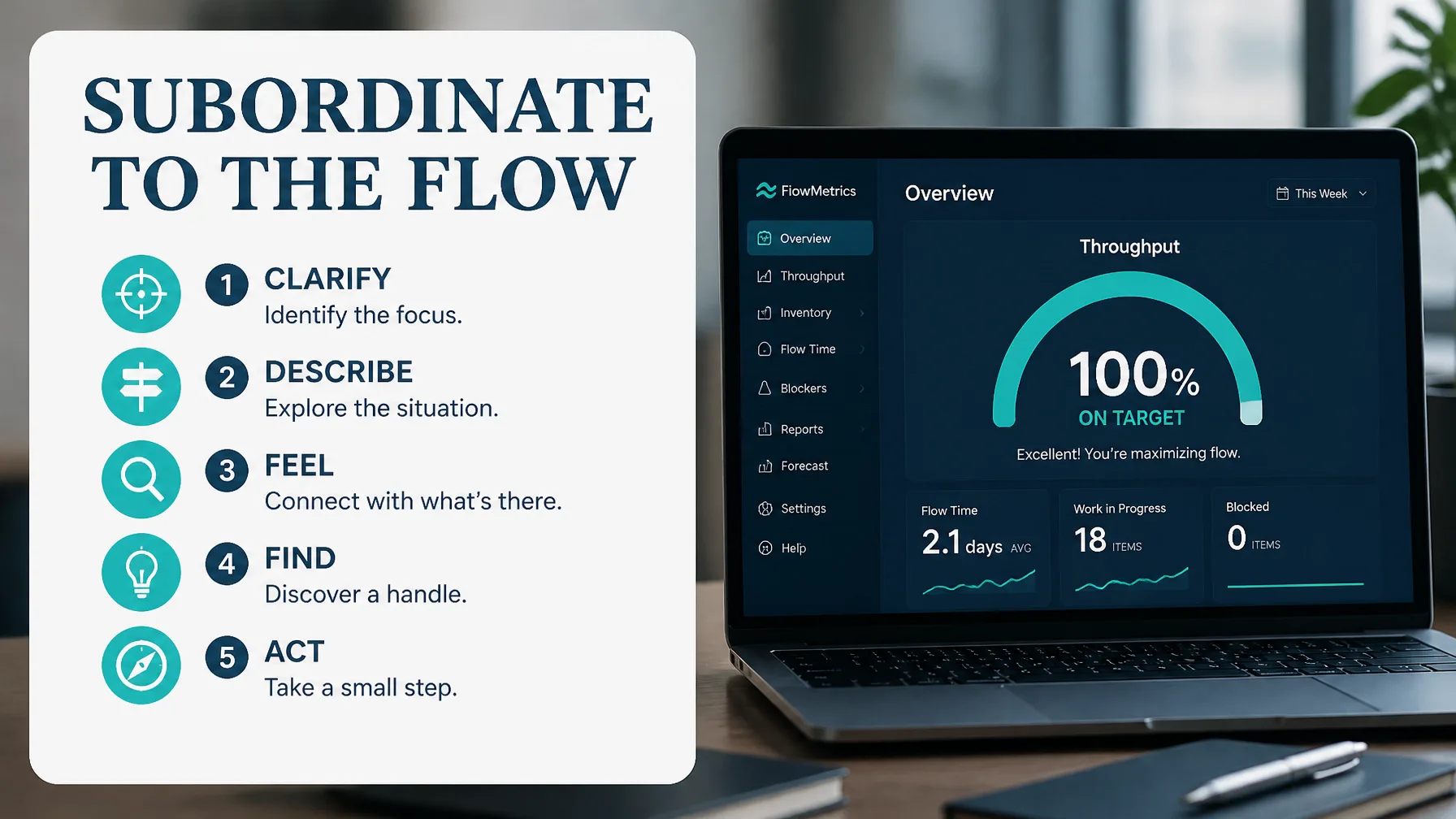
Applying the Theory of Constraints in Knowledge Work
While the Theory of Constraints is often discussed in manufacturing, its application in service and IT sectors is where the most significant gains are found. In administrative workflows, like software development, healthcare patient flow, or financial auditing, bottlenecks are often invisible because they are made of information, not iron.
In these environments, a Bottleneck might be a single "Subject Matter Expert" who must approve every ticket, or a legacy server that can only handle a set number of concurrent requests. When you look at your Value Stream, you must look for where the work piles up.
If you are a Yellow Belt supporting a larger project, your role is to identify these queues. If you are a Black Belt, your role is to restructure the entire flow to ensure the constraint is "elevated."
The Danger of High Utilization
Many organizations make the fatal mistake of demanding 100% utilization from every employee. This is a violation of ToC principles. If every person in the chain is working at 100% capacity, and there is any Variation in the process, the system will eventually lock up.
The Voice of the Process tells us that non-constraints should have idle time. That idle time is the "protective capacity" that prevents the bottleneck from ever running out of work. If you force a non-bottleneck to work at 100%, you are simply creating Waste (Muda) in the form of overproduction and inventory.
Integrating ToC with DMAIC and Six Sigma
The Theory of Constraints and Lean Six Sigma are not competing philosophies; they are complementary.
- Lean helps you remove Waste (the DOWNTIME factors) to reveal the constraint.
- Six Sigma helps you reduce Variation at the constraint to ensure every unit it produces is defect-free (Zero Defects philosophy).
- ToC tells you where to apply these tools for maximum impact.
When you are in the Improve Phase of a project, don't just look for "what can we fix?" Ask, "If we fix this, will it increase Throughput at the system level?" If the answer is no, you are likely chasing a "Quick Win" that will ultimately lead to a "Global Loss."
Stop Polishing the Non-Bottleneck
In the high-stakes world of process improvement, your most valuable asset is your time. Spending that time on localized improvements that don't affect the final Y of your business equation is a dereliction of duty.
Whether you are looking to master the basics as a White Belt or lead enterprise-wide transformation as a Master Black Belt, the goal remains the same: identify the bottleneck, exploit it, and ignore the distractions of the "Quick Win."
If you are ready to stop guessing and start delivering data-driven results that leadership actually cares about, it is time to formalize your expertise. At Lean 6 Sigma Hub, our CSSC-accredited courses are designed for professionals who want to move beyond theory and into the realm of high-impact execution.
Take the first step in your journey today. Enroll in our Lean Six Sigma Green Belt or Black Belt Certification programs and learn how to identify, elevate, and master the constraints in your organization.
For those just starting out, explore our Free White Belt Course to build your foundational awareness of DMAIC and process flow.