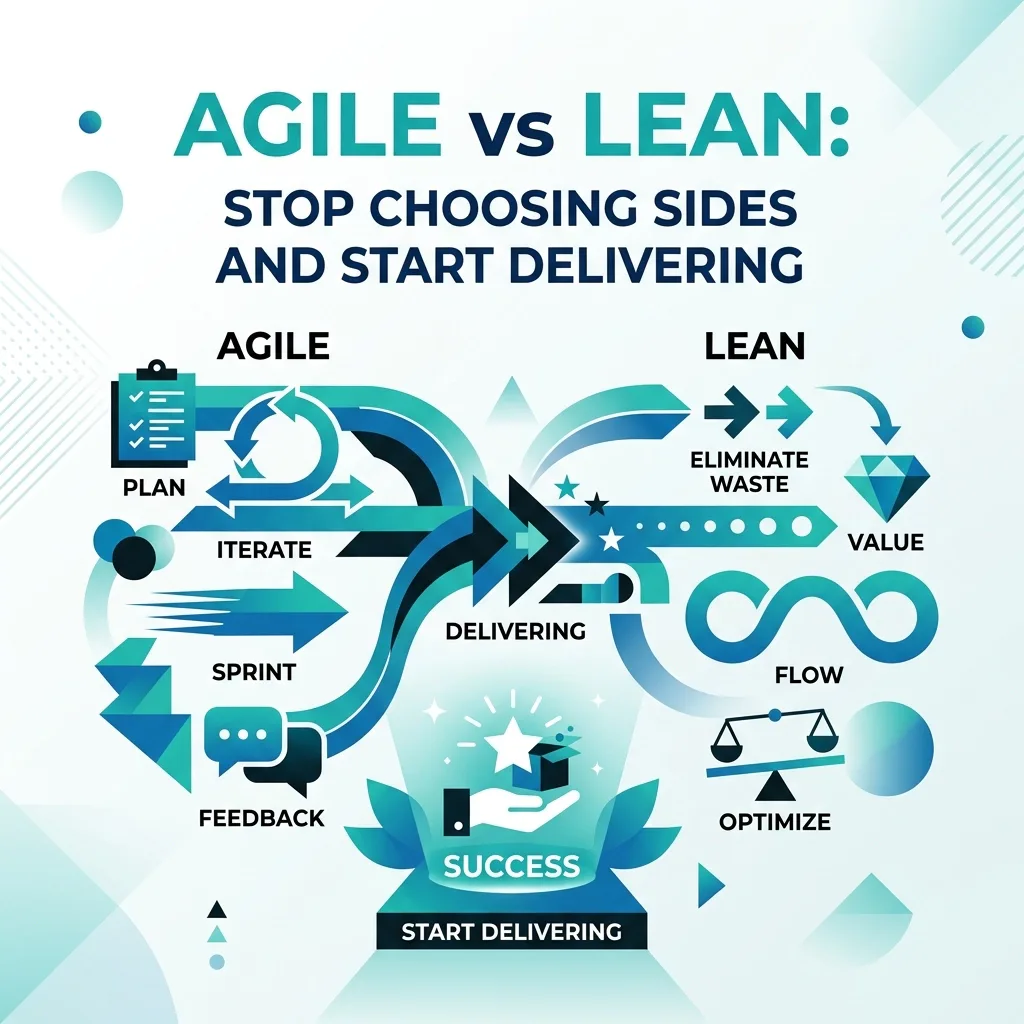
In the modern corporate arena, there is a pervasive and frankly exhausting obsession with "Methodology Tribalism." You’ve seen it: the Agile evangelists who believe a Daily Stand-up solves every systemic failure, and the Lean purists who think mapping a process on a wall for three days is a substitute for actual product innovation.
If you are currently choosing a "side" in the Agile vs. Lean debate, you are demonstrating a profound misunderstanding of both. In the realm of high-performance delivery, choosing between Agile and Lean is like choosing between oxygen and water. You might survive for a few minutes without one, but eventually, the system collapses.
It is time to stop the framework worship and start focusing on what actually matters: delivering measurable value to the customer without drowning in waste.
The Intellectual Poverty of Framework Worship
The fundamental purpose of any operational framework is to solve a business problem. Yet, most organizations treat these methodologies like religions. They hire "coaches" who prioritize ritual over results.
Agile was birthed from the software world to handle high-uncertainty environments where requirements shift like sand. Lean, rooted in manufacturing excellence, was designed to eliminate waste and maximize flow in established systems.
When you treat them as mutually exclusive, you create a vacuum. An "Agile-only" shop often becomes a chaotic mess of "fast delivery" that produces high-quality garbage because they’ve ignored process stability and waste. Conversely, a "Lean-only" shop can become so obsessed with incremental process improvement that they fail to pivot when the market demands a fundamental change in direction.
Lean: The Science of Efficiency
To fully appreciate the Lean philosophy, one must move beyond the superficial definition of "cutting costs." Lean is the systematic pursuit of value. According to the Lean Six Sigma concepts and glossary, Lean focuses on the relentless elimination of Muda (waste), Mura (unevenness), and Muri (overburden).
In a Lean environment, the process is the product. If your process is riddled with noise factors, your output will be inconsistent. Lean practitioners utilize tools like Process Mapping to document the current state and identify where value is being bled out through waiting, overproduction, or defects.
Technical Definition: Flow Efficiency
Lean isn't about working harder; it’s about reducing the time a work item sits idle. If a project takes 10 days to complete, but only has 2 hours of actual value-added work performed on it, your process is failing. That is a 2.5% flow efficiency. No amount of "Agile Sprints" will fix a systemic 97.5% waste factor.

Agile: The Science of Adaptability
While Lean optimizes the how, Agile optimizes the what. In environments where the "Voice of the Customer" (VOC) is volatile, Agile provides the framework to iterate.
However, Agile is often used as an excuse for lack of discipline. Professional Agile is not "cowboy coding" or "unstructured meetings." It is a disciplined approach to managing uncertainty. By breaking work into small batches: a concept also central to Lean: Agile allows for rapid feedback loops.
If you aren't using a Critical to Quality (CTQ) Tree to bridge the gap between vague customer desires and technical requirements, your Agile iterations are just expensive guesses.
The Convergence: Where the Magic Actually Happens
The most sophisticated organizations don't choose; they integrate. They use Lean to stabilize the delivery pipeline and Agile to navigate the product roadmap.
Consider the RDMAICS framework. This isn't just a linear path; it's a cycle of operational excellence that integrates the best of both worlds.
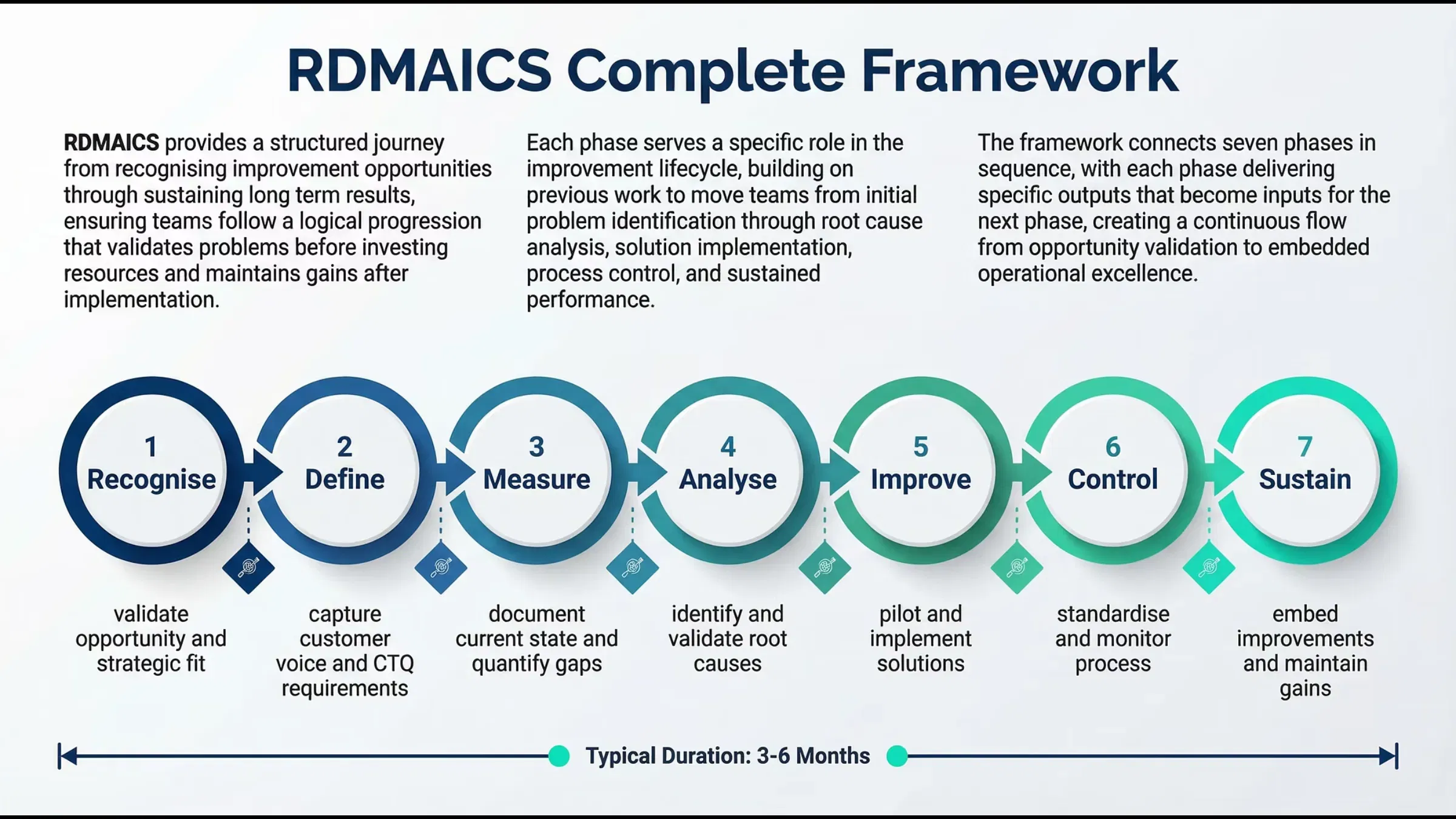
To deliver at scale, you must move from a "Project" mindset to a "System" mindset. This requires:
- Project Selection Rigor: Stop starting projects based on who shouts the loudest. Use a Project Selection Scoring Calculator to ensure you are working on the right things.
- Complexity Awareness: High-impact projects often fail because the team underestimated the SIPOC complexity.
- Data Normality: Before you make claims about process improvement, you must know if your data is even reliable. If you can't perform a Shapiro-Wilk test, you aren't doing data-driven improvement; you're doing "opinion-driven" guessing.
Case Study: The $2.4M Delivery Trap
Let’s look at a hypothetical (but painfully common) scenario. A mid-sized fintech company adopted "Agile" to speed up product delivery. Their velocity was high: they were "delivering" features every two weeks.
However, their rework rate was 40%. They were so focused on the Sprint cycle that they ignored the Lean principle of "Built-in Quality." Because they didn't have a Stakeholder Impact Assessment or a clear Project Charter, half the features were scrapped within three months of launch.
By introducing Lean Six Sigma discipline: specifically Setup Time Reduction for their deployment pipeline and rigorous Lessons Learned documentation: they reduced their cycle time by 30% and their defect rate by 85%.
They didn't stop being Agile. They just stopped being amateur.
Stop Playing With Blocks and Start Leading
If you want to be a leader in this space, you need to move past the "Scrum Master" level of thinking. A Scrum Master knows how to facilitate a meeting. A Lean Six Sigma Black Belt knows how to transform a business's P&L.
The demand for professionals who can marry the speed of Agile with the precision of Lean Six Sigma is skyrocketing. Why? Because AI is commoditizing basic tasks. If your only value is "managing a Trello board," you are replaceable. If your value is using Lean Six Sigma to change the way your company uses AI, you are indispensable.
The Path to Mastery
For those ready to move beyond the "sides," the path is clear. You need formal, accredited training that covers the full spectrum of improvement methodologies.
- Green Belt: For those who want to lead high-impact projects and save their companies $50K–$100K per initiative. View Green Belt Details.
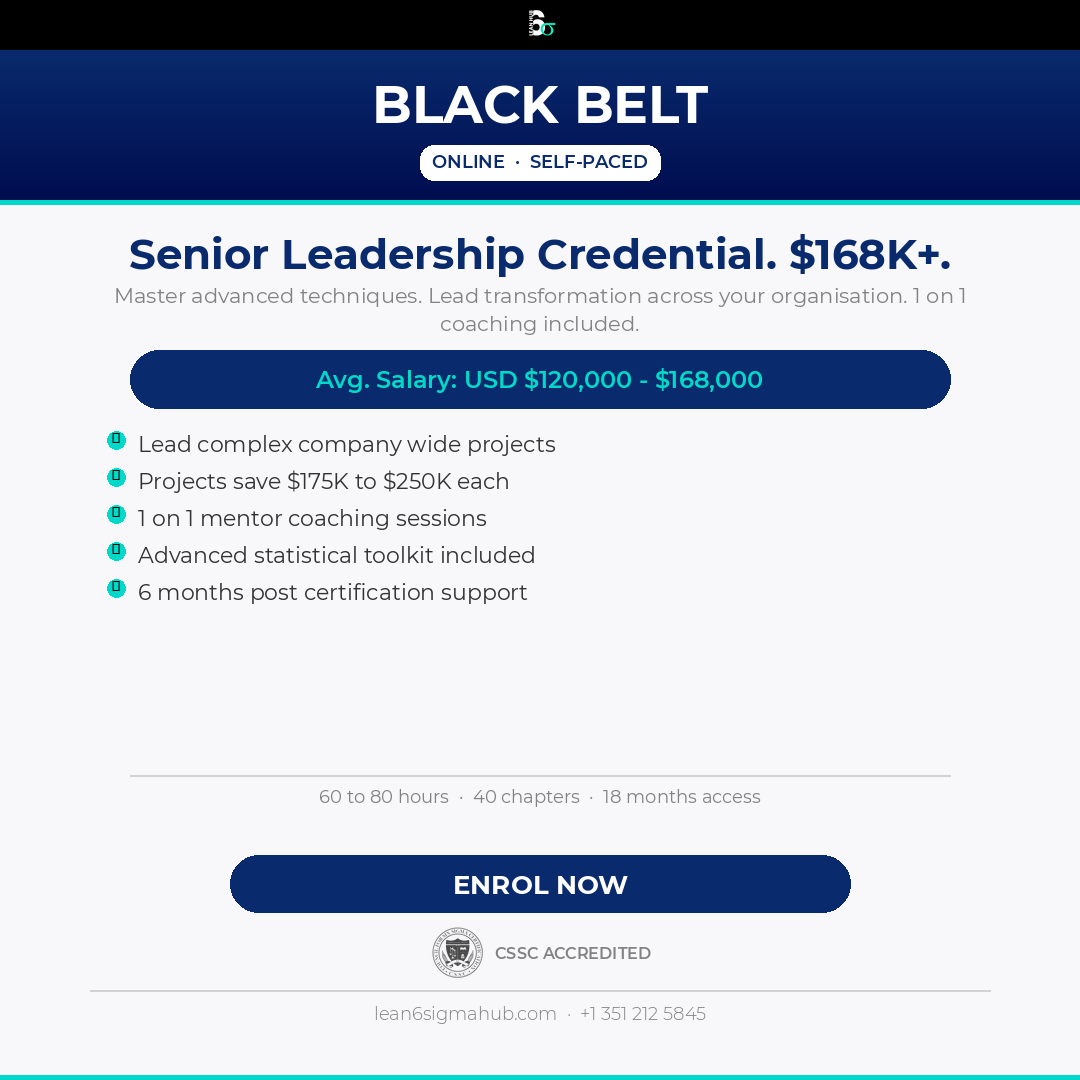
- Black Belt: For those aiming for senior leadership, capable of leading cross-functional transformations and mentoring others. Average salaries for this level range from $120,000 to $168,000.
- Master Black Belt: The pinnacle of operational excellence, shaping enterprise strategy and earning upwards of $200K+.
The Final Verdict
Stop asking which is better: Agile or Lean. It is a false dichotomy designed for people who prefer talking about work over actually doing it.
If your process is slow and full of garbage, use Lean to clean it up. If your market is changing and your customers are unhappy, use Agile to find the right path. If you want to be the person who actually delivers results in the middle of that chaos, you need a Lean Six Sigma certification.
The era of "Methodology Fanboys" is over. The era of the "Delivery Expert" is here.
Stop choosing sides. Start delivering results. Pursue your Lean Six Sigma certification today at Lean 6 Sigma Hub.