
In the realm of modern corporate strategy, the pursuit of operational excellence has transitioned from a competitive advantage to a fundamental requirement for survival. As we navigate through the first quarter of 2026, many professionals and organizational leaders find themselves questioning the continued relevance of traditional methodologies. With the rapid integration of artificial intelligence, machine learning, and hyper-automation into the workplace, one must ask: Does Lean Six Sigma certification still carry weight, or has it been eclipsed by the digital revolution?
To fully appreciate the current landscape, one must look beyond the superficial trends of the tech industry. The fundamental purpose of Lean Six Sigma (LSS) is not merely to "fix processes" but to foster a culture of data-driven decision-making and rigorous problem-solving. In 2026, the truth is clear: the demand for certified professionals is not only persistent but is expanding into sectors previously untouched by Lean methodologies.
The Evolution of Process Excellence in the AI Era
A common misconception in the mid-2020s was that autonomous systems would render human process experts obsolete. On the contrary, the surge in automated tools has highlighted a critical flaw: automating an inefficient process simply produces "faster waste." In 2026, Lean Six Sigma serves as the necessary architectural framework that ensures technologies are applied to optimized, stable processes.
Organizations today are utilizing LSS to bridge the gap between legacy operations and digital transformation. For instance, the application of DMAIC (Define, Measure, Analyze, Improve, Control) is now frequently used to transform hybrid workforce productivity, ensuring that remote and in-office teams operate with synchronized efficiency. Without the structured approach provided by a six sigma certification, digital initiatives often succumb to "pilot purgatory": a state where projects fail to scale due to a lack of underlying process stability.

The Financial Reality: Salary Benchmarks and Market Demand
For the individual professional, the value of a credential is often measured by its impact on career trajectory and compensation. In 2026, the financial data remains overwhelmingly in favor of certification. According to recent labor analytics from Lightcast and industry aggregators like Indeed, the salary premium for LSS-certified individuals continues to outpace inflation.
2026 Compensation Benchmarks:
- Certified Yellow Belt: Typically commands a salary range of $70,000 to $95,000, acting as a foundational credential for entry-level management and project support roles.
- Certified Green Belt: Holds a national average salary of approximately $103,000. These professionals are recognized for their ability to lead departmental projects and achieve typical savings of $50,000 to $100,000 per initiative.
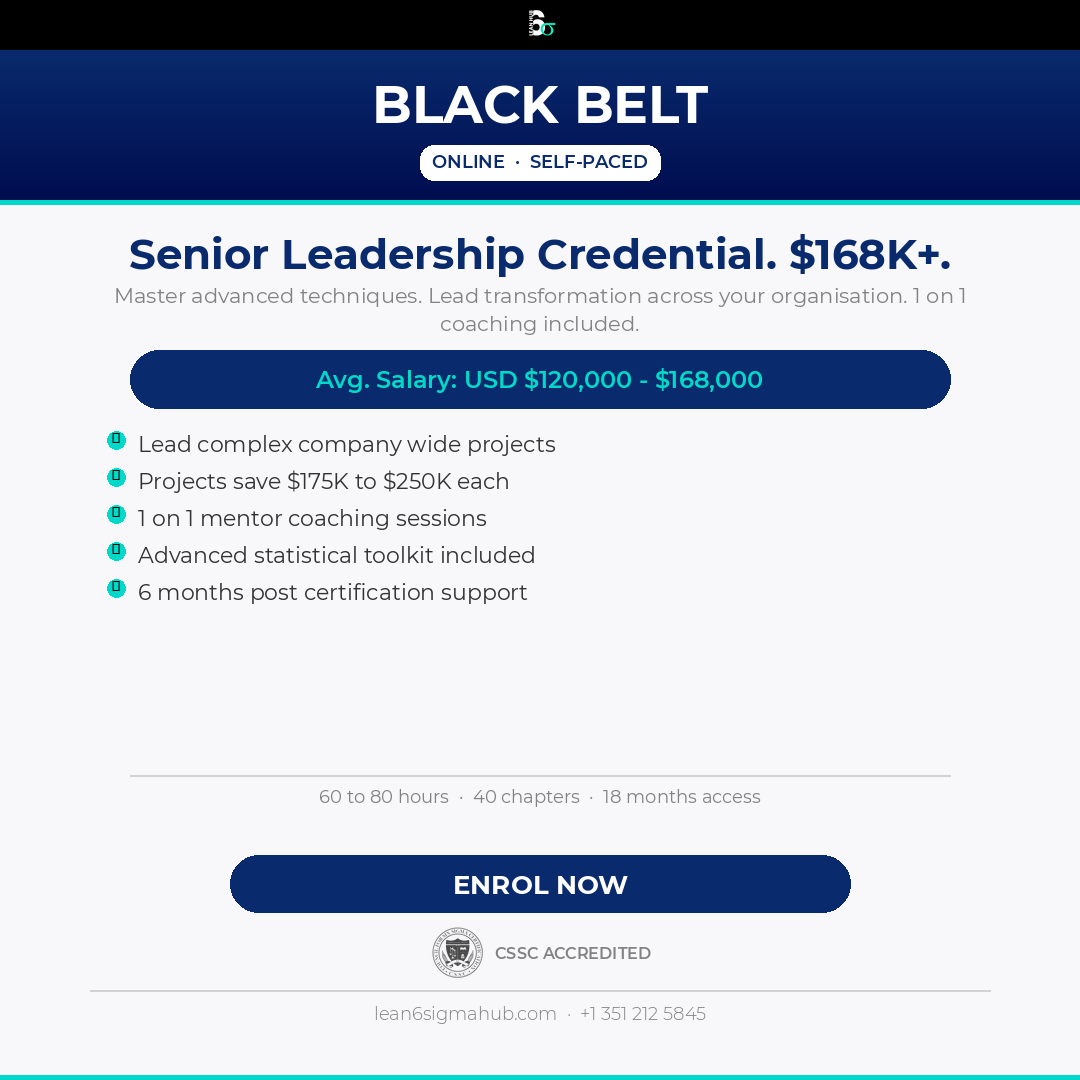
- Certified Black Belt: At the leadership level, Black Belts see an average salary range of $120,000 to $168,000, with senior practitioners in specialized industries such as pharmaceuticals or fintech exceeding $180,000.
- Master Black Belt: Those at the executive level, responsible for enterprise-wide strategy, can expect compensation exceeding $200,000, reflecting their role in shaping organizational culture and mentorship.
These figures are not merely reflections of "years of experience" but are direct results of the demonstrated ROI that certified experts bring to the table. Employers are willing to pay a premium because a certified professional is trained to identify and resolve supplier performance issues and eliminate the "hidden factory" of rework and scrap.

Cross-Industry Versatility: Why 2026 is Different
The 2026 job market is characterized by extreme volatility in certain sectors, yet Lean Six Sigma provides a "portable" skill set that mitigates the risk of industry-specific obsolescence. We are currently seeing a massive influx of LSS applications in non-traditional fields:
- Healthcare: Hospitals are using LSS to reduce patient wait times and optimize surgical suite utilization.
- Finance and Banking: Institutions are leveraging these tools for banking compliance and regulatory reporting to avoid multi-million dollar fines.
- Sustainability: "Green Lean" is the new standard, where Six Sigma metrics are applied to carbon footprint reduction and waste energy minimization.
- Logistics: The complexity of modern supply chains, particularly in cold chain logistics, requires the precision of Six Sigma to maintain temperature integrity and reduce transit failures.
The Critical Importance of CSSC Accreditation
As the market for online education has grown, so has the proliferation of "certificate mills." In 2026, the distinction between a generic certificate and a globally recognized accreditation is the difference between a resume being shortlisted or discarded.
Lean 6 Sigma Hub remains at the forefront of this industry by maintaining rigorous standards set by The Council for Six Sigma Certification (CSSC). Furthermore, our commitment to excellence was recently honored with the 2025 Global Recognition Award, a testament to our impact on professional development and organizational efficiency. When you pursue a lean six sigma certification with us, you are not just getting a PDF; you are gaining a credential that is verified, respected, and internationally portable.

Technical Mastery: The Skills of a 2026 Lean Leader
To truly matter in 2026, a certification must go beyond the basic "Seven Waste" definitions. Modern training must equip professionals with advanced analytical capabilities. Our curriculum focuses on high-impact technical skills, including:
- Advanced Data Treatment: Knowing when to keep and when to remove data points is crucial in an era of Big Data.
- Bottleneck Analysis: The ability to identify process constraints and chokepoints is the only way to scale operations effectively.
- Pilot Success Criteria: Defining what "good" looks like before a full-scale rollout saves companies millions in failed implementations.
- Sustainable Implementation: Training teams to maintain new processes ensures that the gains from an "Improve" phase do not evaporate after the project ends.
Organizational ROI: The Strategic Imperative
From a business perspective, the decision to invest in Lean Six Sigma training for staff is driven by a calculated return on investment. Organizations that prioritize internal certification programs see significant improvements in:
- Cost Reduction: By calculating rework and scrap rates accurately, companies can target the root causes of financial leakage.
- Process Transparency: Implementing dashboard designs for process control allows leadership to see real-time performance rather than relying on delayed monthly reports.
- Customer Satisfaction: In service sectors like payment processing, resolving transaction failures and delays is directly correlated with customer retention.
Conclusion: The Verdict for 2026
Does Lean Six Sigma certification matter in 2026? The answer is an emphatic yes. However, it matters differently than it did a decade ago. It is no longer about the "belt" as a badge of honor; it is about the belt as a verified capability to drive results in a complex, tech-driven world.
In an economy that prizes efficiency, precision, and data-backed strategy, the LSS framework provides the only comprehensive methodology that addresses both the human and technical aspects of process improvement. Whether you are looking to secure a six-figure salary, lead a major organizational transformation, or simply future-proof your career against the tide of automation, the path begins with a commitment to mastery.
At Lean 6 Sigma Hub, we provide the tools, the mentorship, and the CSSC-accredited curriculum necessary to turn you into a recognized expert. From our free White Belt starter to our comprehensive Master Black Belt programs, we are dedicated to your professional ascension.
Enroll in a CSSC-accredited certification program today and position yourself at the pinnacle of operational excellence. Visit Lean 6 Sigma Hub to begin your journey toward a higher standard of professional achievement.