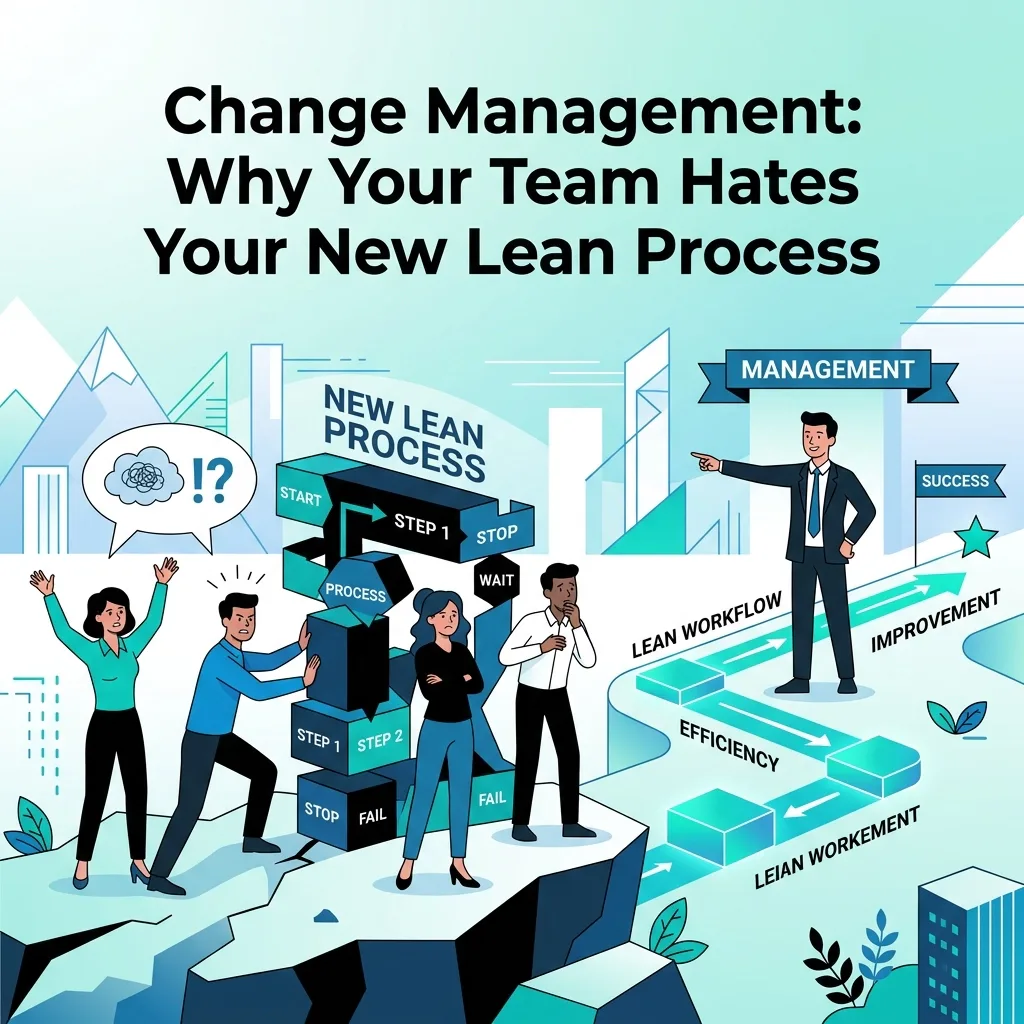
In the realm of operational excellence, few sights are more discouraging than a meticulously designed Lean process being systematically ignored, bypassed, or openly criticized by the very team it was meant to empower. Organizations frequently invest thousands of dollars and hundreds of man-hours into identifying waste, streamlining value streams, and implementing sophisticated Kanban systems, only to find that the "human element" becomes an insurmountable barrier.
The fundamental purpose of Lean Six Sigma is to create value and eliminate waste. However, when the implementation lacks a robust change management strategy, the Lean initiative itself becomes a form of "Muda" (waste). To fully appreciate why teams resist these changes, one must look beyond the technical workflows and examine the psychological and structural friction points that occur during a transition.
The Psychological Barrier: Why Resistance is Natural
Resistance to change is not a sign of a "bad" team; it is a biological and psychological certainty. The human brain is wired to prefer the predictable, even if the predictable is inefficient. When a Master Black Belt introduces a new process, it often triggers a "threat response" in the workforce.
The primary drivers of this resistance typically include:
- Fear of Incompetence: Employees who were experts in the "old way" suddenly feel like novices. They worry they will not be able to keep up with new metrics or master new digital tools.
- Loss of Autonomy: Lean processes often involve high levels of standardization. If not introduced correctly, this can feel like "micro-management" or a loss of personal judgment.
- Job Security Concerns: In many corporate cultures, "efficiency" is erroneously viewed as a euphemism for "downsizing." If the goal of the Lean project isn't explicitly stated, the team will assume the worst.
- The "Flavor of the Month" Syndrome: If the organization has a history of starting initiatives and never finishing them, the team will simply wait for the Lean rollout to "blow over."

Lean-Specific Friction: When the Methodology Backfires
Beyond general resistance, there are specific reasons why Lean implementations specifically draw the ire of the frontline staff.
Tool-First, People-Last
Many practitioners fall into the trap of focusing on the mechanics of Lean: 5S, Value Stream Mapping, and Tollgate Reviews: without addressing the culture. When tools are forced upon a team without a clear explanation of how those tools solve their specific problems, the tools are viewed as a burden rather than a benefit.
Increased Visibility and Surveillance
Lean thrives on transparency. Visual management boards and real-time metrics are essential for identifying bottlenecks. However, to an untrained or fearful team, these boards look like a scoreboard used for punishment. If a "red" metric leads to a reprimand rather than a collaborative problem-solving session, the team will quickly learn to "cook the books" or sabotage the system.
Jargon Overload
The use of Japanese terminology like Kaizen, Gemba, and Poka-Yoke can create a linguistic barrier. While these terms have specific technical meanings, using them excessively without proper context makes the methodology feel like an exclusive club that the frontline workers aren't invited to join.
The ADKAR Framework: A Blueprint for Change
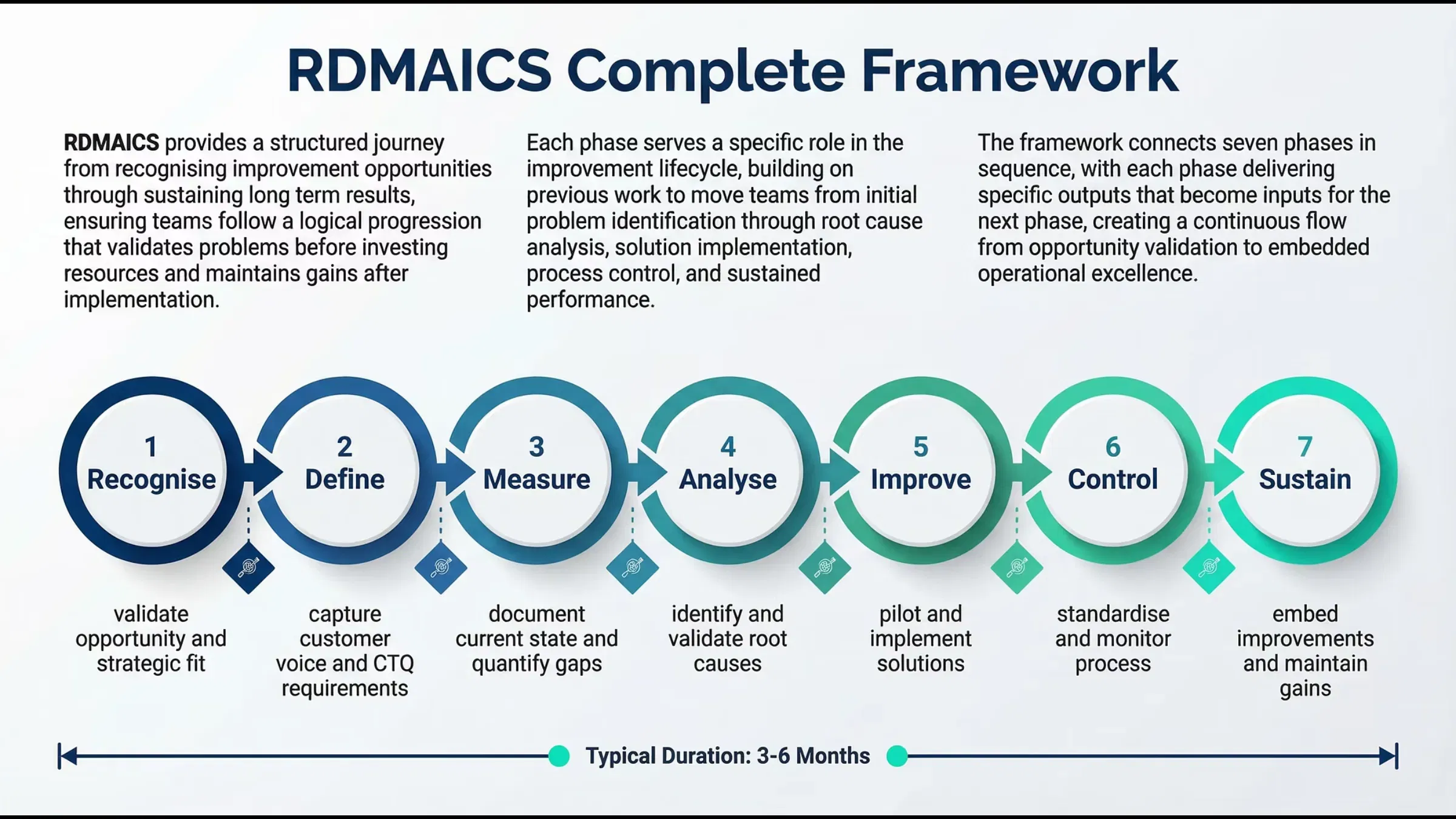
To successfully implement a Lean Six Sigma project, leaders must move beyond the DMAIC (Define, Measure, Analyze, Improve, Control) technical framework and integrate a change management model. One of the most effective frameworks is the ADKAR model, which focuses on the individual's journey through change.
1. Awareness of the Need for Change
The team must understand why the current process is failing. This shouldn't be framed as "you are doing a bad job," but rather "our current system is preventing us from meeting customer needs." Utilizing a Voice of Customer (VOC) Priority Matrix can provide the data-heavy evidence needed to build this awareness.
2. Desire to Support the Change
This is the "What’s In It For Me?" (WIIFM) phase. To build desire, leadership must demonstrate that the new process will make the employees' lives easier. Perhaps it reduces overtime, eliminates frustrating manual data entry, or provides better safety protocols. Use Quick Wins to show immediate benefits.
3. Knowledge on How to Change
Awareness and desire aren't enough if the team doesn't know what to do. This requires structured training. Whether it is a White Belt overview or a deep dive into Process Mapping, education is the antidote to fear.
4. Ability to Implement Skills
Knowledge is theoretical; ability is practical. This phase requires coaching. Leaders must be present at the Gemba (the actual place where work happens) to support the team as they stumble through the new process for the first time.
5. Reinforcement to Sustain the Change
Without reinforcement, the "rubber band effect" occurs, and the team snaps back to the old way of working. This is where Lessons Learned Documentation and robust Control Phase documentation become vital.
Diagnosing Resistance with Lean Tools
Interestingly, the tools of Lean Six Sigma can be used to diagnose and solve the problem of resistance itself.
- Stakeholder Impact Assessment: Before rolling out a change, use a Stakeholder Impact Assessment Calculator to identify who has the most to lose and who has the most influence. This allows for targeted communication plans.
- SIPOC Analysis: By performing a SIPOC (Supplier, Input, Process, Output, Customer) analysis, you can identify exactly which "suppliers" (team members) are being asked to provide new "inputs" (work methods). If the process is too complex, the SIPOC Complexity Score will warn you that resistance is likely.
- Pilot Programs: Never jump from a theoretical solution to a global rollout. Scaling solutions from pilot to full implementation allows you to "fail small" and refine the human-process interface before the stakes become too high.
How to Fix a Failing Rollout: Practical Strategies
If your team currently "hates" your new process, you cannot fix it through a memo or a mandate. You must engage in "Reverse Engineering" of the resistance.
1. The Empathy Audit
Go to the Gemba. Sit with the operators. Don't look at the metrics on your screen; look at the frustration on their faces. Ask: "What is the hardest part of this new process?" You might find that a simple software glitch or a misplaced tool shadow board is causing 90% of the frustration.
2. Co-Creation
Change is something done with people, not to them. If a process needs to be redesigned, involve the people who do the work. A Green Belt trained facilitator can lead a Kaizen event where the operators themselves draw the Future State Map. When people build the "house," they are less likely to burn it down.
3. Transparent Leadership
If the goal is to save the company money to avoid layoffs, say that. If the goal is to increase capacity to handle a new product line, say that. Ambiguity is the breeding ground of anxiety. Use the Project Charter ROI Calculator to show the team the actual fiscal impact of their efforts.

Case Study: The Surveillance Trap
A manufacturing plant implemented a real-time OEE (Overall Equipment Effectiveness) dashboard. Within a week, machine downtime increased by 15%. Investigation revealed that operators were so afraid of being blamed for "red" status that they were over-maintaining machines and stopping production at the slightest tremor to "check settings."
The fix wasn't a better dashboard. The fix was a Change Management shift. Leadership started a "Red is an Opportunity" campaign, where a red light on the dashboard triggered an immediate support visit from maintenance and engineering: not to blame the operator, but to ask: "What do you need from us to get back to green?" Within a month, OEE reached record highs.
Conclusion: Lean is a Human Endeavor
The technical aspects of Lean Six Sigma: the Shapiro-Wilk Tests for data normality and the Optimization Plots for process refinement: are essential. But they are secondary to the culture in which they reside. A process is only as good as the people willing to execute it.
If your team hates your new process, it is likely because the process hasn't respected their expertise, addressed their fears, or demonstrated its value to their daily lives. By applying the same rigor to Change Management as you do to Statistical Process Control, you can transform a resistant workforce into a powerhouse of continuous improvement.
Operational excellence is not a destination; it is a mindset. And that mindset must be shared from the C-suite to the shop floor.
Stop struggling with resistance and start leading with confidence. Enroll in our Lean Six Sigma Certification programs today to master the art of both technical improvement and human-centric change management.