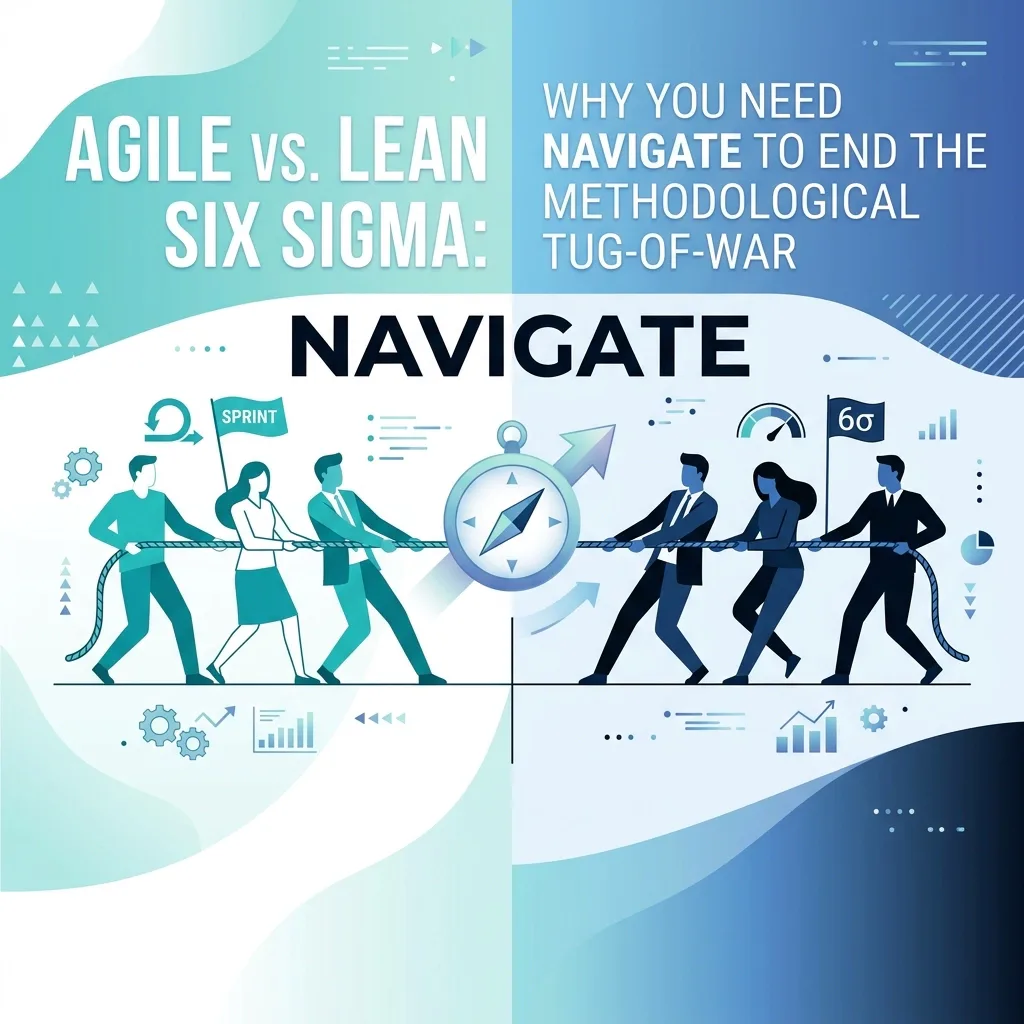
In the hyper-competitive landscape of 2026, organizations are no longer fighting for mere market share; they are fighting for operational survival. For years, a silent war has been waged in boardrooms and production floors: the "Methodological Tug-of-War" between Lean Six Sigma (LSS) and Agile.
On one side, you have the LSS purists: data-driven, methodical, and obsessed with reducing variance through the rigorous DMAIC (Define, Measure, Analyze, Improve, Control) framework. On the other, the Agile evangelists: focused on speed, iterative development, and "failing fast."
To the uninitiated, these two seem like polar opposites. One wants a five-year roadmap; the other wants a two-week sprint. But here is the brutal truth: If you are forced to choose between them, you’ve already lost.
The secret to enterprise transformation isn't picking a side; it’s about orchestration. This is where the NAVIGATE framework (as detailed at navigateframework.org) changes the game. It acts as the integration architecture that bridges the gap between the precision of Lean Six Sigma and the velocity of Agile.
The Cost of Framework Tourism
Many leaders suffer from what we call "Framework Tourism." They fly into a new methodology, take a few pictures (or certifications), and hope it solves their systemic issues. But without an overarching strategy, these methodologies often collide. LSS projects can become too "heavy" for fast-moving tech teams, while Agile projects can lack the statistical rigor needed to solve deep-rooted process defects.
When these systems aren't integrated, you get "Methodological Friction." Your LSS Black Belts are identifying bottlenecks using advanced bottleneck identification techniques, but your Agile teams are already sprinting toward a solution that doesn't address the root cause. This misalignment leads to wasted capital, frustrated talent, and zero ROI.
To fully appreciate why a unified approach is mandatory, we must look at how the NAVIGATE framework provides the structure for this integration.
Introducing NAVIGATE: The 8-Phase Architecture for Transformation
NAVIGATE isn't just another set of tools; it’s an Integration Architecture. It allows a Master Black Belt to look at a business problem and decide which "weapon" to draw from the holster: Lean Six Sigma, Agile, or a hybrid of both.
Phase 1: Notice (The Wake-Up Call)
Transformation begins when an organization notices a significant gap between its current performance and its strategic intent. Whether it’s a drop in customer satisfaction or an increase in operational costs, the "Notice" phase is about acknowledging that the status quo is a recipe for irrelevance.
Phase 2: Assess (The Capability Deep Dive)
Before you can fix anything, you need to know what you’re working with. This involves a rigorous Stakeholder Analysis to identify who the key players are and where the resistance lies. Are your teams culturally ready for Agile? Do they have the data literacy for LSS?
Phase 3: Value (The ROI Engine)
In this phase, we quantify the "Why." Using tools like the Project Charter ROI Calculator, we move past gut feelings and into hard numbers. We determine the financial impact of the transformation, ensuring that every hour spent in a sprint or a DMAIC cycle adds measurable value to the bottom line. This is where we conduct a detailed Cost-Benefit Analysis to justify the resource allocation.

Phase 4: Integrate (The Methodological Bridge)
This is the heart of the NAVIGATE framework. Here, we stop the tug-of-war. Instead of asking "Which methodology should we use?", we ask "How do these methodologies work together?"
For example, an organization might use Lean Six Sigma to stabilize a process and identify critical-to-quality (CTQ) requirements using a CTQ Tree Calculator. Once the process is stable and the requirements are clear, the Agile teams take over to build the iterative solutions. LSS provides the 'What' and the 'Why,' while Agile provides the 'How' and 'How Fast.'
Phase 5: Govern (Control Without Bureaucracy)
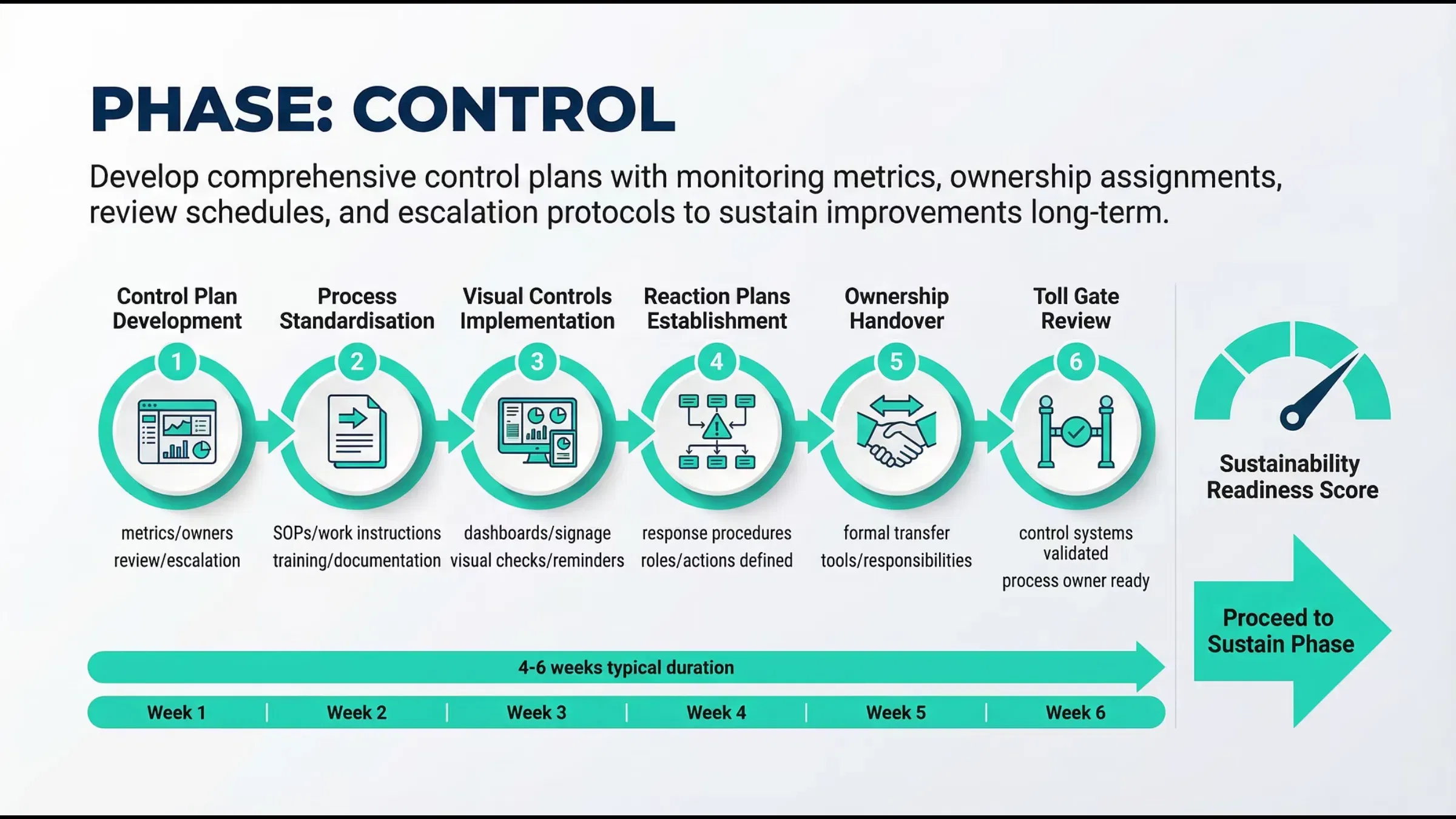
Governance in an integrated environment is about maintaining standards without killing speed. You need a roadmap that tracks progress across both long-term LSS projects and short-term Agile sprints. This is where the Control Phase Roadmap becomes vital. It ensures that improvements aren't just temporary spikes in performance but are baked into the standard operating procedure.
Phase 6: Adopt (Cultural Alignment)
Methodologies don't fail; people do. The "Adopt" phase focuses on change management. It’s about ensuring that the shift toward an integrated NAVIGATE approach is embraced at every level, from the C-suite to the frontline. Without clear process ownership, even the best framework will collapse once the consultants leave the room.
Phase 7: Track (Realizing the Benefits)
How do you know if it's working? You track it. Benefits realization tracking is the only way to prove the ROI of your transformation efforts. In an integrated model, you aren't just tracking "velocity" or "defect rates" in isolation; you are tracking the cumulative impact of these improvements on the total enterprise value.
Phase 8: Evolve (The Continuous Feedback Loop)
The final phase of NAVIGATE is the recognition that no framework is static. As the market changes, your integration architecture must evolve. This is the ultimate "Lean" principle applied to the transformation process itself.
Why 'Both' is Better Than 'Or'
The fundamental purpose of NAVIGATE is to move past the binary thinking of LSS vs. Agile. When you integrate these methodologies, you create a powerhouse of organizational efficiency.
Consider a utility company struggling with service connection issues. A pure Agile approach might build a beautiful new customer portal, but if the underlying billing process is broken, you’re just making it faster for customers to see their errors. Conversely, a pure LSS approach might take six months to analyze the billing process while the competition eats your lunch with a better digital experience.
By using the NAVIGATE framework, you can use LSS to resolve the underlying service connection issues while simultaneously using Agile to iterate on the digital interface. That is orchestration. That is the NAVIGATE advantage.
The Path to Mastery: Beyond the Tools
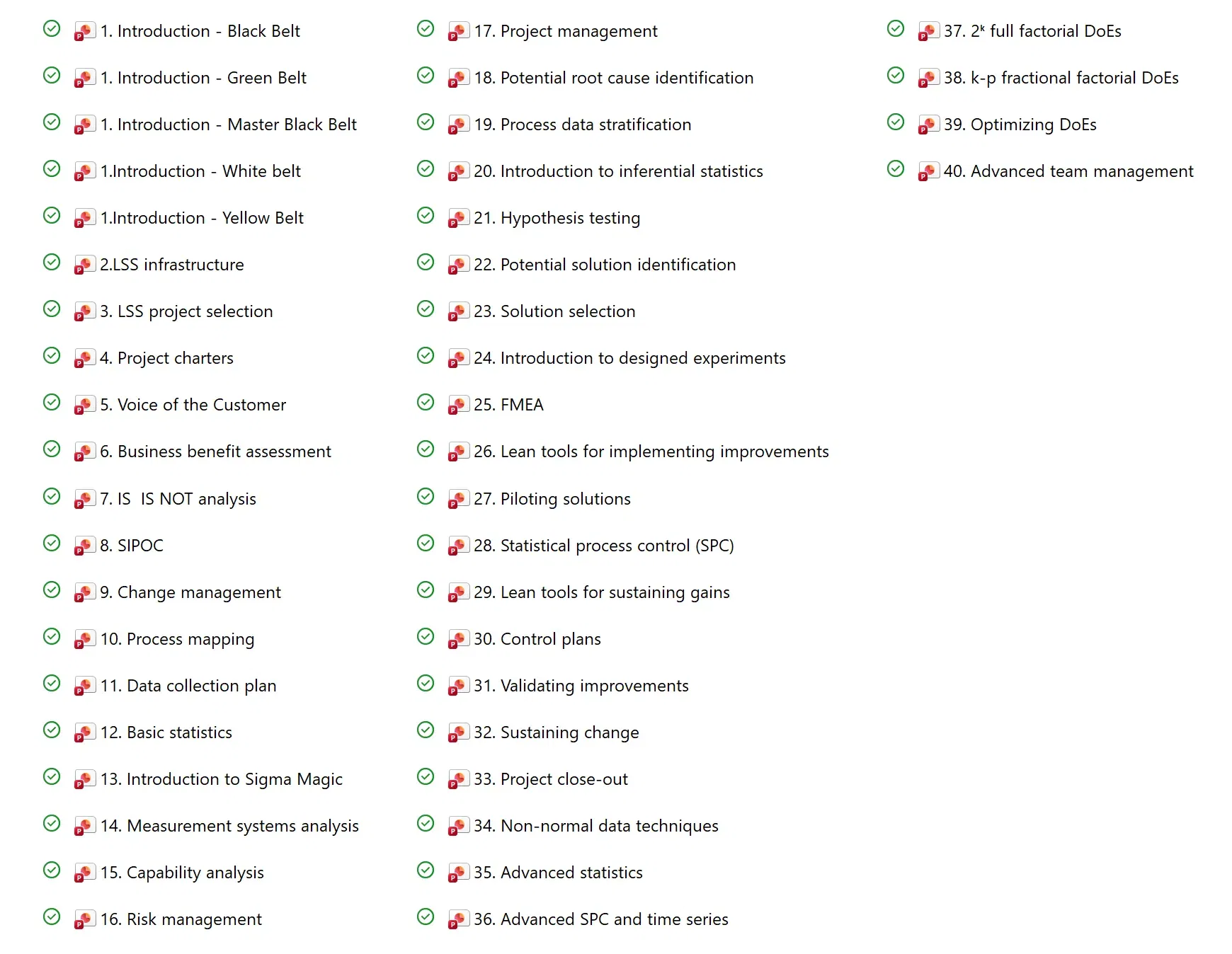
Becoming an expert in this level of integration requires more than just reading a blog post or watching a YouTube video. It requires a deep understanding of how statistical tools like P-charts and NP-charts can inform Agile backlogs, and how SIPOC complexity scores can determine the length of a sprint.
This is why top-tier practitioners are moving toward Master Black Belt certifications that emphasize strategic deployment over simple tool application. The ability to navigate the complexity of modern business is the most valuable skill set in the market today.
Conclusion: End the War, Start the Transformation
The methodological tug-of-war is a relic of the past. In 2026, the winners are those who can synthesize the best of all worlds into a cohesive, high-velocity transformation engine. The NAVIGATE framework provides the map, the rules of engagement, and the integration architecture required to scale Lean Six Sigma and Agile across the entire enterprise.
Stop trying to choose between speed and quality. Stop letting your frameworks fight each other for resources. It is time to step up, lead with authority, and orchestrate a transformation that actually delivers on its promises.
Ready to stop being a "Framework Tourist" and start leading enterprise-wide transformation? Elevate your career and your company by mastering the integration of these powerful methodologies. Enroll in our Lean Six Sigma Master Black Belt program today and become the architect of your organization’s future.