In the realm of operational excellence, there is a recurring tragedy: a company invests thousands in Green Belt and Black Belt training, completes a handful of successful "pilot" projects, and then watches as the momentum evaporates. This is the "scaling wall." Most organizations hit it not because they lack talent or tools, but because they lack a common architecture.
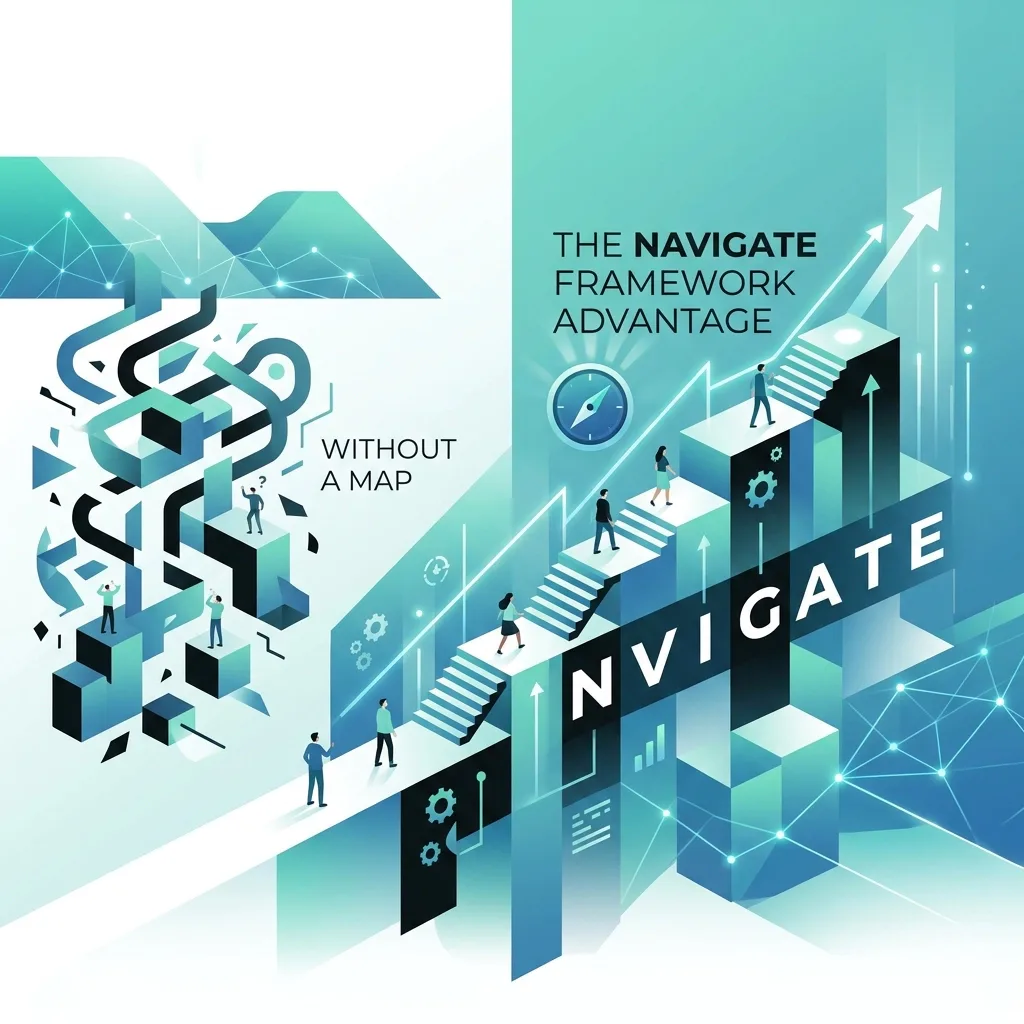
Without a map, Lean Six Sigma (LSS) becomes a collection of disconnected tactical tools, a "framework tourism" approach that provides temporary sights but no permanent residence in the organizational culture. To move from isolated project success to enterprise-wide transformation, you need a strategic blueprint. That blueprint is the NAVIGATE Framework.
The Architecture of Failure: Why Programs Stagnate
The fundamental purpose of Lean Six Sigma is to reduce variation and eliminate waste. Yet, ironically, the way most companies deploy LSS is highly variable and incredibly wasteful. They suffer from "random acts of improvement," where projects are selected based on who screams the loudest rather than what the data suggests.
To fully appreciate why scaling is so difficult, one must understand the difference between a methodology (like DMAIC) and an architecture (like NAVIGATE). DMAIC tells you how to fix a single process. NAVIGATE tells you how to build a self-sustaining engine of improvement across ten thousand processes.

Introducing the NAVIGATE Framework: The 8 Phases of Scaling
The NAVIGATE framework consists of eight critical phases designed to move an organization from tactical chaos to strategic excellence. It serves as the connective tissue between executive strategy and front-line execution.
Phase 1: Network and Stakeholder Alignment
Scaling begins with people, not statistics. Before a single chart is drawn, you must map the political and operational landscape of the organization. This involves a rigorous stakeholder analysis to identify who will champion the change and who will quietly dismantle it. Without executive alignment and "buy-in" from mid-level managers, your scaling efforts will be treated as an "extra" task rather than the core way of working.
Phase 2: Assessment of Organizational Readiness
Many programs fail because they attempt to run before they can crawl. In this phase, we conduct a gap analysis of current capabilities. Do we have the data infrastructure to support advanced analytics? Is the culture ready for the radical transparency that LSS requires? Assessment prevents the common mistake of over-promising ROI before the foundation is laid.
Phase 3: Vision and Strategic Hoshin Kanri
Scaling LSS must be tied to the North Star of the business. This is where we apply Hoshin Kanri (Policy Deployment) to ensure that every project at the bottom of the pyramid supports a strategic objective at the top. If your project isn't moving a needle that the CEO cares about, it isn't scaling; it's just busywork. This phase bridges the gap, ensuring LSS and Agile methodologies work in tandem toward a 2026 competitive edge.
Phase 4: Identification of Value Streams and Projects
The most dangerous waste in LSS is working on the wrong project. Scaling requires a robust pipeline of high-impact opportunities. Instead of letting Belts pick their own "pet projects," organizations must use a data-driven approach. Utilizing a project selection scoring calculator ensures that resources are allocated to the constraints that actually throttle the business.
Phase 5: Governance and PMO Structure
Governance is the "map" in action. It defines the roles, responsibilities, and reporting lines. Who owns the process once the project is finished? How do we handle cross-functional disputes? A centralized Project Management Office (PMO) for LSS provides the standardized "rules of the road" that allow multiple projects to run simultaneously without colliding.
Phase 6: Actionable Deployment and Training
This is the phase most people skip to, but in the NAVIGATE framework, it only happens after the strategy and governance are set. Training must be targeted. You don't just train 500 Green Belts; you train the right 500 people who sit at the nexus of your most critical value streams. This is where the practical application of tools like Voice of the Customer priority matrices becomes the daily language of the workforce.
Phase 7: Tracking Benefits and ROI
If you cannot prove the value, the budget will eventually vanish. Scaling requires a relentless focus on benefits realization tracking. This isn't just about "soft savings" or "avoided costs." It’s about hard dollars hitting the bottom line. NAVIGATE mandates a standardized financial validation process that involves the Finance department in every project closure.
Phase 8: Embedding the DNA of Excellence
The final phase is the transition from a "program" to a "culture." In this stage, Lean Six Sigma is no longer something you "do"; it is how you work. Success here is marked by process owners taking full accountability for their metrics and using LSS tools instinctively to solve daily problems. This is where the long-term ROI of a Green Belt or Black Belt truly manifests: not in one project, but in a thousand small improvements.
The Master Black Belt: The Architect of NAVIGATE
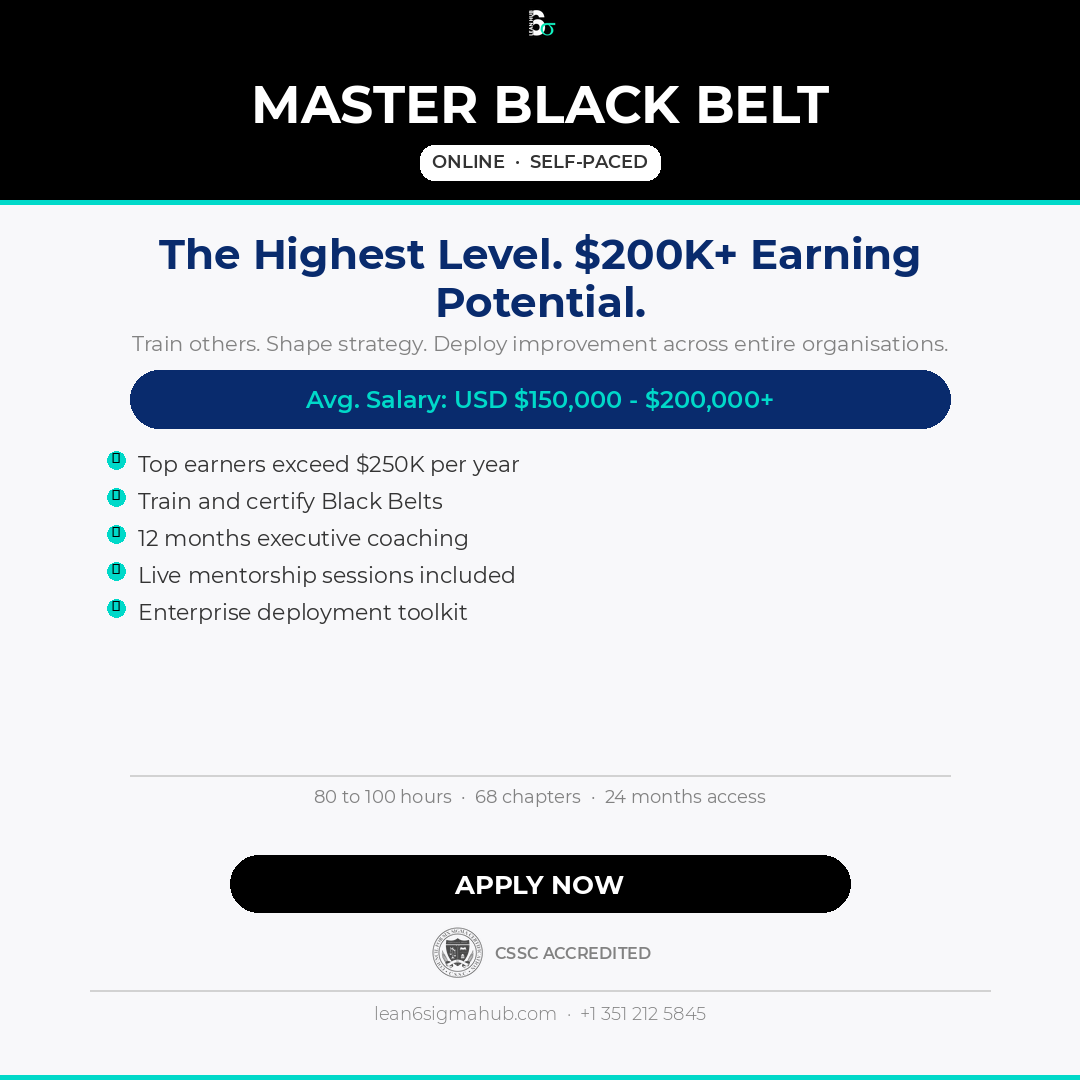
To deploy a framework as comprehensive as NAVIGATE, you cannot rely on part-time practitioners. Scaling requires a Master Black Belt (MBB). If the Green Belts are the builders and the Black Belts are the foremen, the MBB is the architect.
The MBB's role is to look across the entire organizational landscape and ensure the NAVIGATE phases are being executed with precision. They are responsible for shaping the company strategy and mentoring the next generation of leaders. Without an MBB to provide this high-level orchestration, the "map" is quickly lost, and the organization reverts to its old, inefficient habits.
Transitioning from DMAIC to NAVIGATE
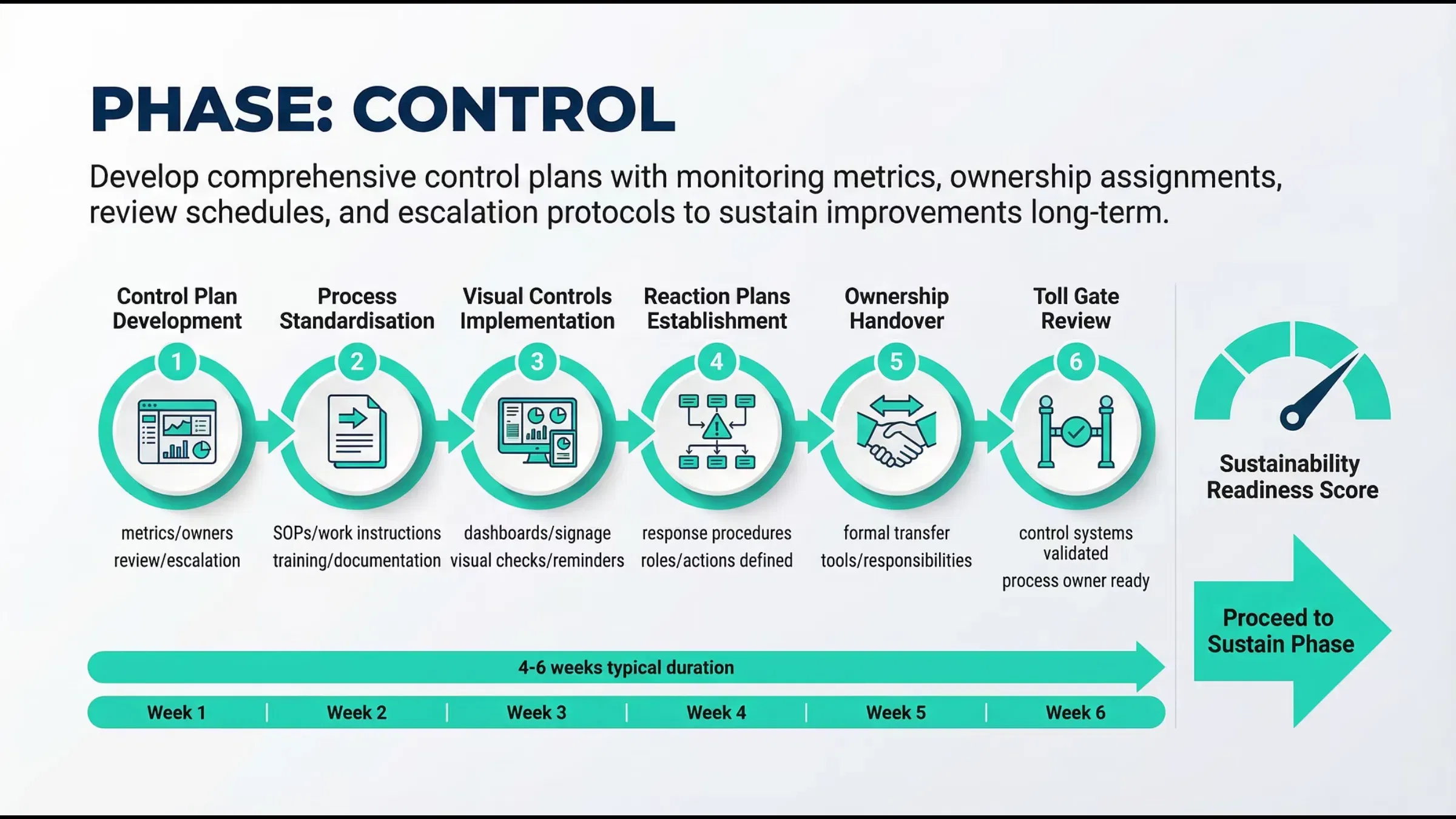
It is important to note that NAVIGATE does not replace DMAIC (Define, Measure, Analyze, Improve, Control). Instead, it provides the environment in which DMAIC can thrive. Think of DMAIC as the engine of a car and NAVIGATE as the GPS, the fuel infrastructure, and the highway system combined. You can have a powerful engine, but without a road and a destination, you are just burning fuel in the garage.
For instance, while a project is in the Control Phase, the NAVIGATE framework ensures that there is a process owner ready to receive the handover and that the financial gains are being logged in the enterprise tracking system.
Conclusion: Stop Guessing, Start Navigating
Scaling Lean Six Sigma is not a matter of "trying harder" or "training more." It is a matter of structural integrity. If your LSS program feels like it’s stalling, or if you’re struggling to prove the aggregate value of your efforts to the C-suite, you are likely missing the common architecture provided by the NAVIGATE framework.
Stop wandering through the wilderness of "random acts of improvement." Give your organization the map it deserves. By following the 8 phases of NAVIGATE, you transform your operational excellence initiative from a series of isolated events into a powerful, scalable, and unstoppable engine for growth.
The path to enterprise-wide transformation is clear, but it requires a commitment to professional-grade architecture. Don't leave your ROI to chance.
Take the next step in your professional journey and master the architecture of scaling. Enrol in our Master Black Belt Certification today and become the architect your organization needs.