Let’s be real: the "Measure" and "Analyze" phases of a typical DMAIC project are usually where the momentum goes to die. You’ve got a room full of highly paid Green Belts and Black Belts manually scrubbing Excel sheets, chasing down data from legacy ERP systems, and trying to spot patterns in a sea of noise. It’s slow, it’s prone to human error, and frankly, it’s a waste of the strategic brainpower you’ve spent years developing.
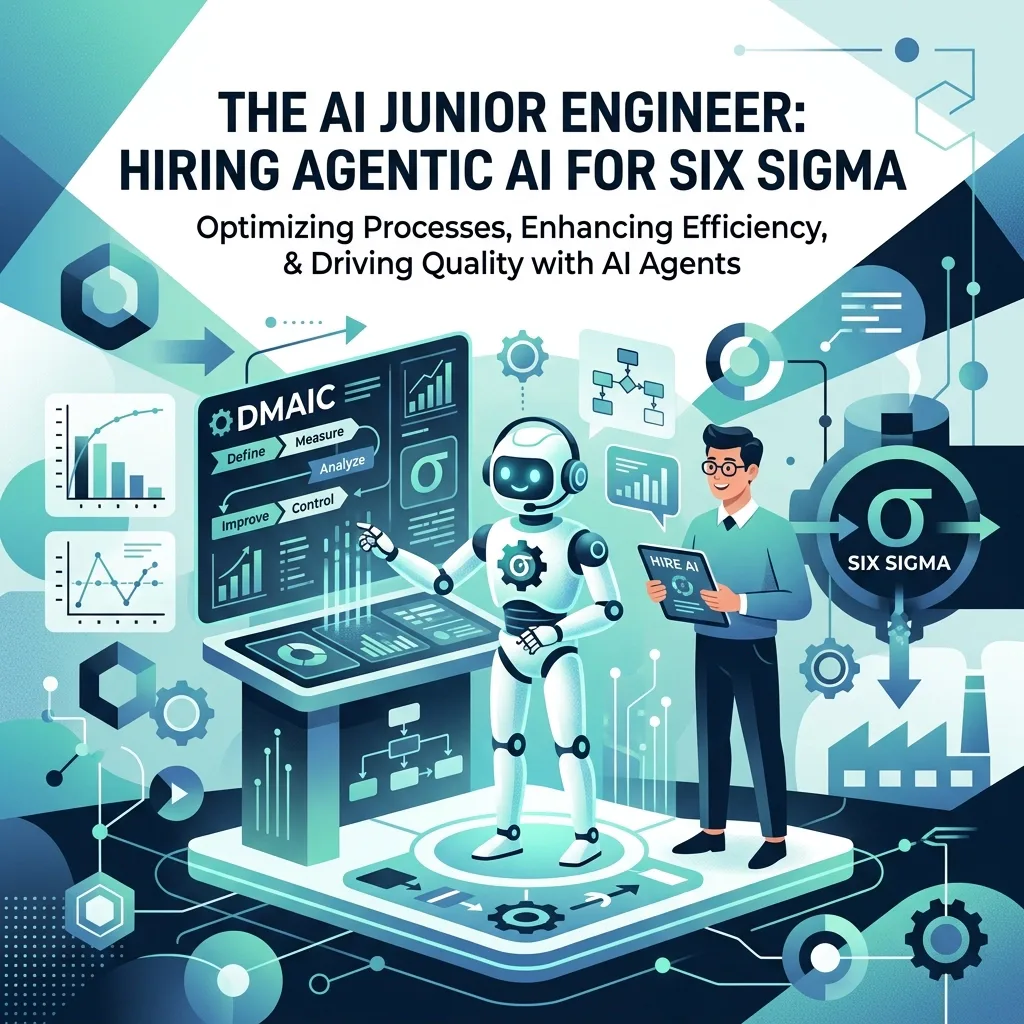
Welcome to 2026. The days of treating Six Sigma as a manual labor intensive exercise are over. If you aren’t "hiring" Agentic AI to act as your tireless junior engineer, you’re essentially trying to build a skyscraper with a hand-cranked drill.
What Exactly is an "Agentic" AI?
Before we dive into the process, we need to distinguish between the Generative AI (like ChatGPT) we’ve all used and Agentic AI.
Traditional Generative AI is like a really smart intern who waits for you to ask a question. Agentic AI is the junior engineer who takes the goal, breaks it down into tasks, and goes off to execute them. It has agency. It can use tools, browse the web, query databases, and even trigger actions in other software without you holding its hand.
In the world of Lean Six Sigma, this is a game-changer. Imagine a "Junior Engineer" that:
- Never sleeps.
- Doesn't get bored of cleaning 10,000 rows of data.
- Monitors your process stability 24/7/365.
- Flags an anomaly before your dashboard even refreshes.
Phase 1: The Tireless Data Scrubber (Measure & Analyze)
In a standard Six Sigma project, we spend about 80% of our time on data preparation and only 20% on actual improvement. Agentic AI flips that script.
When you deploy an AI agent as your junior engineer, you can task it with "Project Data Readiness." The agent can connect to your SQL databases, API endpoints, or even scrape PDF reports to consolidate information. But it doesn't just copy-paste. It uses reasoning to identify outliers, handle missing values, and normalize datasets.
For instance, if you are conducting a statistical comparison test, the agent can automatically verify the assumptions of normality and equal variance before you even open your statistical software. If the data is messy, it cleans it. If it’s incomplete, it notifies the relevant department to find the source. This is the "dirty work" that usually burns out your human team.

Phase 2: Anomaly Detection and Real-Time "Watchdogs"
The most significant drain on a Black Belt's time is monitoring. We set up Control Charts (SPC), but someone still has to look at them. Human fatigue is a major factor in process slippage.
An Agentic AI functions as a Real-Time Watchdog. By utilizing frameworks like LangGraph or Pydantic AI, these agents can be programmed with the specific rules of your process.
Instead of waiting for a weekly review to realize your process mean has shifted, the agent detects the trend in real-time. It can perform complex Duncan Multiple Range Tests across various production lines simultaneously to see which shift is underperforming and why.
It doesn't just send an alert saying "Process Out of Control." It provides context: "Hey, I noticed a 2% shift in the temperature at Station 4. This correlates with the new batch of raw materials received this morning. I’ve already flagged the batch ID for you." That is the difference between a tool and a junior engineer.
Integrating AI Agents into the Control Phase
The Control Phase is notoriously the hardest part of the DMAIC cycle to sustain. Most projects fail because the human element eventually reverts to old habits.
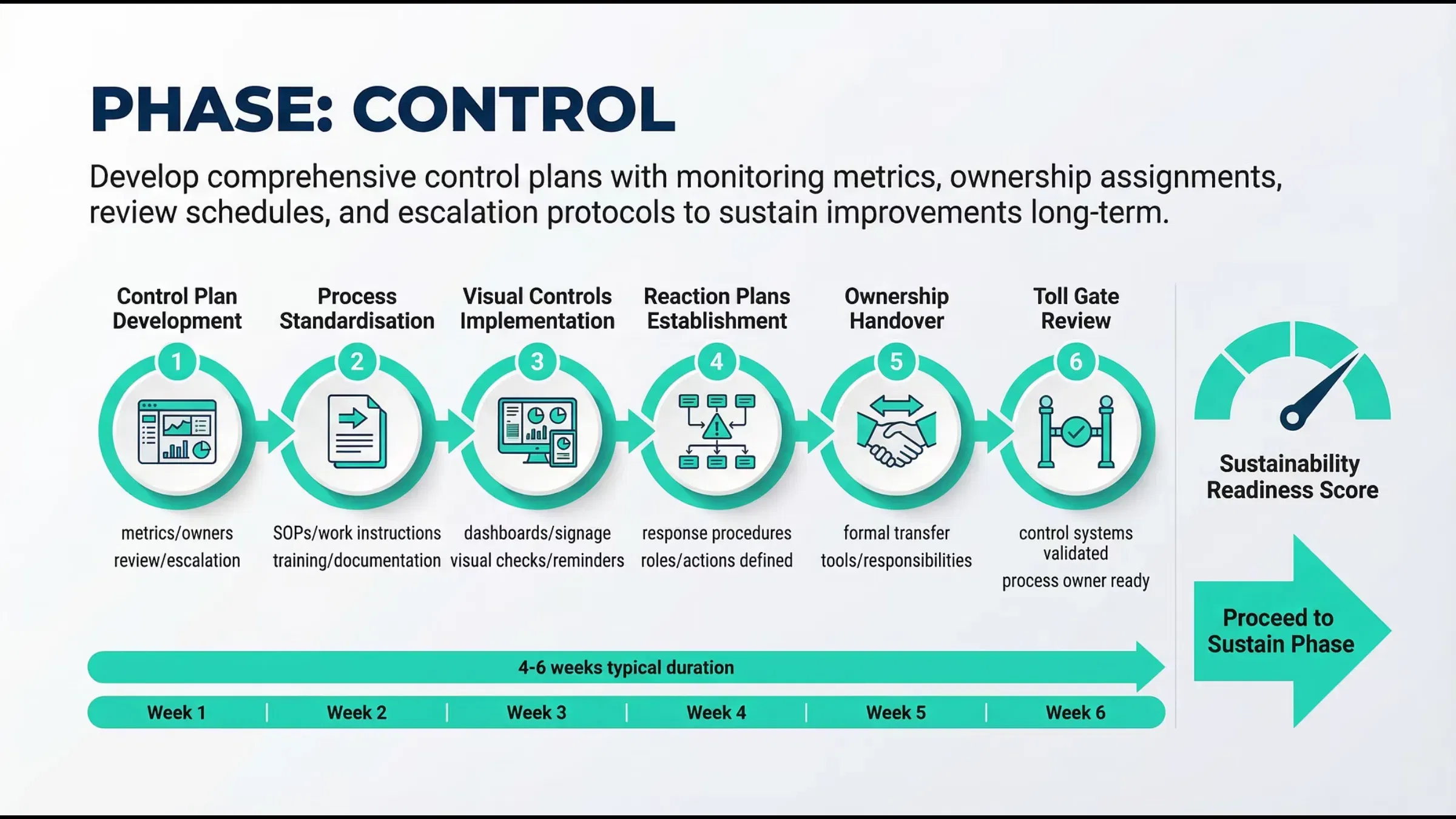
As seen in our Control Phase Roadmap, the steps of standardization and visual control are critical. Agentic AI automates the "Reaction Plans Establishment" and "Ownership Handover."
When an AI agent is part of your control plan, it acts as the digital glue. It can:
- Automate Reporting: Generate weekly sustainability readiness scores.
- Visual Controls: Update digital dashboards and send Slack/Teams notifications to process owners.
- Audit Trail: Maintain an impeccable log of every process tweak, fulfilling the "Sustain" portion of the roadmap without human intervention.
Why the Market is Demanding "AI-Literate" Six Sigma Pros
If you look at the current job market, big players like Elevance Health and Capital One are already hunting for "Agentic AI Process Engineers." They aren't looking for just a coder, and they aren't looking for just a Six Sigma belt. They want the hybrid professional who understands how to apply Lean Six Sigma principles to AI workflows.
Why? Because AI without Lean is just "digital waste." If you automate a broken process, you just get broken results faster. You need the Six Sigma methodology to define the right problems, and the AI Agents to execute the solutions at scale.
Current trends show that salaries for these hybrid roles are skyrocketing, with some senior positions in financial services reaching well over $300,000. Companies are desperate for people who can lead "Agentic Workflows": essentially, managing a fleet of AI junior engineers to maintain operational excellence.
How to "Hire" Your First AI Junior Engineer
You don’t need a PhD in Computer Science to start this. You need a solid foundation in Six Sigma and a willingness to explore the tech stack.
- Define the Scope: Don't try to automate the whole factory. Pick one repetitive task: like "daily scrap data collection."
- Choose Your Framework: Look into tools like CrewAI or LangChain. These are designed to let you build "crews" of agents that work together.
- Equip with L6S Knowledge: Feed your agent your standard operating procedures (SOPs) and historical lessons learned documentation. This gives the AI the "context" it needs to act like a member of your team.
- Set the Guardrails: Just like a human junior engineer, the AI needs a "Senior" (You) to review its work. Use the Six Sigma project selection tools to decide which tasks are high-value enough for AI automation.

The Human Element: Why You Aren't Being Replaced
A common fear is that the AI "Junior Engineer" will eventually become the "Black Belt." That’s unlikely.
The most critical part of any Lean Six Sigma project is the Define phase. AI cannot understand organizational politics, it cannot empathize with a frustrated floor operator, and it cannot define the strategic "Why" behind a project.
The AI is there to handle the data-heavy, repetitive, and monitoring tasks that humans are historically bad at. This frees you up to do what Black Belts do best: Leading change, mentoring Green Belts, and driving cultural transformation.
By delegating the "Engineer" work to the AI, you transition from being a data-miner to being a Process Architect.
Conclusion: Don't Get Left Behind
The shift toward Agentic AI in Six Sigma is no longer a "future" trend: it is happening right now in 2026. Companies are no longer satisfied with monthly reports; they want real-time process integrity.
If you want to stay relevant, you need to master the tools of the modern age. Start by solidifying your foundational knowledge and then layer on the technical skills to manage an AI-augmented team.
Whether you are looking for free resources to start your journey or you're ready to lead at the highest level, the time to adapt is now.
Level up your career and lead the future of operational excellence. Enroll in our Lean Six Sigma Certification programs today and learn how to master the intersection of process and technology.