In the world of Lean Six Sigma, there is a recurring tragedy: a highly skilled team spends months analyzing data, mapping processes, and designing solutions, only to have the entire project scrapped at the last minute because a senior executive says, "That’s not what I asked for."
If you’ve been in the game long enough, you’ve seen it. It’s painful, it’s expensive, and it’s entirely avoidable. The reason these projects fail isn't a lack of statistical prowess or a failure of the DMAIC methodology. They fail because they were built on sand. They lacked the one document that grants legitimacy, defines the mission, and protects the team from the shifting winds of corporate priorities.
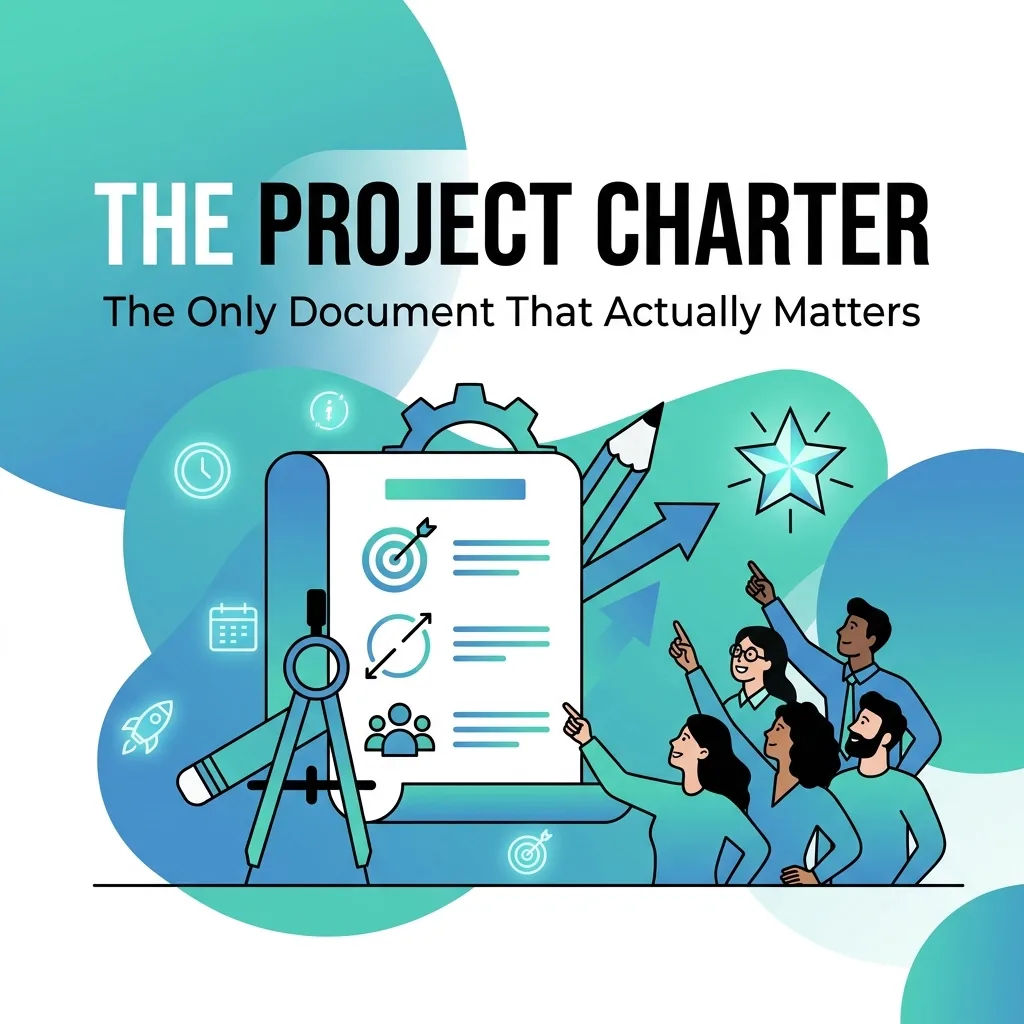
I’m talking about the Project Charter.
Calling it “the only document that matters” might sound like hyperbole, but in the realm of operational excellence, it’s the truth. Without a signed, sealed, and delivered charter, you don’t have a project; you have a hobby. And hobbies don’t save companies millions of dollars.
What is a Project Charter, Really?
At its most fundamental level, a project charter is the formal authorization for a project to exist. It is a contract between the project team and the organization’s leadership. In the Lean Six Sigma framework, it is the primary output of the Define Phase.
While many people view the charter as a bureaucratic hurdle or a "check-the-box" exercise, a seasoned Master Black Belt knows better. The charter is your shield. It is the tactical roadmap that ensures everyone: from the Green Belt doing the heavy lifting to the Sponsor signing the checks: is looking at the same map.
A high-impact charter typically includes:
- The Business Case: Why are we doing this right now?
- The Problem Statement: What is the specific pain point we are addressing?
- The Goal Statement: What does success look like in measurable terms?
- Scope: What are the boundaries of the work?
- Timeline: When will we hit the major Tollgate Reviews?
- The Team: Who is responsible, accountable, and supporting the effort?

1. It Grants Legitimacy and Authority
In any large organization, resources are a zero-sum game. Every hour a subject matter expert spends in a DMAIC meeting is an hour they aren't doing their "day job." Without a project charter, you have no formal right to those resources.
The charter establishes the Project Manager’s authority. It signals to the rest of the company that this work is a priority endorsed by leadership. When you run into resistance: and you will: the charter is the document you point to that says, "We have permission to be here, and we have permission to change things."
To fully appreciate the weight of this authority, consider the difference between a "suggestion" and a "mandate." A project without a charter is a suggestion. A project with a signed charter is a mandate. This is why we often suggest checking your project's potential impact early using a Project Selection Scoring Calculator before even drafting the charter.
2. It Prevents "Sponsor Amnesia"
One of the most dangerous phenomena in corporate life is "Sponsor Amnesia." This occurs when a Project Sponsor agrees to a goal in January, but by June, they’ve forgotten the original scope and are demanding entirely different results.
A well-drafted project charter is the cure for this disease. It serves as a permanent record of what was agreed upon. If a Sponsor tries to shift the goalposts mid-stream, you pull out the charter. You don’t do it to be confrontational; you do it to facilitate a professional negotiation. "We can certainly pivot to this new goal, but as per our original charter, that will require a change in timeline and budget."
3. The Ultimate Shield Against Scope Creep
Scope creep is the silent killer of Lean Six Sigma projects. It starts with a small request: "While you're looking at the invoice process, could you also take a quick look at the procurement workflow?" Before you know it, a focused 3-month project has turned into a 12-month monster that is destined to fail.
The charter defines the In-Scope and Out-of-Scope boundaries. If it isn't in the charter, it doesn't exist for the purpose of the project. By being brutally honest about what you won't do, you protect your ability to deliver on what you will do. For those dealing with complex processes, utilizing tools like the SIPOC Complexity Score Calculator can help you define these boundaries more accurately during the drafting phase.
4. Grounding the Project in Financial Reality
Lean Six Sigma isn't about "feeling better" about a process; it's about measurable improvement and financial impact. A project charter forces you to quantify the "Why."
The Business Case section of the charter must answer: What is the ROI? If we fix this, how much money do we save, or how much more revenue do we generate? This is where many practitioners stumble because they use vague language like "improve efficiency."
To be effective, you need hard numbers. You should be using a Project Charter ROI Calculator to ensure your financial projections are grounded in reality. If the ROI doesn't justify the effort, the charter allows you to kill the project early: which is a success in its own right. It’s better to kill a bad project in the Define phase than to let it die a slow death in the Improve phase.
5. Aligning the Team on "The North Star"
When the data gets messy and the team starts arguing over root causes, the charter serves as the "North Star." It reminds everyone of the Goal Statement.
A good goal statement follows the SMART criteria: Specific, Measurable, Achievable, Relevant, and Time-bound.
- Bad Goal: "Reduce defects in the manufacturing line."
- Good Goal: "Reduce the defect rate of Part A from 15% to 5% by Q3 2026, resulting in a cost savings of $120,000 annually."
When the team loses its way, you bring them back to the goal. If a proposed solution doesn't directly contribute to that 10% reduction, it's a distraction. For those looking for inspiration on how this looks in practice, reviewing a LSS Black Belt Sample Project can provide a benchmark for high-quality goal setting.
Common Pitfalls: Why Your Charter Might Actually Be Useless
Even if you have a document titled "Project Charter," it might be worthless if you fall into these common traps:
- Vagueness: Using words like "optimize," "enhance," or "streamline" without defining the metrics.
- Lack of Sign-off: A charter sitting in your "Documents" folder that hasn't been signed by the Sponsor is just a piece of paper.
- The "Kitchen Sink" Approach: Trying to solve world hunger in one project. Keep the scope narrow.
- Ignoring Risks: Failing to identify high-level constraints and assumptions early on.
If you find your process changes are starting to deviate from the original plan, you must ensure you are following a comprehensive guide to process documentation to maintain alignment with the charter’s original intent.
How to Make the Charter a Living Document
The charter shouldn't be filed away once the Define phase is over. It should be the first slide of every Tollgate Review. It should be referenced when the team hits a roadblock. It should be updated (with formal approval) if the business environment changes significantly.
In the realm of Lean Six Sigma, we often get caught up in the "Measure" and "Analyze" phases because they feel the most "scientific." But the most scientific data in the world won't save you if you're solving the wrong problem or if you don't have the backing of your organization.
The Project Charter is your contract for success. Treat it with the respect it deserves, or prepare to watch your project join the graveyard of failed corporate initiatives.
Conclusion: Stop Winging It
If you are serious about your career in process improvement, you need to master the art of the charter. It is the difference between being a "person who does projects" and a "leader who delivers results."
Whether you are pursuing your Green Belt or aiming for the advanced strategic heights of a Black Belt, the ability to define a project correctly is the most valuable skill in your toolkit. Don't build your career on sand. Build it on the solid foundation of a rigorous, well-negotiated Project Charter.
Take the next step in your professional evolution and master the tools that drive real organizational change. Enroll in our CSSC-accredited certification programs today.